
Blog
Can You Put New Shingles Over an Old Roof in Maryland?
Sometimes the code allows it. Here is when it does not, and why every roof replacement we do comes down to bare wood.
Sometimes. The International Residential Code, which Maryland adopts as its building standard for houses, allows a new layer of asphalt shingles over an old one in a narrow set of cases. The existing roof has to be a single layer, and it has to be sound enough to serve as a base. Plenty of roofs that homeowners ask about fail one of those tests.
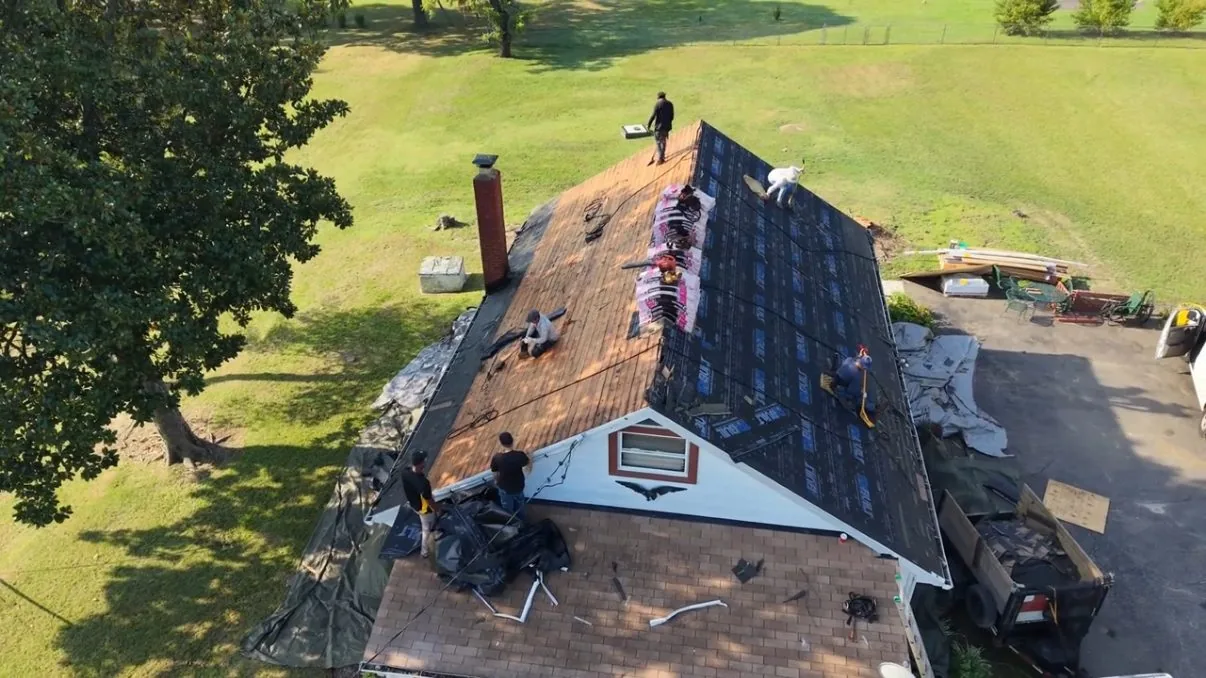
Even where a roof-over would pass, we do not install them. Every roof replacement we do in Columbia and across Howard County comes down to bare wood, because the deck under the old shingles is the one part of the roof nobody can grade from the driveway.
When Maryland code rules out a second layer
Section R908.3.1.1 of the residential code lists the conditions where a roof recover is not permitted. In plain terms, a new layer cannot go on when any of these is true:
- The existing roof already has two or more layers of any roof covering.
- The existing roof is water-soaked or has deteriorated to the point that it is no longer an adequate base for more roofing.
- The existing covering is slate, clay tile, cement tile or asbestos-cement tile.
The roofing permit is where this gets enforced. Howard County and most of the towns around it require a permit to replace a roof, and the scope on that permit should say whether the old roof is coming off. Our guide on roofing permits in Maryland walks through that side of the job.
What a second layer hides
A roof-over saves the tear-off, and the tear-off is exactly the step that lets a crew see the wood. Once the old shingles come off, we walk the sheathing, mark anything spongy or delaminated, and replace those sheets before new material goes on. With a second layer, a soft spot around a chimney or under an old skylight stays where it is, covered by a new roof that will sit on it for decades.

The layers that keep water out also need the deck. Ice and water membrane at the eaves and up the valleys is made to bond to the wood, and drip edge, pipe boots, valley metal and step flashing all get replaced on a full tear-off. Laid over old shingles, those details either get skipped or get set on a lumpy, worn surface, and old flashing tends to stay in place with sealant smeared over it.
There are slower costs too. New shingles over old ones can show the outline of the courses underneath, the framing carries the weight of both layers, and the next replacement means two layers to strip and haul away. Our guide on what affects roof replacement cost explains why extra layers add labor and disposal to an estimate.
What a full tear-off looks like in one day
Most residential replacements we do are torn off, decked and re-shingled the same day, so a house is not left open overnight. The sequence runs in order: tear-off to bare wood, deck repairs, ice and water membrane at the eaves and valleys, drip edge, synthetic underlayment over the field, starter strip, Owens Corning architectural shingles, then new pipe boots, valley metal and step flashing woven into the courses. Ventilation gets checked while the deck is open.
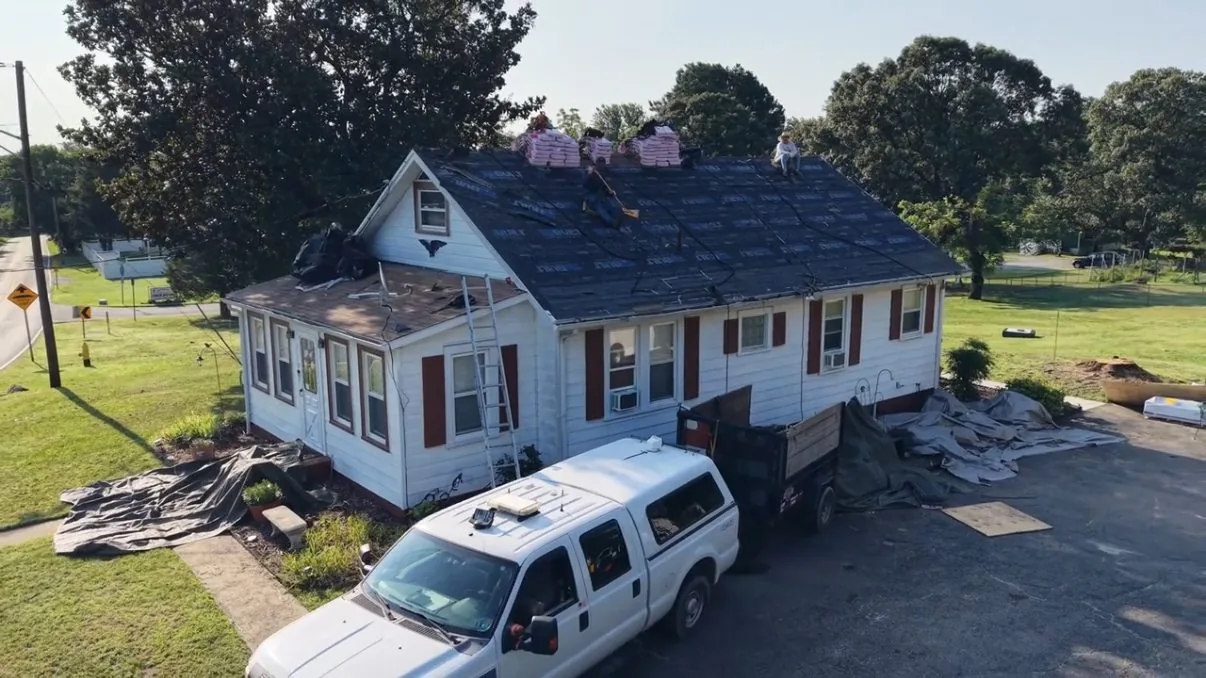
If a contractor quotes a roof-over, ask three things: how many layers are on the roof now, how they will check the deck without removing anything, and whether the eave membrane and flashing will be new. You can also compare the quote against our asphalt shingle roofing scope and the photos on the roof replacement page.
Related reading
Before tear-off day, read how the roof deck decision works during a Columbia replacement. If the siding is due as well, see insulated vinyl vs fiber cement siding.
Not sure what is under your shingles?
We count the layers and check the roof on a free inspection, then put the scope in writing.