
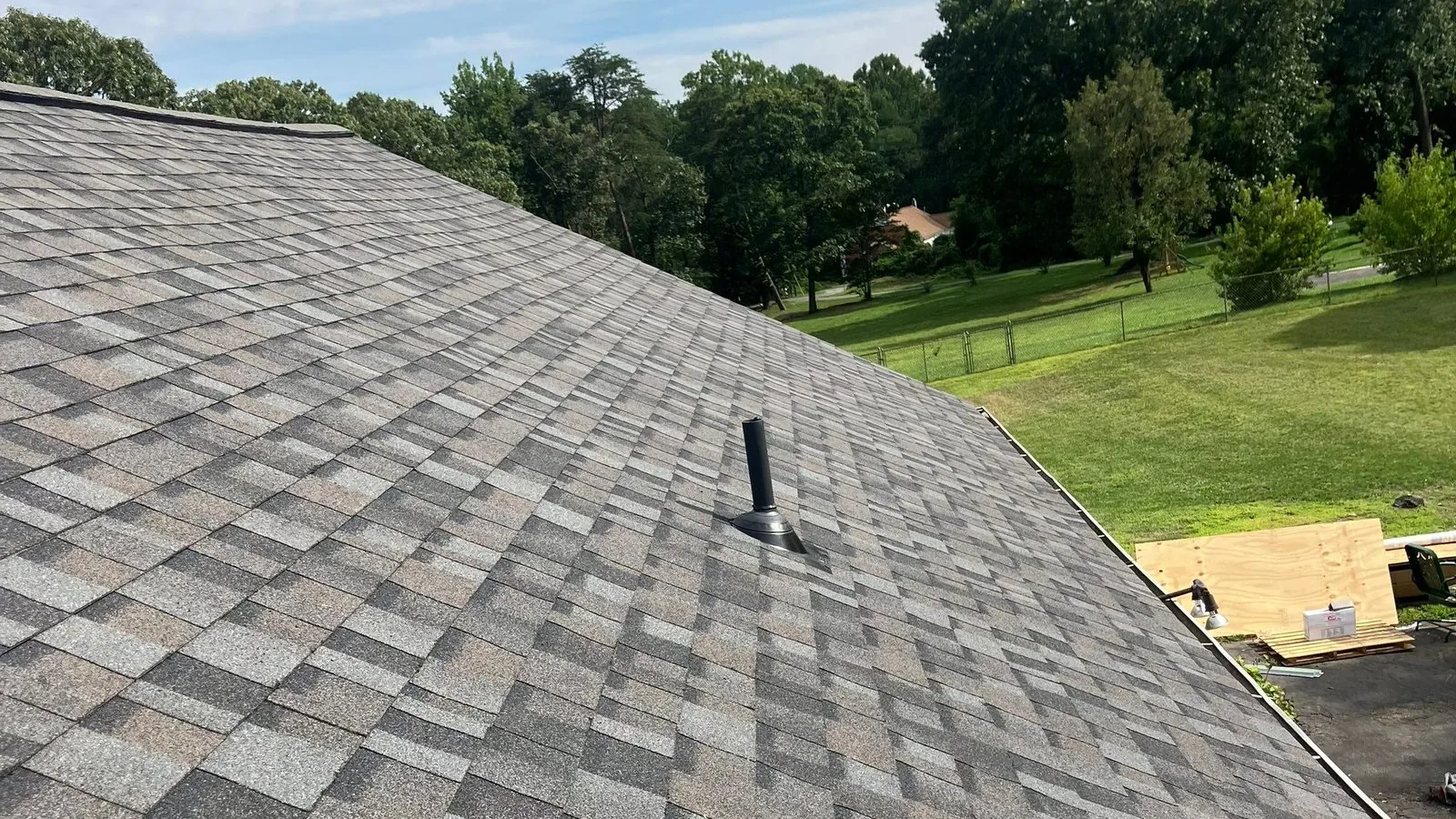
After a big Central Maryland storm, the hard part is not the noise on the roof, it is what you cannot see from the driveway. Hail and wind both go after asphalt shingles, but they leave very different marks, and the worst of it often hides in plain sight until it starts to leak. Here is how to read the signs of storm and hail damage, what you can safely check from the ground, and when it is worth getting a trained set of eyes up top.
Hail and Wind Damage Look Nothing Alike
Storm damage on a roof comes in two forms, and telling them apart is half the job. Hail falls straight down and strikes at random, so it scatters small hits all over a slope with no pattern to them. Wind works in one direction, so it lifts and tears along the edges it can get under. Knowing which one you are looking at tells you where to look and what to expect.
Signs of Hail Damage on the Roof
Hail rarely punches a clean hole in an asphalt shingle. It does something quieter, and there are a few things to look for.
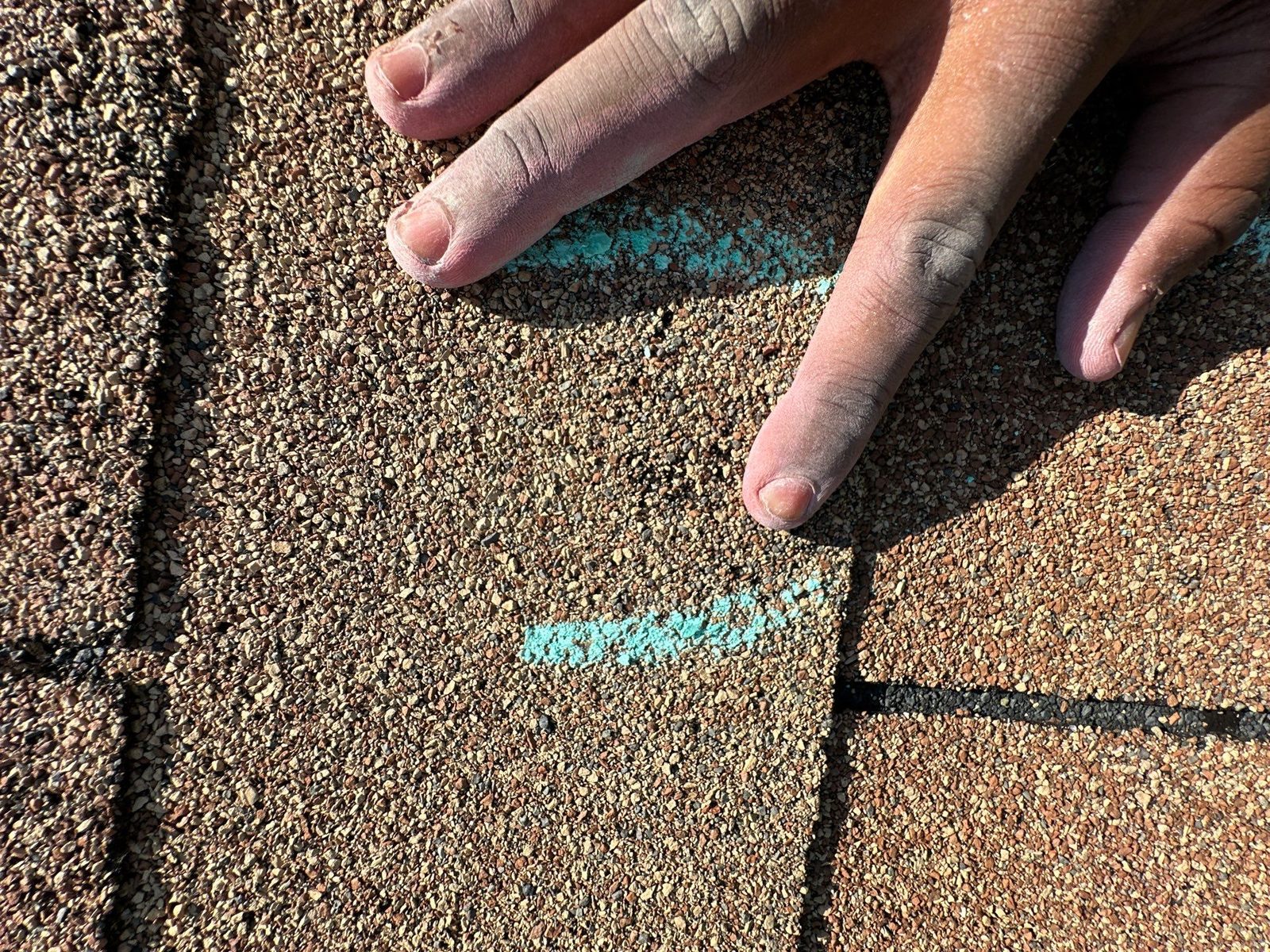
Random bruises or soft spots you can feel with a hand, scattered across the slope with no line to them. A bruise means the mat under the surface has been fractured, even when the top still looks intact.
Granule loss that leaves darker bald patches where the surface coating has been knocked away and the asphalt mat underneath is showing. Those granules are the shingle's sunscreen, and once they are gone that spot ages fast.
Cracked or split shingles, and dents in the soft metals around the roof, like vents, flashing and drip edge. Metal that got dented in the same storm helps date and size the hail.
Signs of Wind Damage
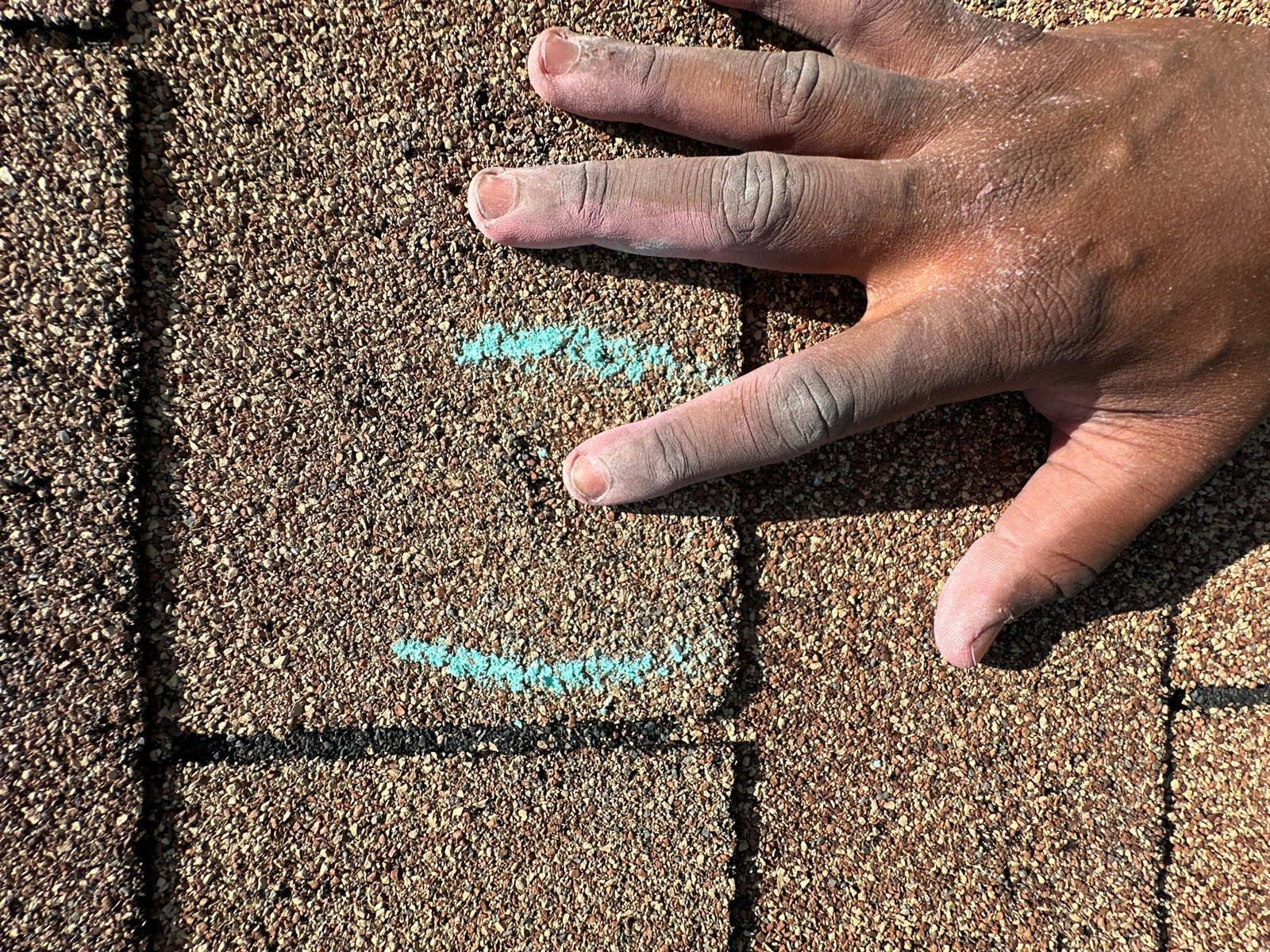
Wind damage reads as a straight, directional pattern, and it is usually worst along the rakes, ridges and eaves where the wind can get a grip. Look for lifted, creased or torn shingle tabs, and outright missing shingles along those edges. Flashing pulled loose at a wall or chimney is another wind tell.
The tricky part is the crease. A tab that got folded back in a gust can settle flat again and look perfectly normal from the sidewalk, while the seal strip underneath is broken for good. That is why a missing shingle is easy to spot and a broken seal is not, and why wind damage so often shows up later as a leak rather than right away as a hole.
What You Can Safely Check From the Ground
You do not need to climb anything to do a first pass. From the yard, with the roof in good light, you can often pick out dark patches or missing shingles against an otherwise even slope, granules washed down and collecting at the base of a downspout, dented vents or flashing, a dented gutter, and debris left sitting on the roof after the storm.
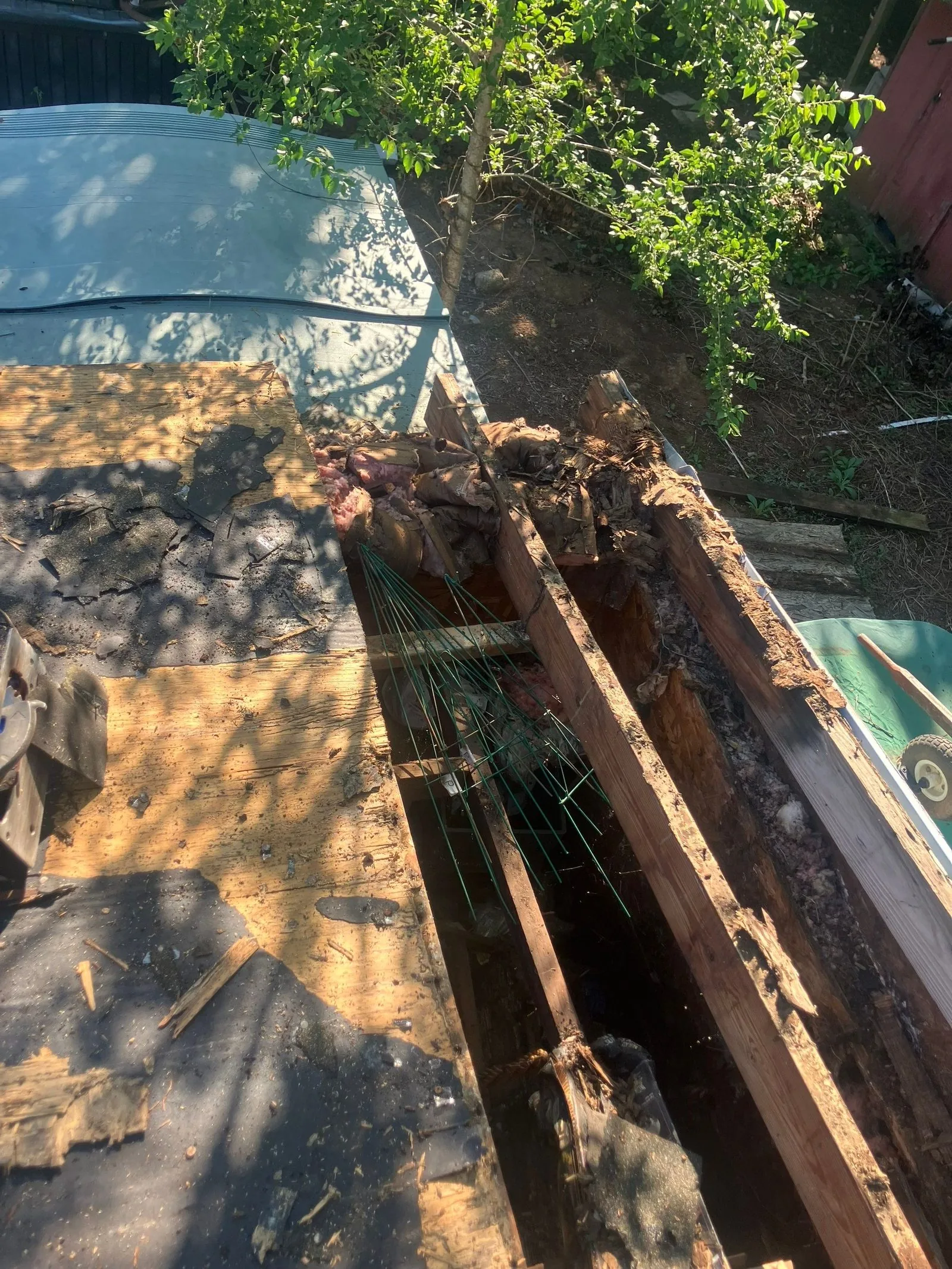
Then step inside. A new ceiling stain, or a drip that shows up after a storm, is a ground-level clue that water is getting past the roof somewhere. What you will not see from below is the fine stuff, the bruising and the broken seals, so treat a ground check as a starting point, not the whole answer.
Storm Damage at a Glance
| What you notice | What it usually points to |
|---|---|
| Random, scattered bruises or soft spots on the shingles | Hail impact |
| Darker bald patches where granules are gone | Hail knocking granules loose, exposing the mat |
| Cracked or split shingles | Hail impact |
| Small dents in vents, flashing or a gutter | Hail striking soft metal |
| Lifted, creased or torn shingle tabs | Wind |
| Missing shingles along a rake, ridge or eave | Wind |
| Flashing pulled loose at a wall or chimney | Wind |
| Granules washed to the base of a downspout | Granule loss after hail or age |
| A new ceiling stain or a drip after a storm | Water getting past a damaged roof |
General guidance, not a diagnosis of your own roof. Hail and wind damage can be subtle, and the only way to know what a storm actually did is a look at the roof itself.
Why Timing Matters After a Storm
Storm damage is easiest to catch, and easiest to document, while it is fresh. Chalk marks, dented metal and clean breaks all read clearly right after the storm, and they get muddier as weeks of sun and freeze-thaw work on them. There is a paperwork reason to move too: many homeowners policies give you a limited window to file a storm claim, and that window varies by policy, so a prompt look protects both the roof and your options. A quick inspection also catches a small opening before it becomes an interior leak.
Leave the Roof Itself to Someone Trained
Here is the one piece of this you should not do yourself: get up on the roof. Climbing is genuinely dangerous, and the damage that decides a storm claim is subtle enough to miss or misread without training. A trained inspector covers the whole roof safely and knows the difference between real storm damage and the ordinary wear an adjuster will rightly deny.
At Diakite, that look is free. A HAAG certified inspector walks the roof and documents the damage slope by slope, then scopes it in Xactimate, the estimating platform your carrier already prices from. We will meet your adjuster at the house and walk the same slopes with them. If a storm has opened the roof, we can tarp it to stop water from spreading while the claim runs. What we will not do is promise you an approval, because that call belongs to the carrier, not the roofer. You can book a free roof inspection or read the full storm and hail damage restoration process, and if you want to know how the claim itself unfolds, our Maryland roof insurance claim guide walks through it step by step.
Great job on my roof in Glen Burnie. Handled all the insurance claim. Very good crew. No complaints the roof look great, great clean up as well. I highly recommend.David G, Google review
Frequently Asked Questions
How do I know if my roof has hail damage?
Hail leaves a random, scattered pattern rather than a neat line. On the shingles it shows up as bruises or soft spots you can feel, round patches where the granules have been knocked loose to expose the darker asphalt mat, and cracked or split shingles. Soft metals like vents, flashing and drip edge often carry small dents from the same storm. Much of it is subtle, so the surest way to know is a trained inspection.
Can I see storm damage from the ground?
Some of it, yes. From the yard you can often spot dark patches or missing shingles, granules washed down to the base of a downspout, dented vents or flashing, and debris left on the roof. Inside, a new ceiling stain or a drip after a storm is another ground-level clue. The finer signs, like bruising and broken seals, do not read from the ground, so a clear view from below is a starting point rather than the whole picture.
Should I get on the roof to check myself?
No. Climbing a roof is unsafe, and the damage that matters most on a storm claim is subtle enough that it is easy to miss or misread without training. A professional inspection covers the whole roof safely and documents what is actually there.
Does homeowners insurance cover storm and hail damage?
Storm and hail damage is often covered, but coverage comes down to your policy, your deductible, and what the adjuster agrees the storm did. Nobody can promise an outcome, because the carrier decides. What helps most is clear documentation of the damage, which is what a HAAG certified inspection is built to provide.
How soon should I get my roof checked after a storm?
Soon. Damage is easiest to catch and document while it is fresh, and many policies give a limited window to file a storm claim, so a prompt look protects both the roof and the claim. A quick inspection also catches a small opening before it turns into an interior leak.