
Commercial Flat Roofing in Columbia, MD
5.0 on GoogleCommercial Flat Roofing in Columbia, MD, Scheduled Around Your Tenants
Diakite Roofing & Restoration replaces flat and low slope roofs on commercial and multifamily buildings around Columbia, and the plan accounts for occupancy, deliveries, and the parking spaces you cannot afford to lose for a week. On a flat roof the first sign of failure is often a tenant calling about a ceiling tile. The Google rating is 5.0, and the first assessment is free.
- Free Roof Inspections
- 5.0 Stars on Google
Free & No Obligation
Book your free roof inspection
The Short Answer
Diakite Roofing & Restoration installs and replaces flat and low slope roof systems on offices, retail buildings, and multifamily properties in Columbia and across Howard County, Maryland. We survey the roof, check the drainage and substrate, put the scope and price in writing, and phase the work around occupancy.
- What kind of Central Maryland buildings do you take on? Offices, retail, small industrial, churches, and multifamily across Howard County and the counties around it.
- Which flat roof system will you use on my Howard County building? That comes out of the survey.
- Can you work around our business hours in Central Maryland? We sequence the job to keep entrances and tenant spaces usable and plan the loud, disruptive stages with you in advance.
- Do you handle the insurance side of a Maryland commercial storm loss? Yes.
In Plain Terms
- Diakite Roofing & Restoration is a roofing contractor based in Columbia, MD.
- Diakite Roofing & Restoration provides commercial flat roofing for property owners in Columbia, MD and the surrounding Central Maryland counties.
- Diakite Roofing & Restoration opens every job with a free no-obligation roof inspection.
Commercial flat roofing across Central Maryland
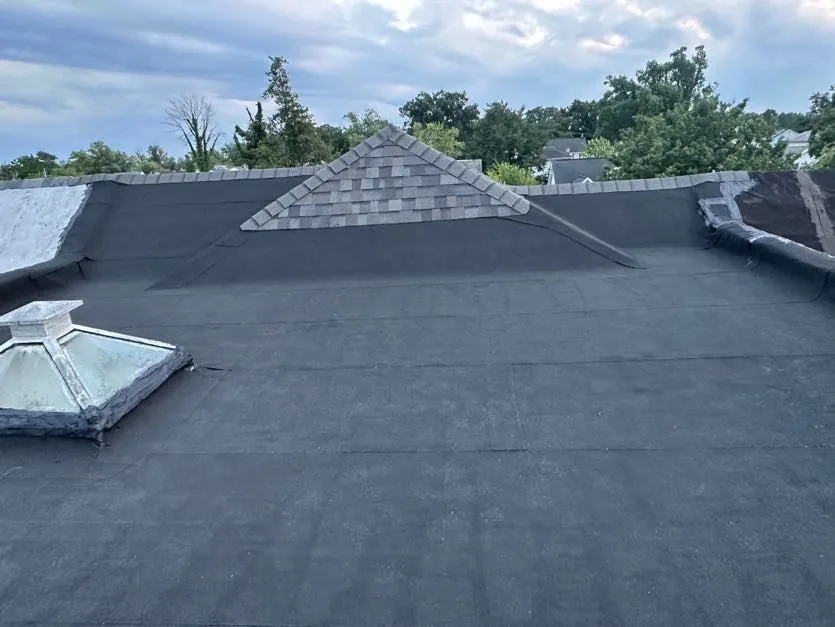
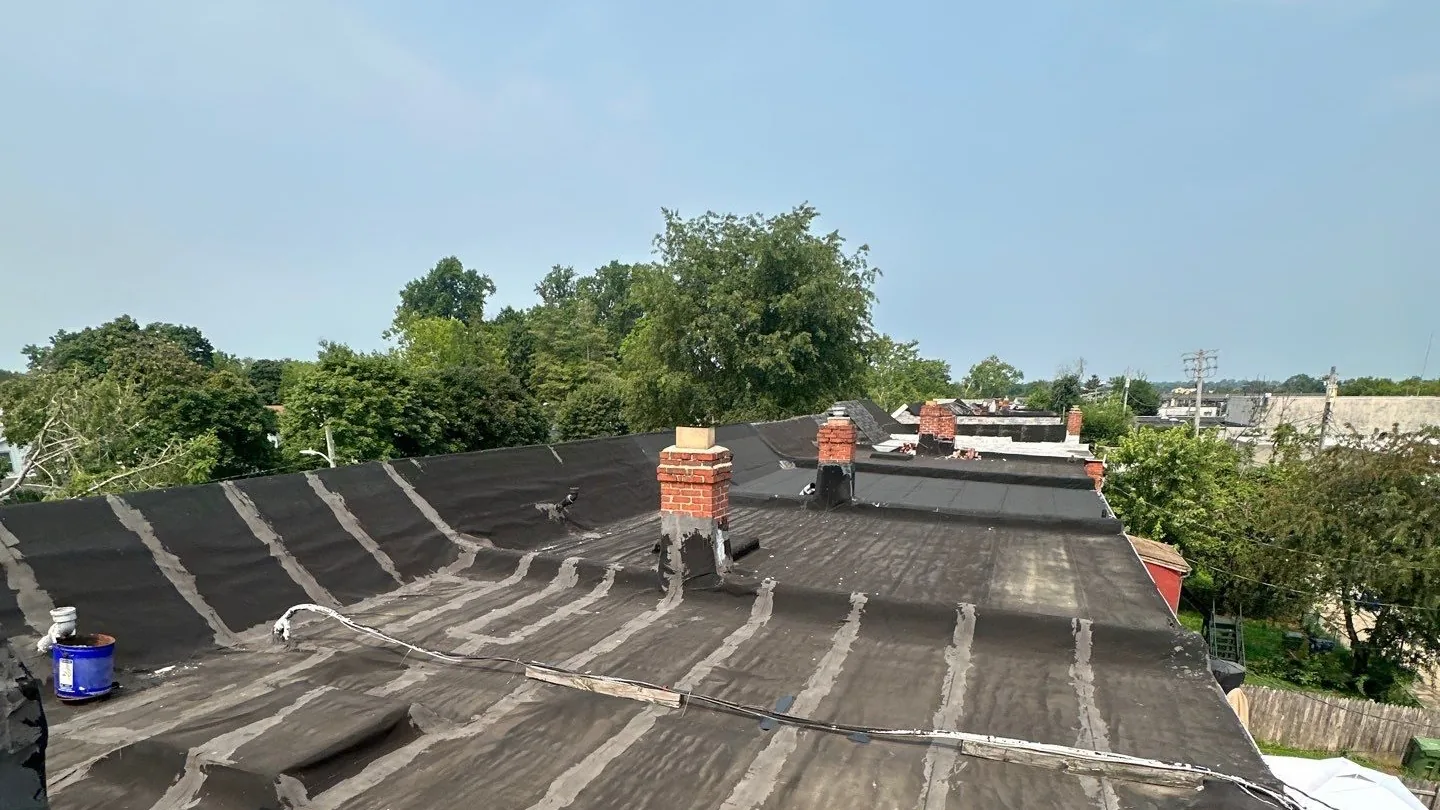
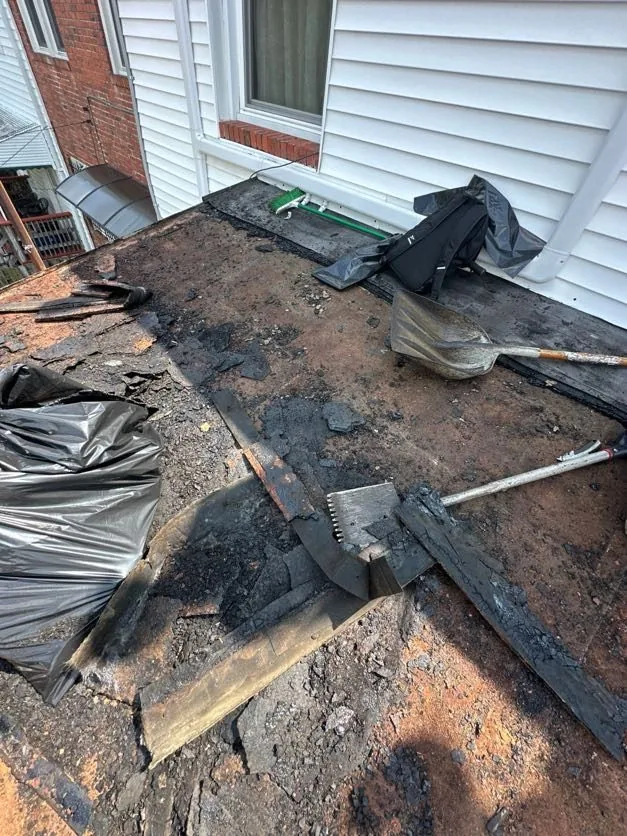
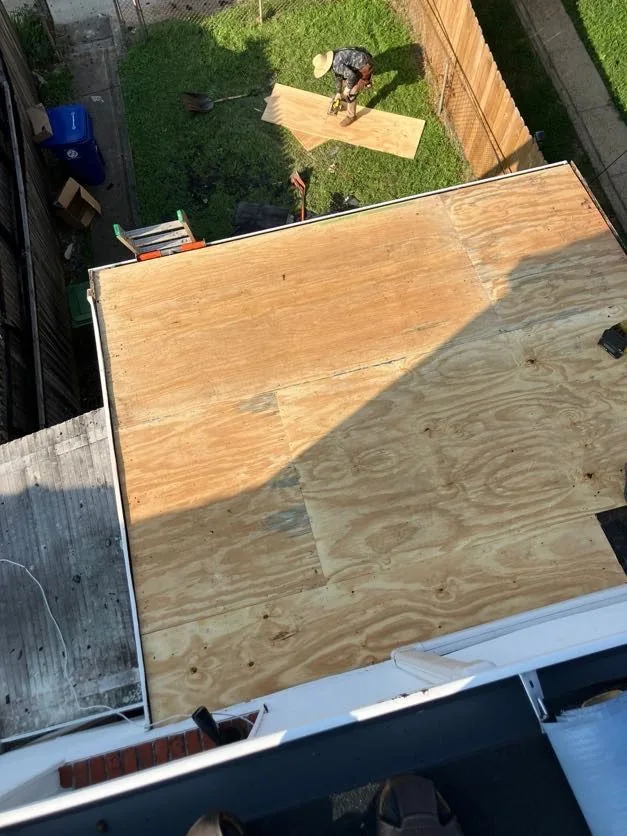
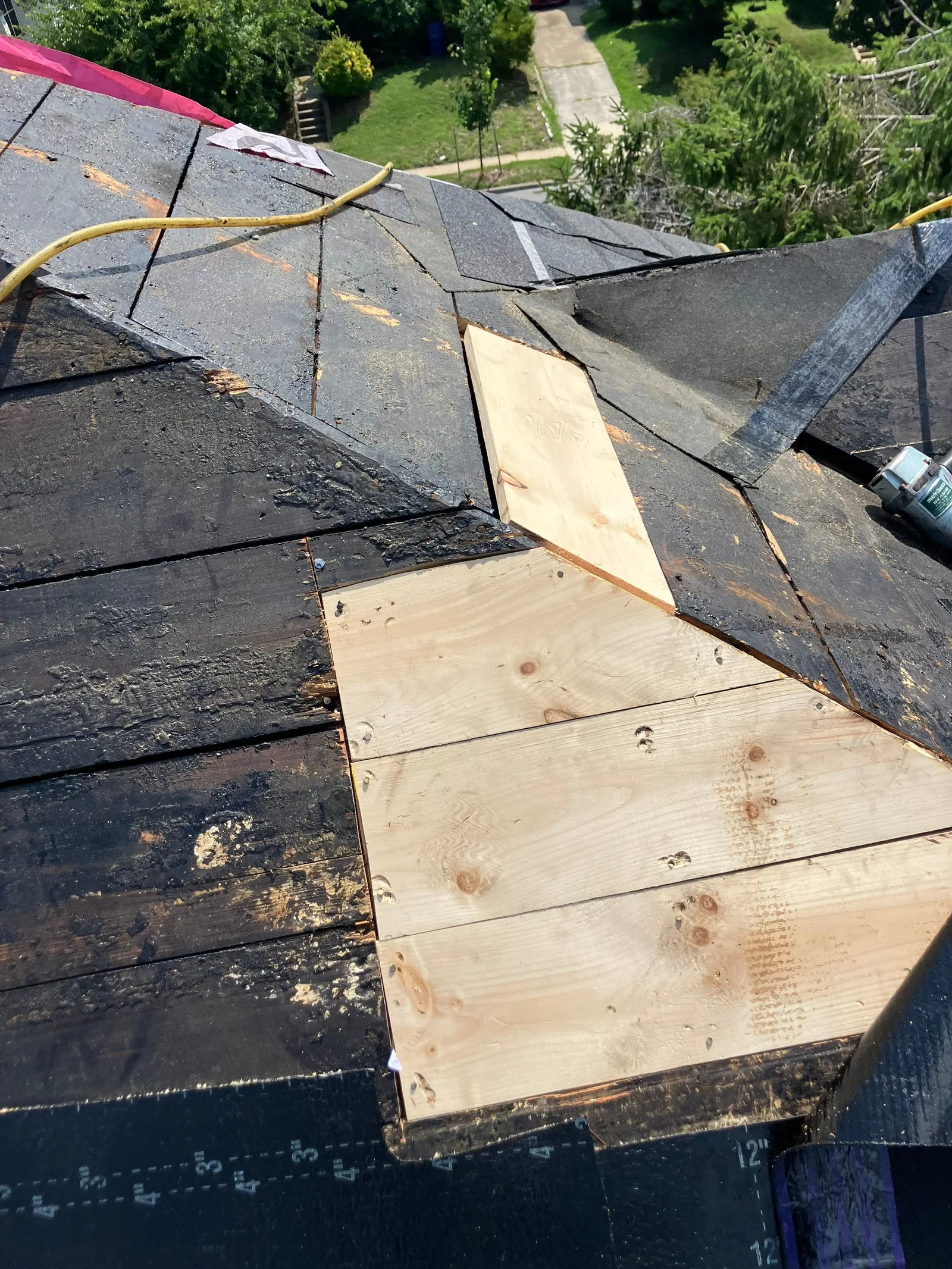
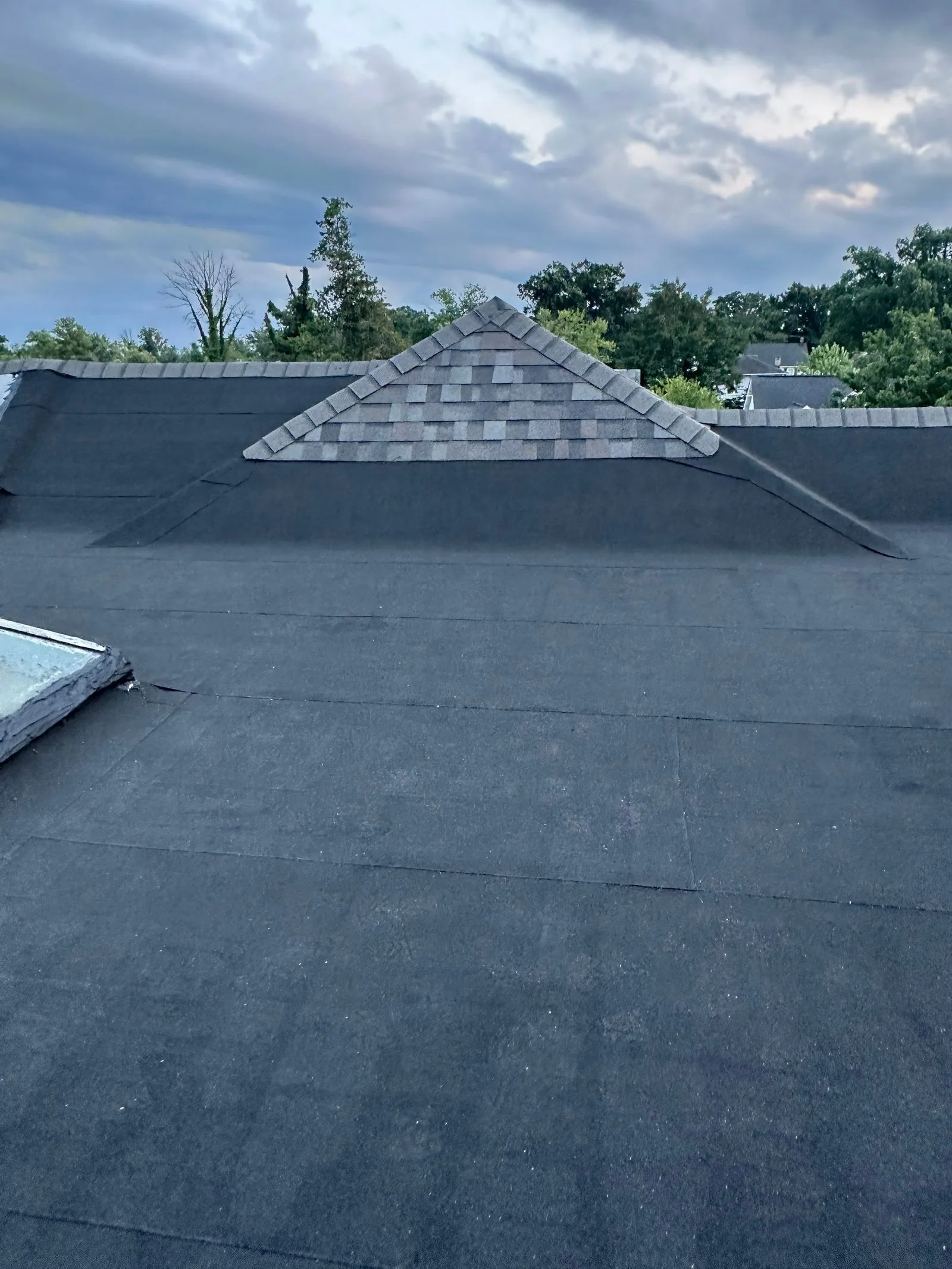
Real job photos from our own site camera. Every commercial flat roofing job opens with a free no-obligation inspection.
The Difference
Why building owners choose Diakite Roofing & Restoration for commercial flat roofing
More about Diakite Roofing & Restoration
Who We Work With
Commercial flat roofing in Columbia: materials, standards and permits
- Xactimate. Insurance scopes are written in Xactimate, the estimating software your carrier already prices from.
- Howard County Department of Inspections, Licenses and Permits. We are based in Columbia, and the county office that issues the permit is the office to ask about the permit.
Good to Know
Commercial flat roofing: what Central Maryland building owners should know
TPO, EPDM, and modified bitumen on a low slope building
Of the three systems on most central Maryland buildings, TPO is a white thermoplastic sheet with hot-air welded seams and a reflective surface that keeps the top floor cooler through a Maryland summer. EPDM is black rubber seamed with tape or adhesive, forgiving to install but it absorbs heat, and modified bitumen comes in torch, cold-adhesive, or self-adhered plies, which suits smaller roofs, tight details, and buildings where an open flame is a problem.
Whether the system goes down mechanically fastened, fully adhered, or ballasted depends on the deck type, the building height, and the wind exposure, and we settle that in the survey.
More about commercial flat roofing
Drainage is most of the job
A flat roof is never actually flat, and it has to move water to a drain or a scupper. Water that ponds speeds up UV and freeze-thaw wear, loads the deck, and works into the seams.
When we scope a low slope replacement, the slope plan comes first. That usually means tapered insulation building positive pitch toward the drains, crickets between drains, sumps set correctly at the drain bowls, and clamping rings and strainers that actually seal.
Free inspection, firm written quote. Call (667) 200-6656.
This company was very professional and very prompt. They explained everything to me in detail, along with pictures and videos. They got the job done quickly and thoroughly, and at a reasonable price. I would highly recommend Diakite Roofing and Restoration, and I would use them again if I needed to in the future.
The perimeter comes second: parapet walls, base flashings, coping, and the termination bar at the top of the membrane, where most low slope leaks start.
Curbs come third, and every rooftop unit, vent, hatch, and pipe penetration gets a proper curb and boot rather than another mastic patch.
Working around tenants in an occupied Columbia building
Offices, retail, and multifamily buildings in Columbia and along the Baltimore to Washington corridor cannot shut down for a roof, so the plan has to cover which sections come off which day, where the crane or hoist sits, how debris leaves without blocking an entrance, and which units get shut down and for how long. Adhesive odor and hot work need coordinating with fresh-air intakes, which means talking to your building engineer before the first day rather than during it.
Every commercial roof gets scoped on the building rather than by the square foot off a satellite image. We walk it, core it where the assembly is unknown, and put the findings in writing.
Diakite Roofing & Restoration works Monday through Saturday. Call (667) 200-6656 to set up a walk-through.
Watch For These
Signs you need commercial flat roofing
- Water still standing on the roof a day or two after the rain stops
- Seams open, shrinking, or lifting at the perimeter and around curbs
- Blisters, ridging, or soft spots you can feel underfoot
- Ceiling stains or dropped tiles inside, usually near a drain or a curb
- Patch stacked on patch around the HVAC units and penetrations
Seeing one of these? Call (667) 200-6656 or request a free estimate.
Same Roof, Same Day
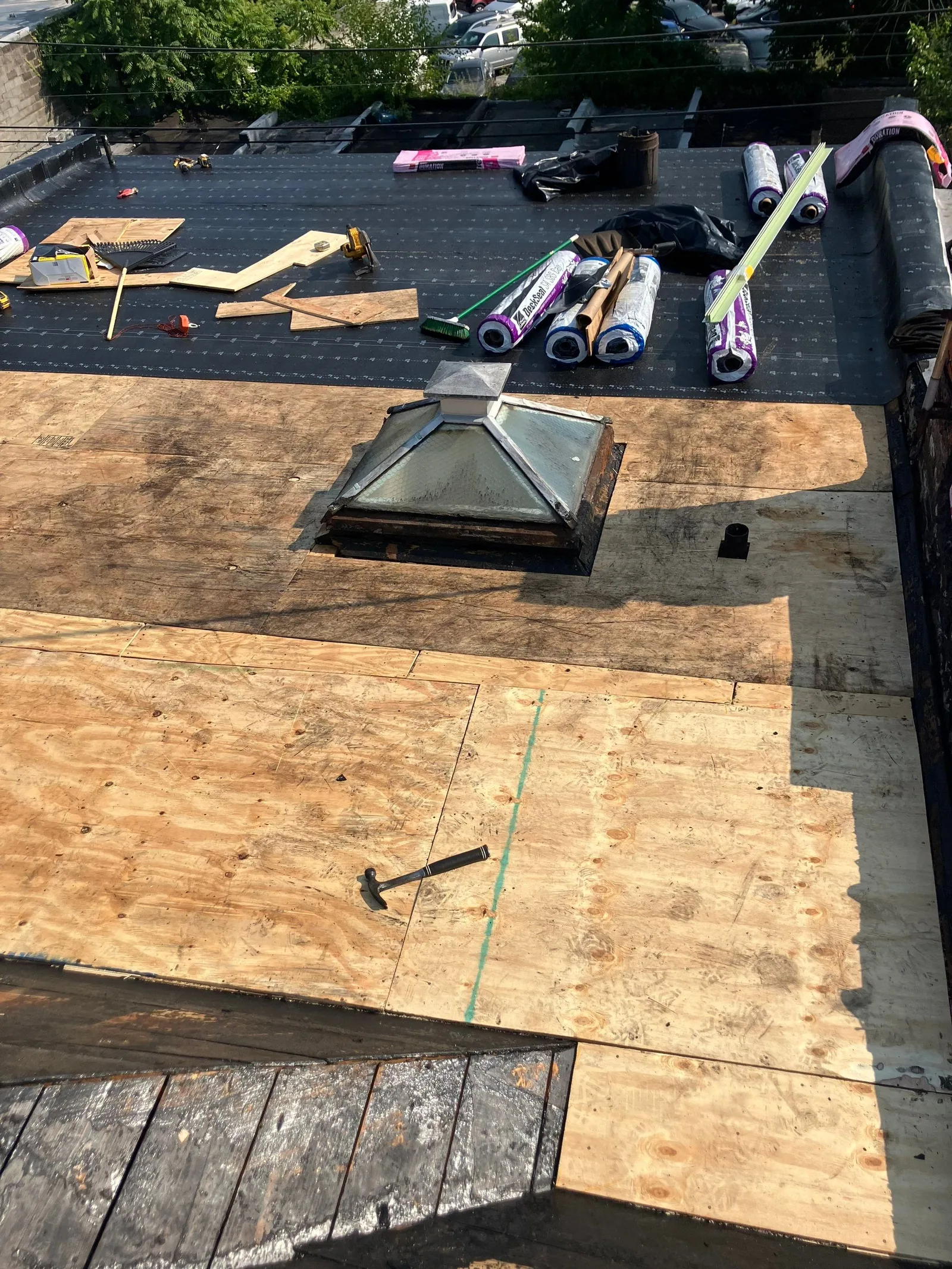
A flat roof going down, and the same roof finished
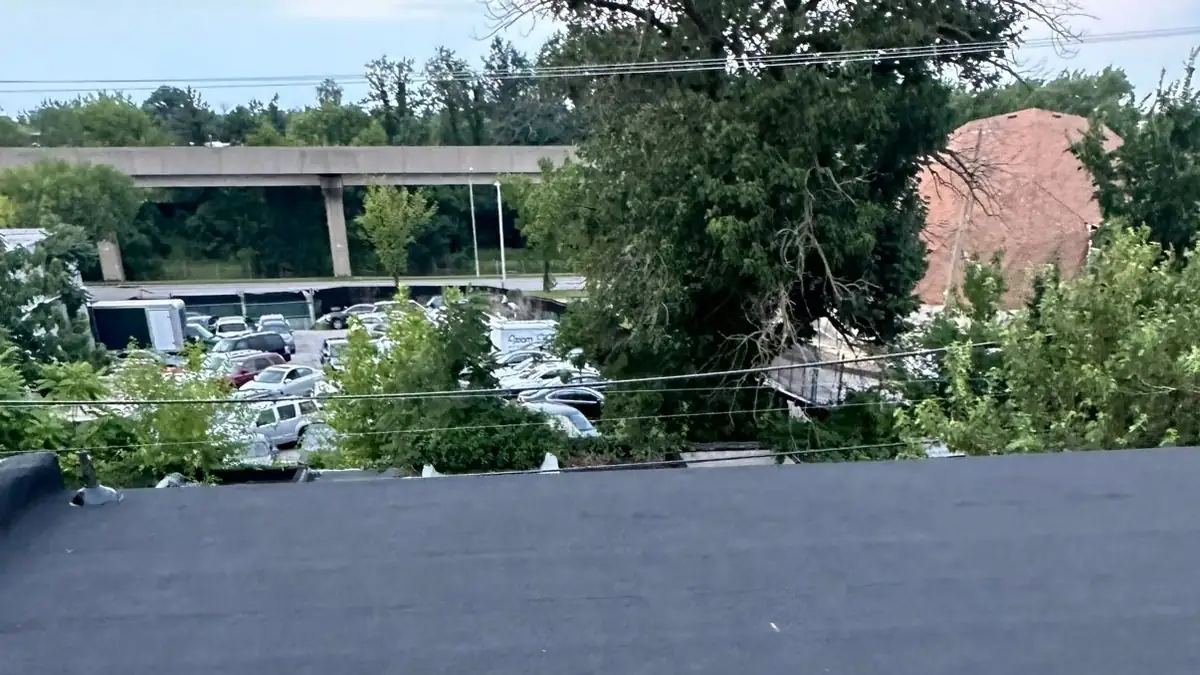
Two frames off our own camera on one low-slope job, taken about nine hours apart. The elevated highway and the parking lot behind the building are in both, which is how you know it is the same roof.
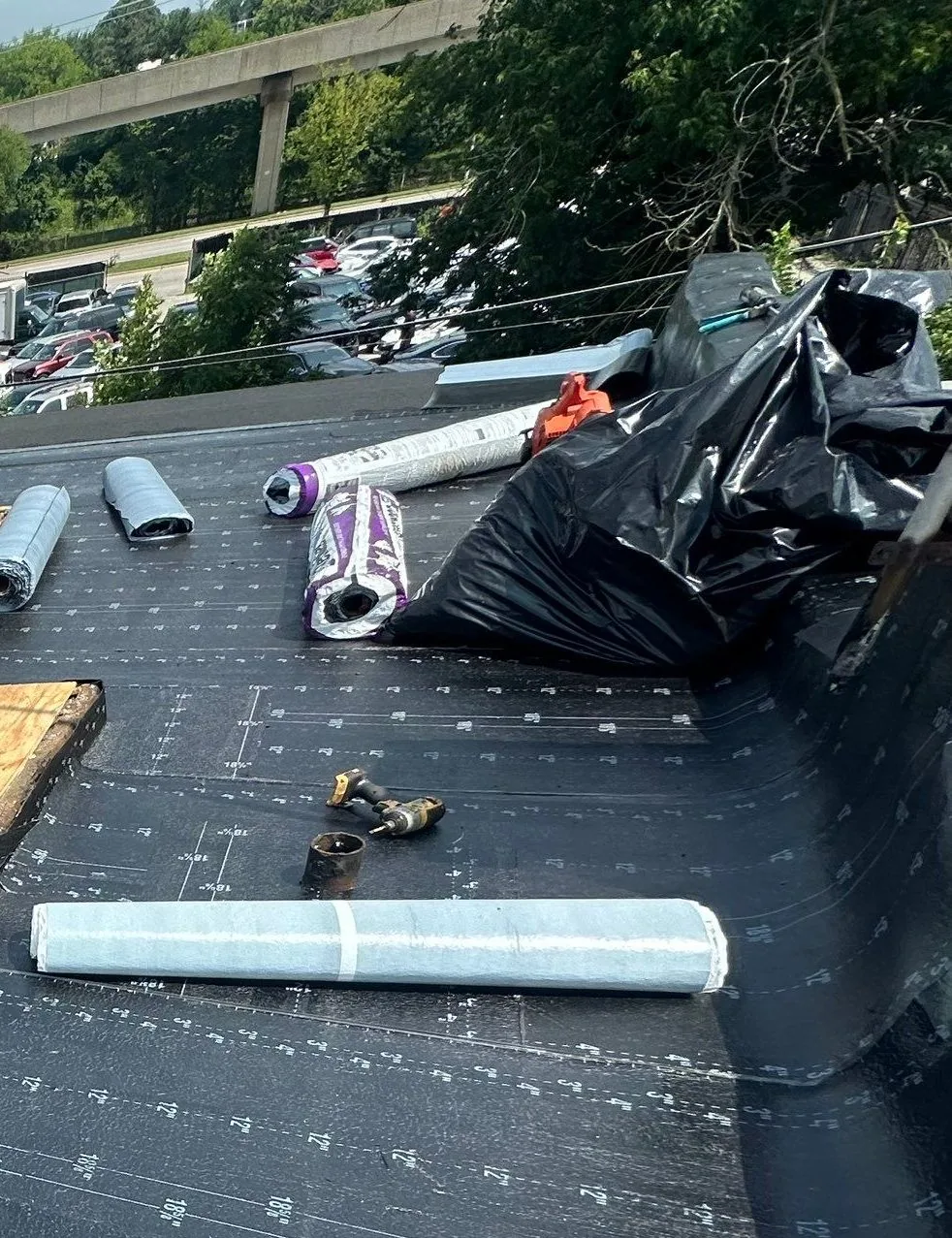
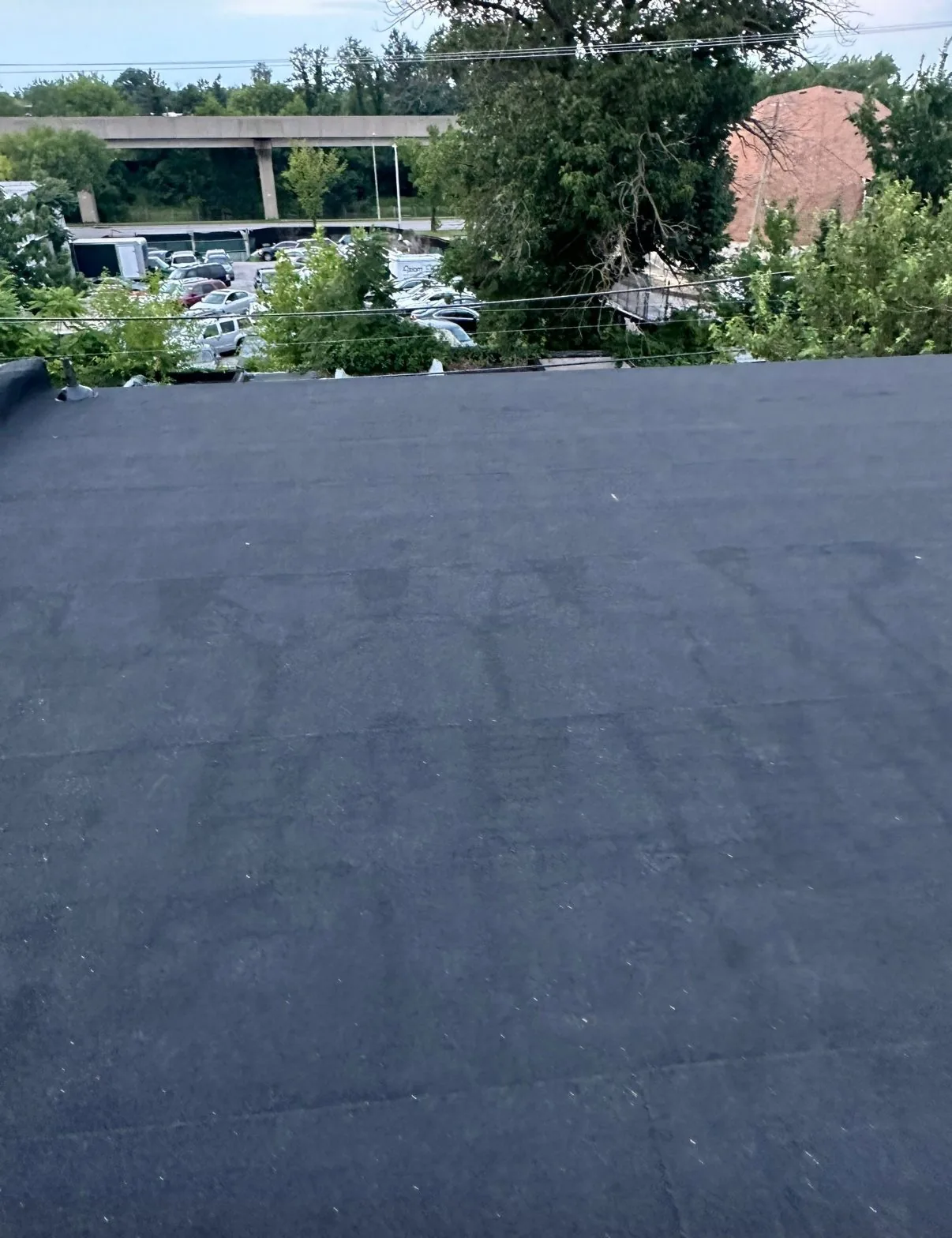
The camera moved between the two, so the roof edge and the tree line do not sit in the same place in each. They are shown side by side rather than as a drag-to-compare slider for exactly that reason.
Our Work
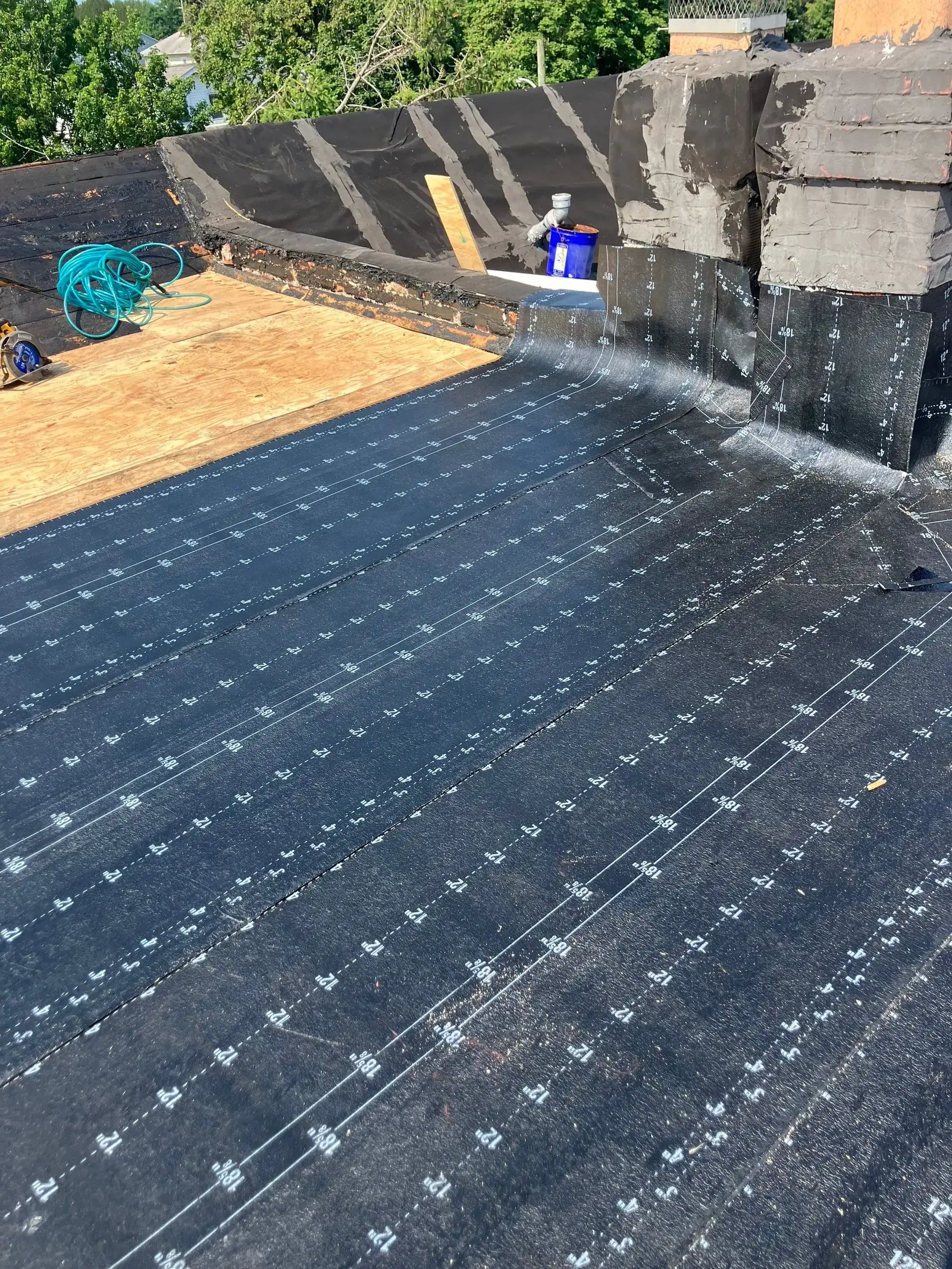
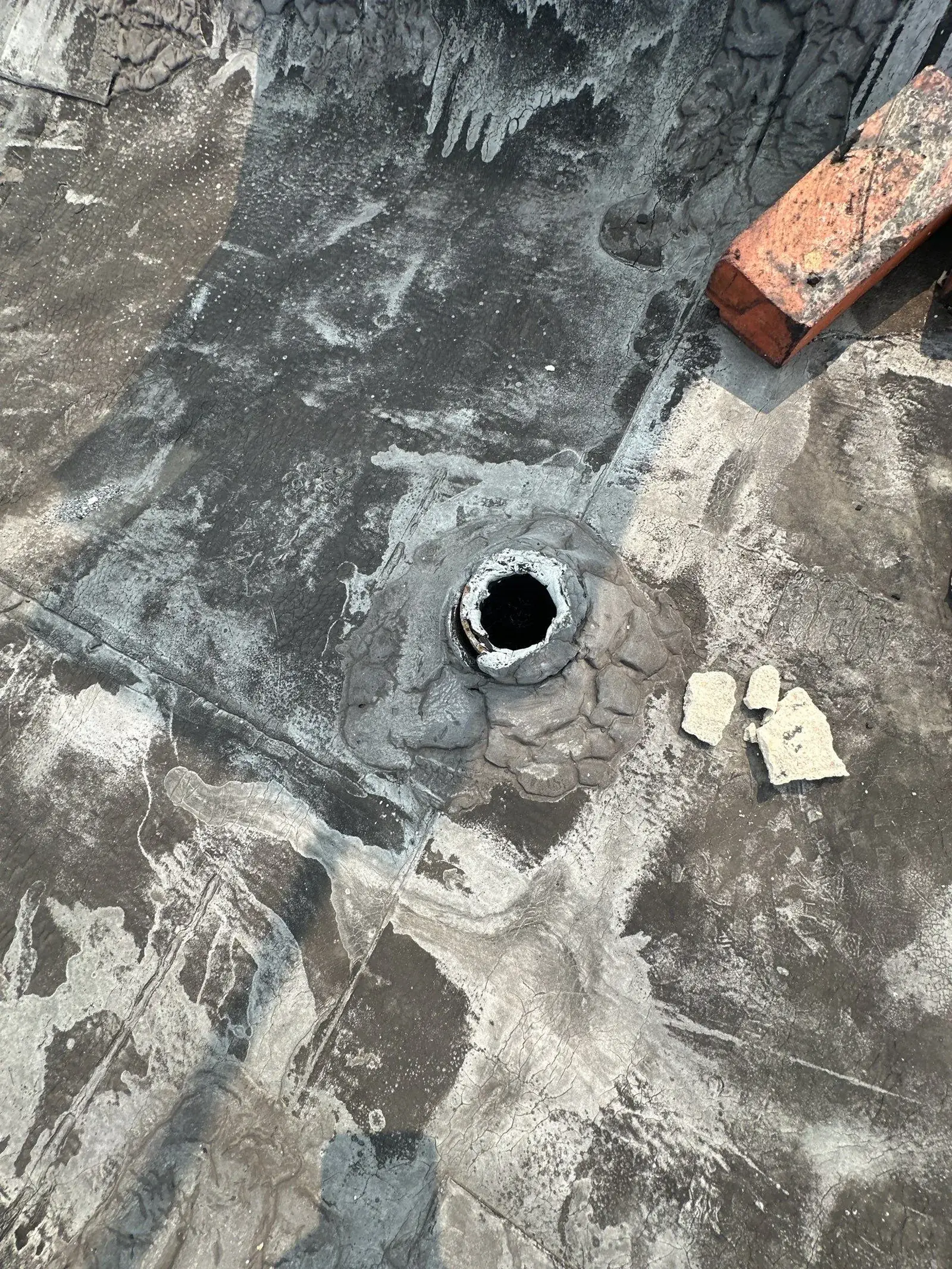
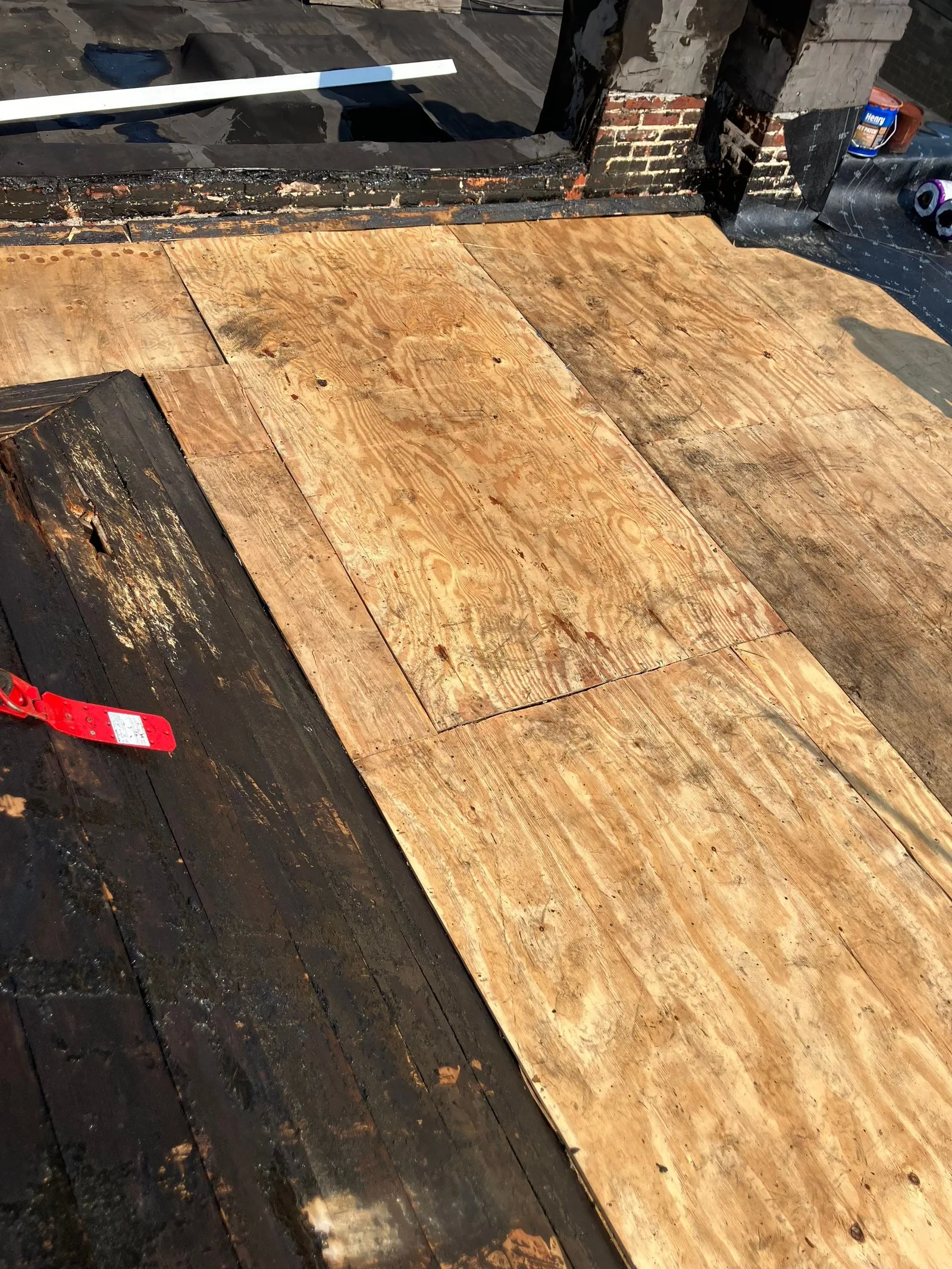
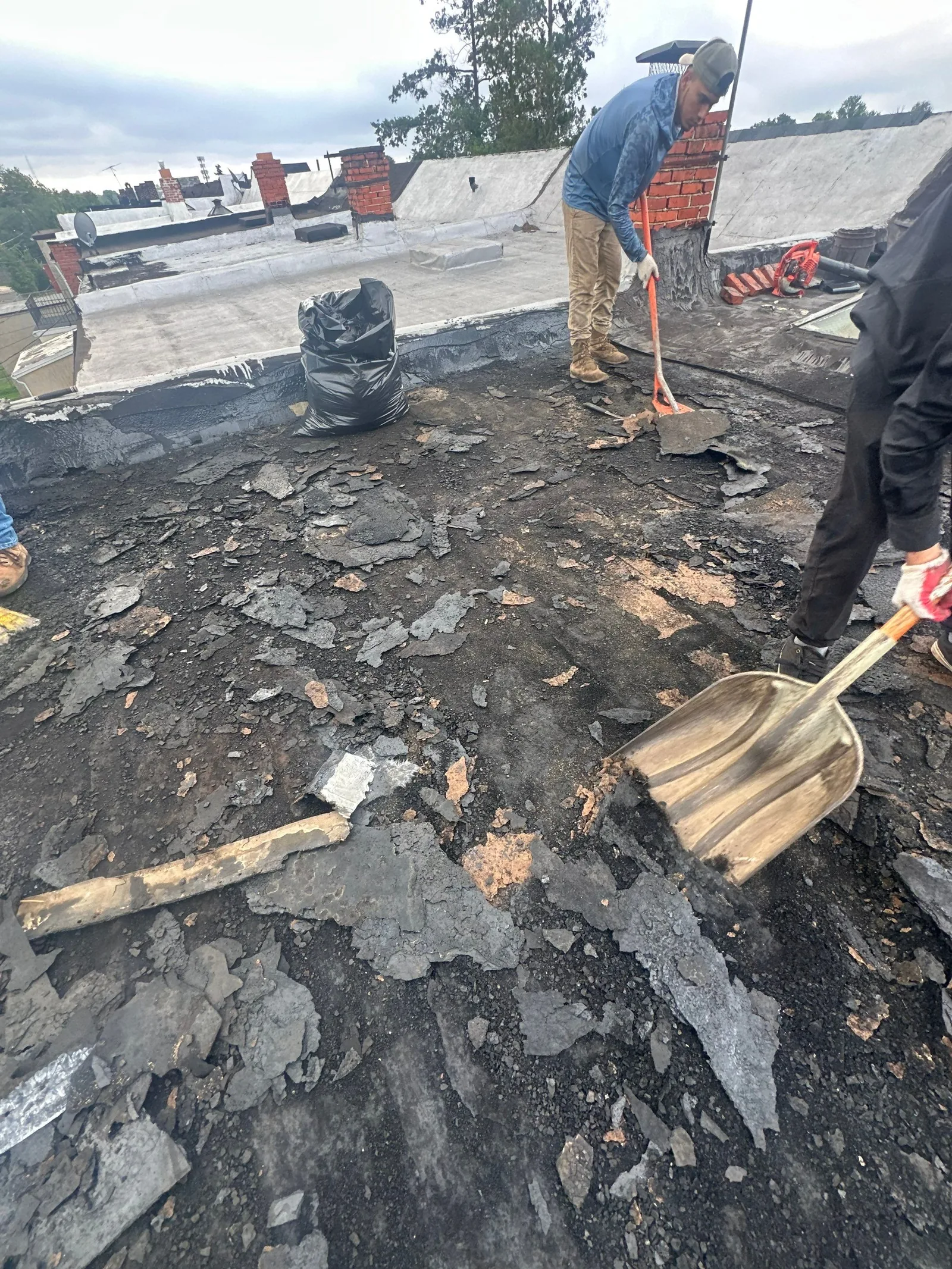
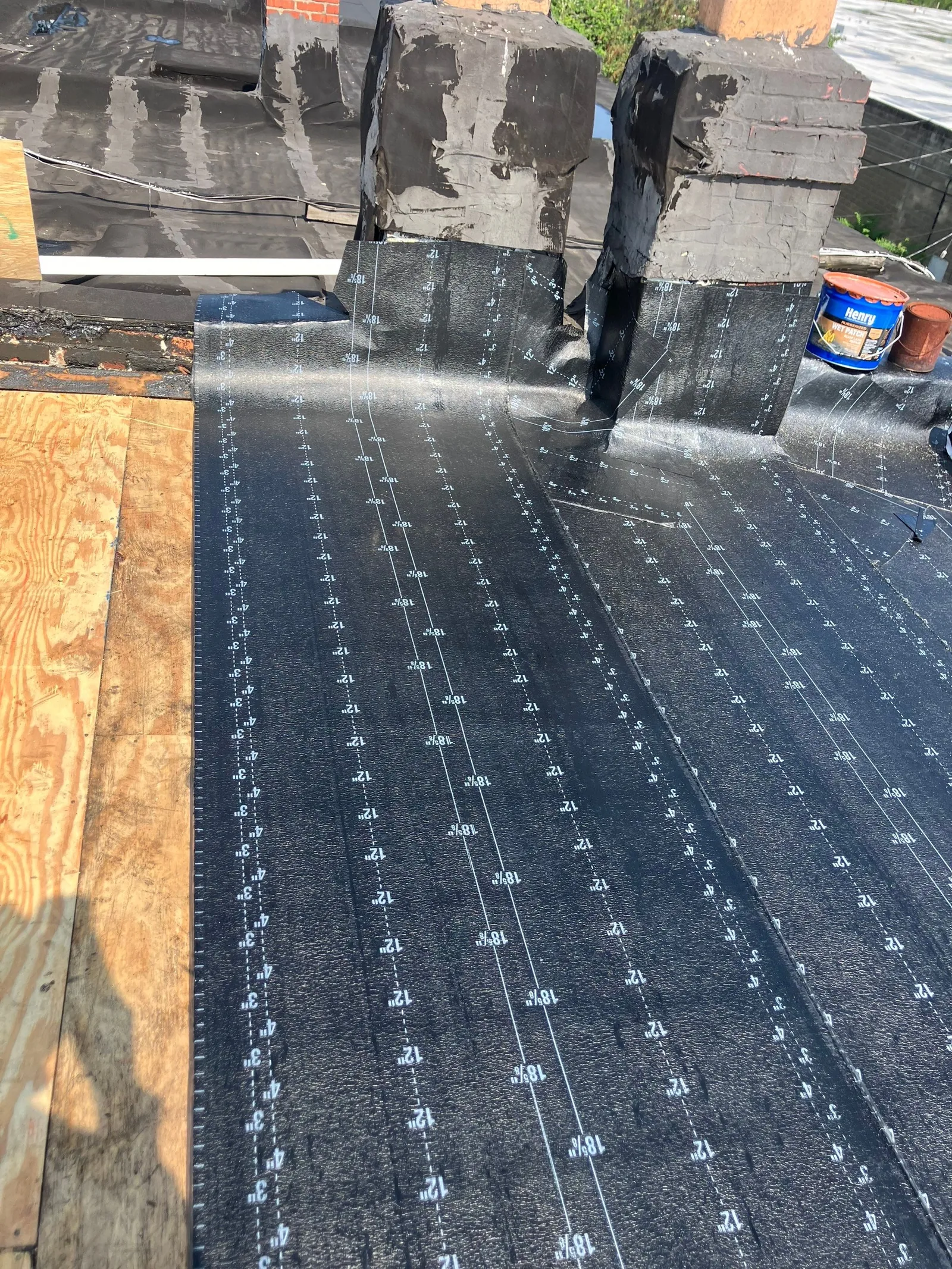
Recent commercial flat roofing jobs
Our Process
The Diakite Roofing & Restoration commercial flat roofing process
- 01
Roof survey
We get up top, map the drainage, check seams, curbs, and penetrations, and probe for wet substrate under the surface.
- 02
System recommendation and scope
We recommend the low slope system that suits your deck, your rooftop traffic, and your budget, then write the scope with the price and the schedule.
- 03
Staging and tenant notice
Access, dumpster placement, and work sequence agreed. Tenants get told what happens and when, before it happens.
- 04
Installation and walkthrough
New system installed and detailed at the perimeter, curbs, and drains, then walked with you before signoff.
Featured Google Reviews
What customers say
Lassana came out and looked at my roof after all the crazy storms going around and told me that my roof doesn’t have any damages yet whereas all the over roofers told me I need a new roof. My
Roof was only 10 year old
Great experience! The contractor did an excellent job installing my siding. They were professional, efficient, and paid close attention to detail. The finished work looks amazing, and I would definitely recommend them to anyone looking for quality siding work.
Great experience with this company. They were professional, punctual, and thorough during the roof inspection. They explained their findings clearly and provided honest recommendations without pressure. I appreciate their attention to detail and would highly recommend their services.
Great job on my roof in Glen Burnie. Handled all the insurance claim. Very good crew. No complaints the roof look great, great clean up as well. I highly recommend.
This whole experience was stress- free and professional. Lass explained everything clearly step by step and made sure I was comfortable with the whole process. The work was neat and punctual and all the materials were cleaned up quickly. The roof looks great! I highly recommend their services, you will be very pleased with the results.
Excellent service from start to finish! The team is professional, responsive, and delivers high-quality work. I highly recommend them!
This company was very professional and very prompt. They explained everything to me in detail, along with pictures and videos. They got the job done quickly and thoroughly, and at a reasonable price. I would highly recommend Diakite Roofing and Restoration, and I would use them again if I needed to in the future.
Good to Know
Commercial flat roofing: frequently asked questions
What kind of Central Maryland buildings do you take on?
Offices, retail, small industrial, churches, and multifamily across Howard County and the counties around it. If a building is bigger than we can staff properly, you will hear that from us rather than find out mid-job.
Which flat roof system will you use on my Howard County building?
That comes out of the survey. Deck type, insulation condition, foot traffic, and the equipment sitting on the roof all steer it. We walk you through the system we recommend and why before anything gets ordered.
Can you work around our business hours in Central Maryland?
We sequence the job to keep entrances and tenant spaces usable and plan the loud, disruptive stages with you in advance. Our crews work Monday through Saturday, 8am to 5pm.
Do you handle the insurance side of a Maryland commercial storm loss?
Wind and hail damage is photographed and scoped in Xactimate the same way as on a house. The carrier decides what it pays.
How do we get started on a Central Maryland commercial roof?
Call (667) 200-6656 or email office@diakiteroofingrestoration.com and we will set a time to get on the roof and put a proposal together.
Where We Work
Areas we serve
More about where we work
Service Radius
Where we take commercial flat roofing calls across Central Maryland
Columbia is the hub every commercial flat roofing crew rolls out of, and the run is the same one the trucks make every morning: US-29, MD-108, MD-100, I-95 and Washington Boulevard. Those corridors are what put Howard, Anne Arundel, Montgomery, Prince George's, Carroll, Frederick & Baltimore Counties inside a working day, on a 35-mile radius out of Columbia.
| Town | County | From Columbia |
|---|---|---|
| Clarksville | Howard County | About 4 miles |
| Ellicott City | Howard County | About 6 miles |
| Laurel | Prince George's County | About 7 miles |
| Silver Spring | Montgomery County | About 16 miles |
| Rockville | Montgomery County | About 17 miles |
| Annapolis | Anne Arundel County | About 25 miles |
Straight-line miles between town centers, measured from geocoded coordinates. They are not drive times and not route mileage. We are a service-area business, so commercial flat roofing happens at your property, not at a counter.
Owners in Baltimore County can start from the local page on roofing in Baltimore County.
For how these systems behave through a Maryland winter, read flat and low-slope roofs in Maryland.
Commercial flat roofing service area, centered on Columbia, MD, with Howard County at the middle of the seven counties.
Related services
Roof replacement
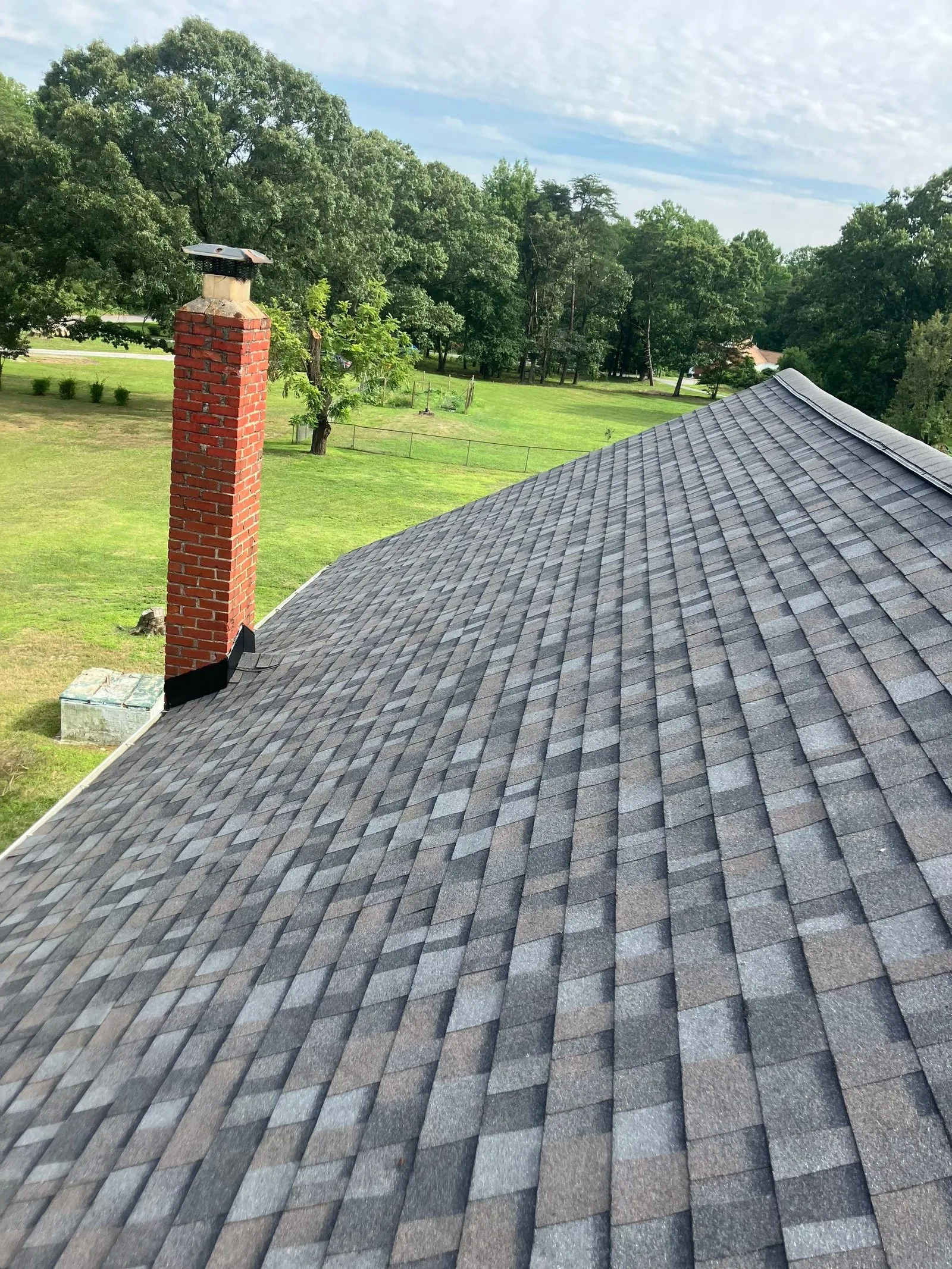
Full tear-off and a new Owens Corning shingle system, with most Columbia homes finished in a single day.
Roof replacement in Columbia, MD →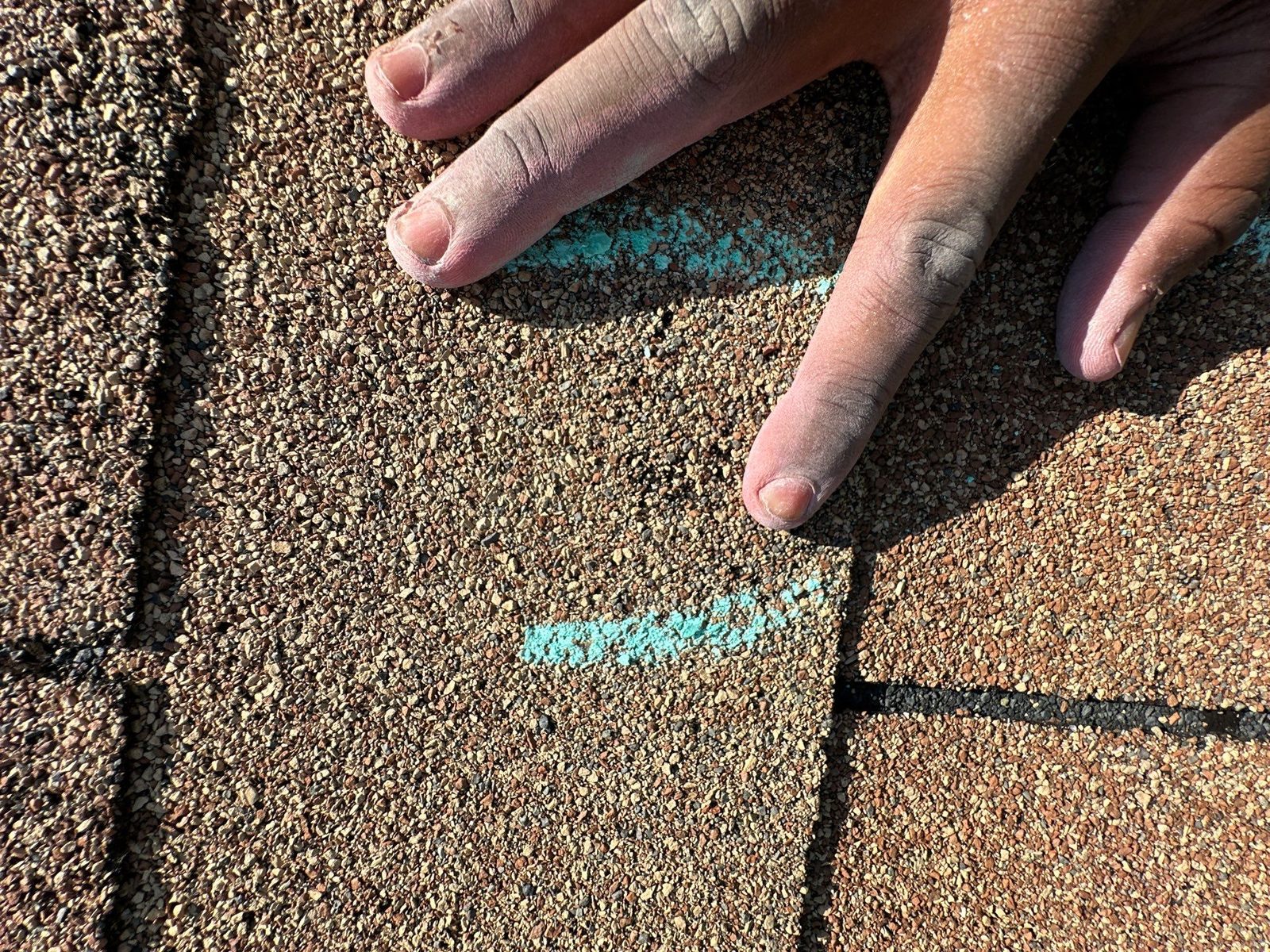
Storm & hail damage restoration
Roof hail damage chalked and photographed slope by slope, then scoped in Xactimate for your insurance claim.
Storm & hail damage restoration in Columbia, MD →
Emergency roof tarping
Storm-opened roofs tarped and secured to stop water spreading inside, documented for your claim, then replaced.
Emergency roof tarping in Columbia, MD →