
Blog
How Long Does a Roof Replacement Take?
A typical asphalt shingle roof comes off and goes back on in a single day. Tear-off in the morning, a finished roof by evening, the yard swept before the crew pulls out.
What pushes that to two or three days is size, weather, or what turns up once the old shingles are gone. This is how a Central Maryland roof replacement really runs, and what decides where yours lands.
Keep reading: the signs a Maryland roof is done, and how hail damage gets documented and scoped.
Most roofs are a one-day job
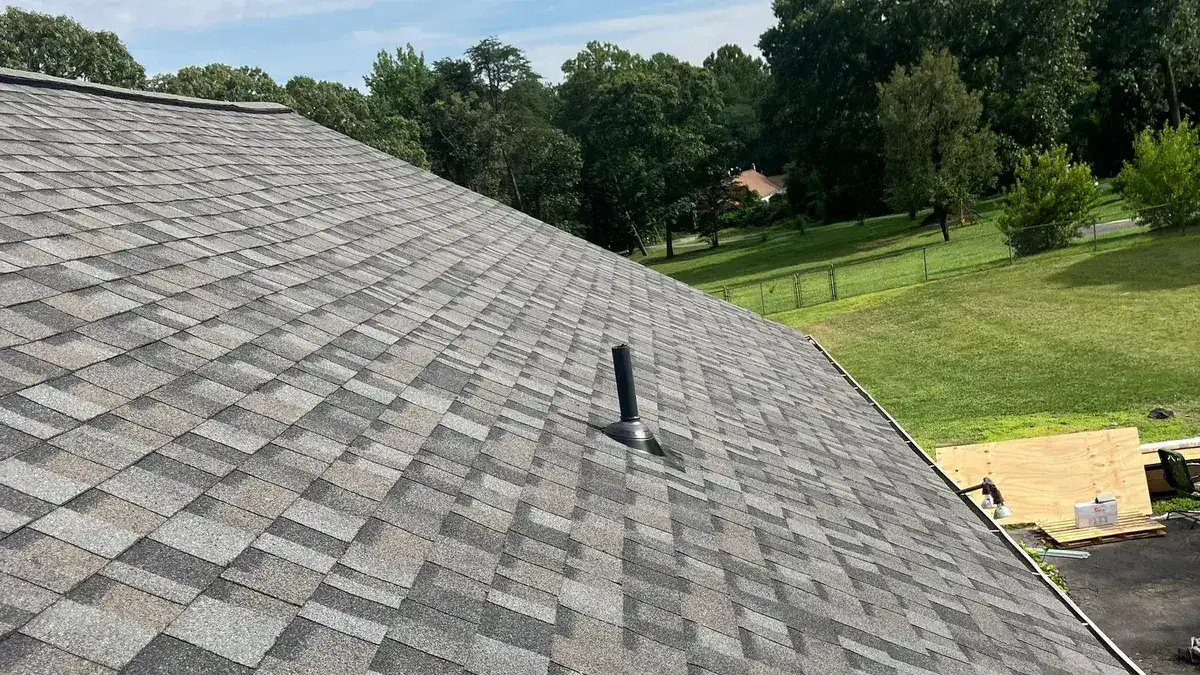
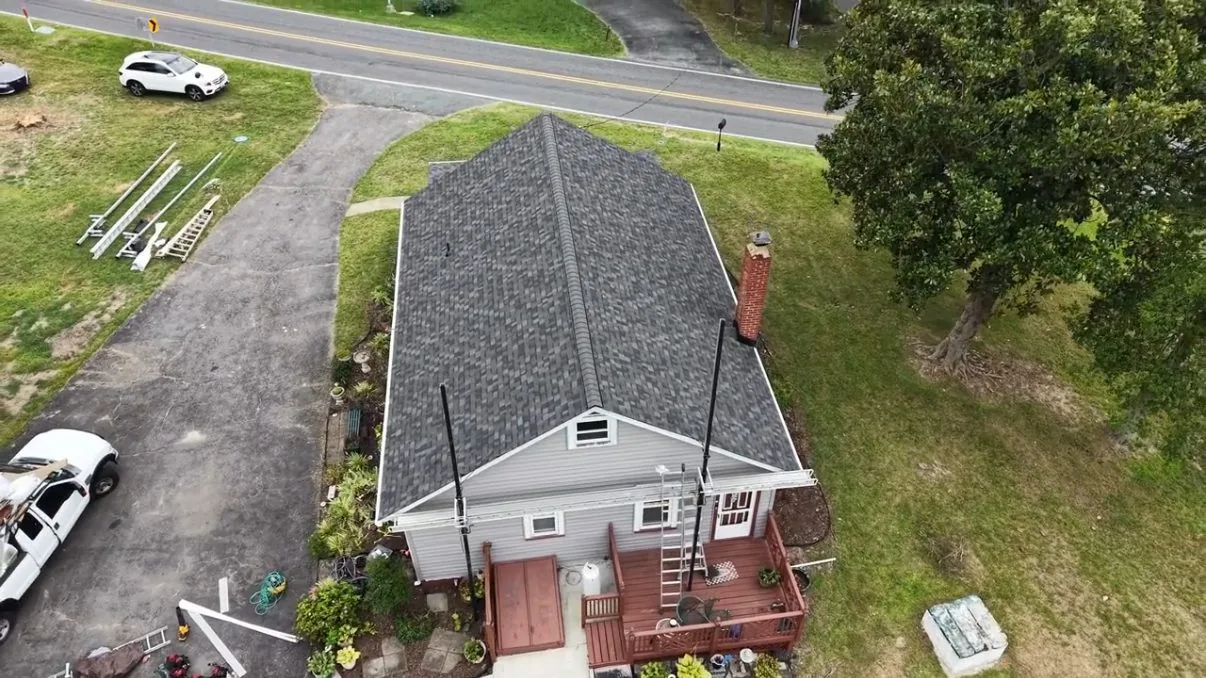
For a standard single-family home with architectural asphalt shingles, a full replacement is usually done in one day. The crew arrives in the morning, strips the old roof, dries the deck in, lays the new shingles and flashing, then cleans up before dark. That finished in one day pace is the norm for most homes in Howard County, not a corner being cut.
One day works because a replacement is a sequence a full crew runs together, not a string of separate visits. While one section is coming off, another is being dried in, and the ridge caps go on last. A bigger or more cut-up roof just has more of every stage, and that is where extra time comes from.
What the day looks like, start to finish
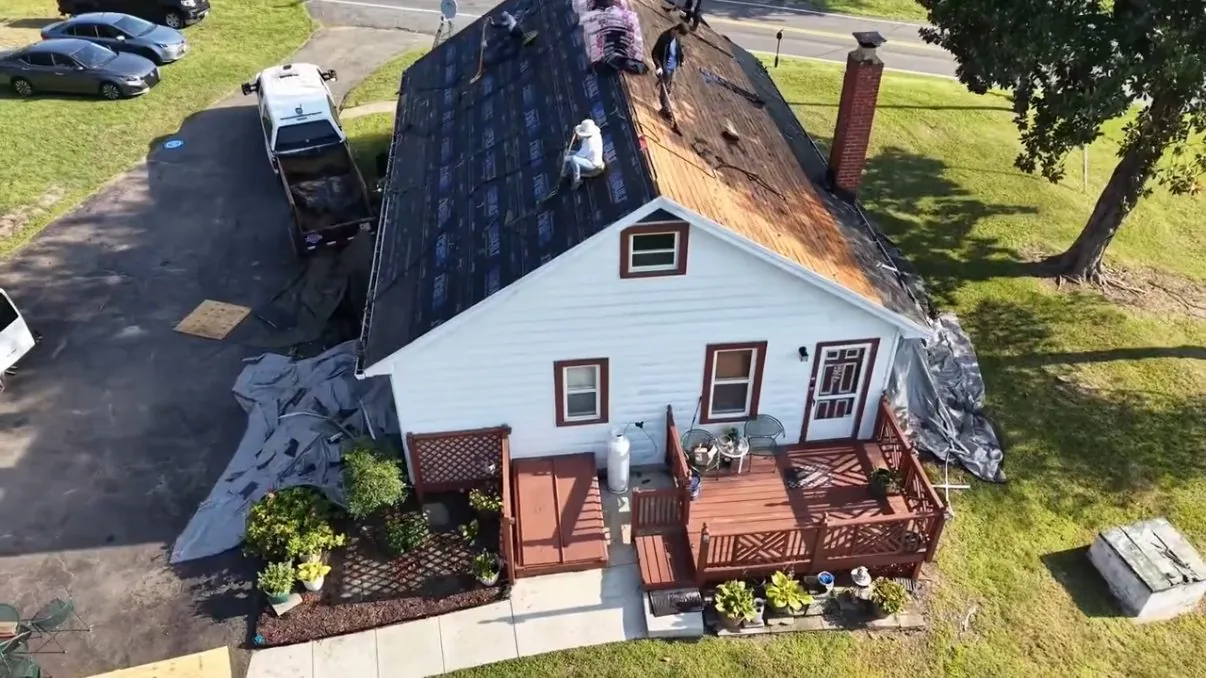
Knowing the order of the day makes the timeline make sense. Every replacement runs the same stages, whether it wraps in a day or spills into a second.
Protect the house and yard
Before a single shingle comes off, the crew covers the landscaping, decks and AC units and lays out ground protection to catch debris. The driveway is kept clear for the dump trailer and the new material. This part is quick, but it is what keeps a tear-off from leaving a mess behind.
Tear off the old roof
The old shingles and underlayment come off down to the bare wood deck. A roof carrying more than one layer of old shingles takes longer to strip, since there is simply more to pull free and haul away.
Inspect the bare decking
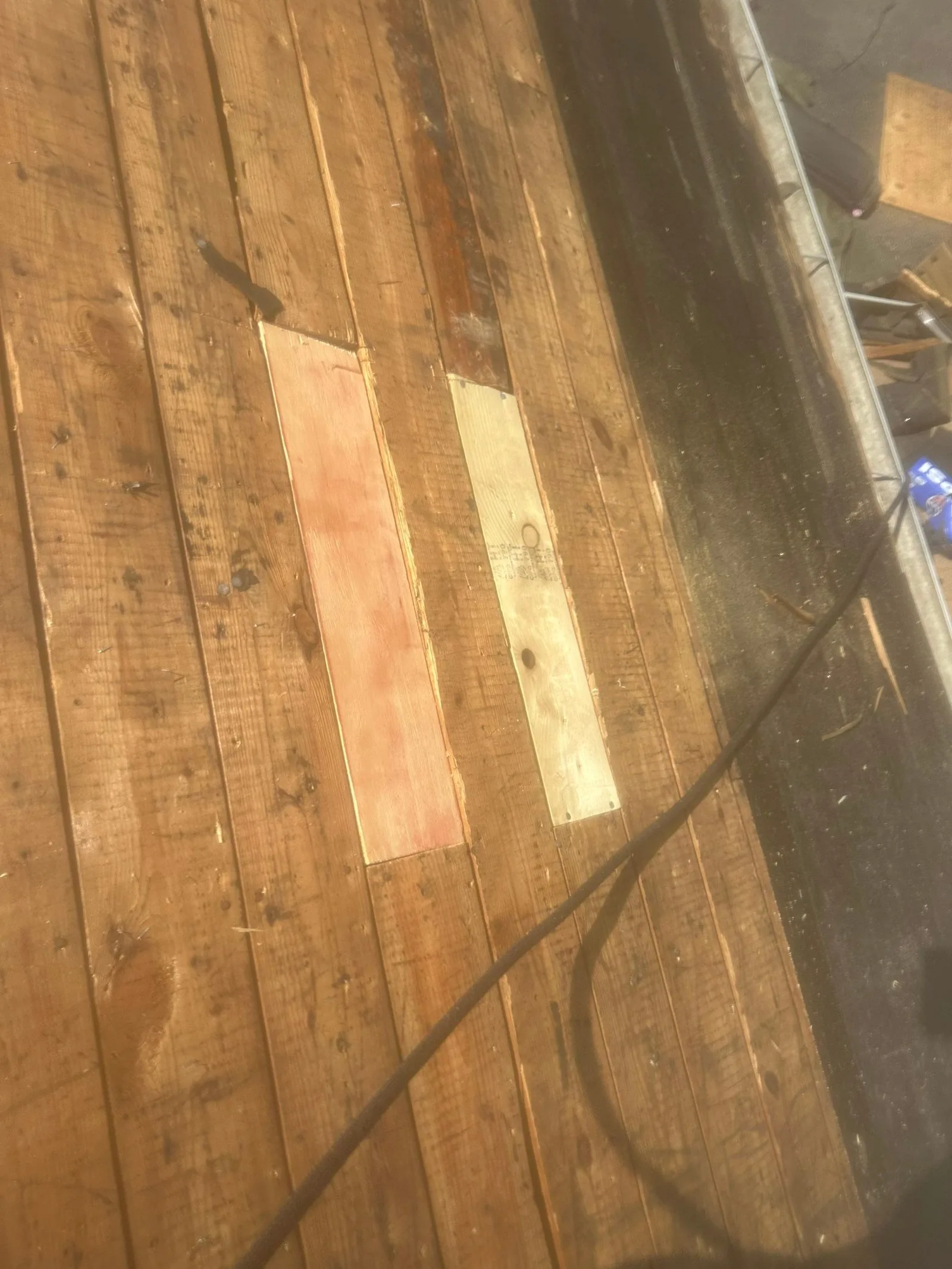
With the deck exposed, the crew can finally see what the old roof was hiding. Sound decking gets dried in as it is.
Boards that are rotted, soft or delaminated get replaced before anything new goes down, because shingles are only as sound as the wood beneath them. This is the stage that most often adds unplanned time, and it is not something anyone can fully judge from the ground.
Dry in the deck
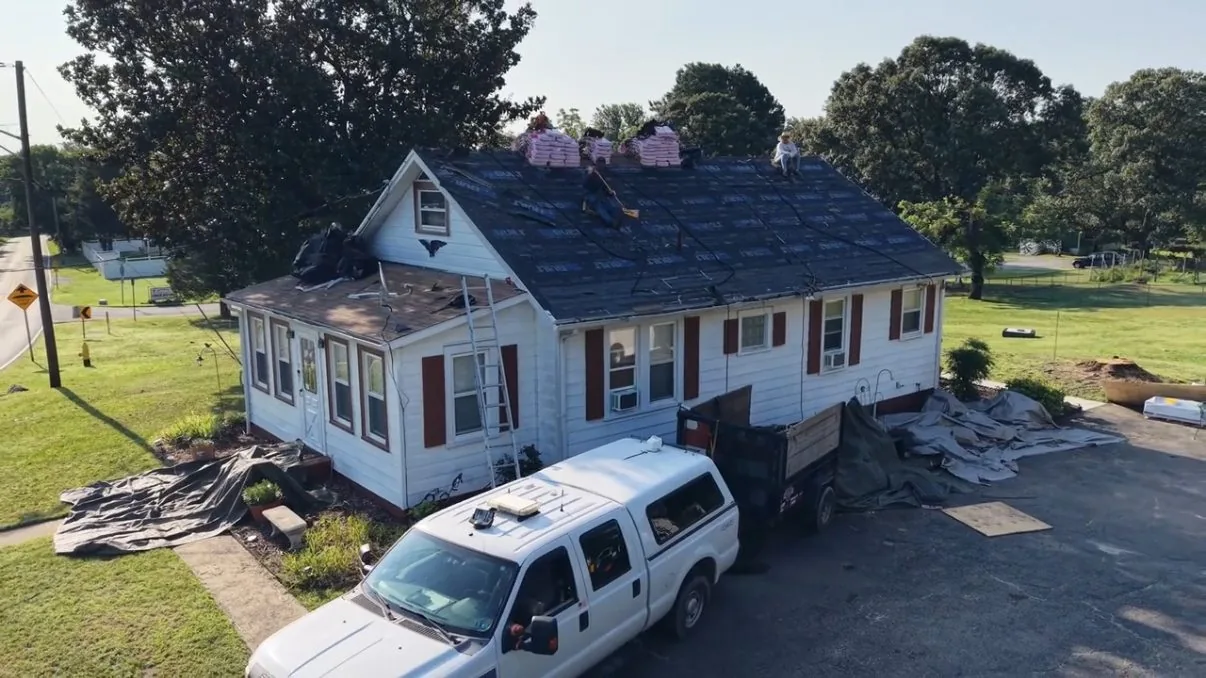
Next the deck is sealed against water: ice-and-water shield at the eaves and in the valleys where runoff piles up, then synthetic underlayment across the field. Once a section is dried in, it can handle a passing shower even before the shingles reach it.
Install shingles and flashing
The new shingles go on from the eaves up, with fresh flashing worked in at the walls, chimneys and valleys. A roof with lots of valleys, dormers and penetrations means more cutting and hand-flashing here, which is a big part of why a complex roof runs longer than a plain one.
Clean up and walk the job
At the end the crew hauls off the old roof, runs a magnet over the lawn and beds to lift stray nails, then walks the property for a final look.
What makes a roof take longer
Most homes land on one day. A handful of things push a roof toward two or three. Almost none of them are surprises the morning of the job: a proper inspection flags most up front, and the rest show themselves the moment the old roof is off.
| What the crew finds | What it does to the timeline |
|---|---|
| Simple roof, one story, few penetrations | Usually a one-day job |
| Steep pitch or multiple stories | Slower, more careful footing; can add time |
| Lots of valleys, dormers and chimneys | More cutting and flashing; adds time |
| More than one layer of old shingles | Longer tear-off |
| Rotted or soft decking found at tear-off | Board replacement adds time |
| Rain in the forecast | Can push the start or pause the work |
| Large overall roof area | More of every stage; can run two to three days |
General guidance, not a promise on your roof. The real timeline comes from a free on-site look, where the size, pitch, layers and decking all get checked before a date is set.
How we pin down your timeline
The only way to give a real timeline is to look at the actual roof. A free on-site inspection measures the size, counts the old layers, checks the pitch and the number of valleys and penetrations, and looks for signs of decking or moisture trouble underneath. From that, the crew can tell you whether yours is a one-day job or one that needs a second day, and schedule around the weather so the roof is never left open overnight.
We work Monday through Saturday, and the free inspection is where your date and scope get set. Replacing siding is a separate, usually longer project; if that is also on your list, the siding replacement page covers how that one runs.
Frequently asked questions
How long does a roof replacement take?
Most single-family asphalt shingle roofs are replaced in one day, start to finish: tear-off, dry-in, new shingles and cleanup. A larger or more complex home, or a stretch of bad weather, can run two to three days.
Do I need to be home during the roof replacement?
No. The work happens outside, on the roof and around the house, so you do not need to be home for it. We only ask for clear access to the driveway and the roofline so the crew can protect the yard and stage materials.
What happens if it rains?
Shingle work needs a dry deck, so rain pauses it. We never leave a roof open to the weather: an exposed deck is dried in with underlayment before the crew stops, and the install picks back up once the surface is dry. A wet forecast can also push the start date.
Does a bigger or steeper roof take longer?
Yes. More square footage, a steep pitch, extra stories, and lots of valleys, dormers and chimneys all mean more cutting, flashing and careful footing, and that adds time. A large or complex home can run two to three days instead of one.
How long does the tear-off part take?
On a typical home the tear-off is one stage of the same day, not a separate visit. Extra layers of old shingles to pull off, or decking that has to be replaced once it is exposed, are what stretch it.
Wondering how long your roof will take?
Free no-obligation inspections · Central Maryland · Mon-Sat 8:00 AM - 5:00 PM