
Roofing in Catonsville, MD
5.0 on GoogleRoofing Contractor in Catonsville, MD
Diakite Roofing & Restoration is a roofing contractor in Catonsville, MD, on the Baltimore County side of the Patapsco. A Victorian summer house on Frederick Road and a Westview Park house from the 1955 to 1967 build-out are different Catonsville jobs, and both start with a free inspection. The Google rating is 5.0.
- Free Roof Inspections
- 5.0 Stars on Google
Free & No Obligation
Book your free Catonsville roof inspection
The Short Answer for Catonsville
Diakite Roofing & Restoration replaces roofs and siding across Catonsville, from the large Victorian summer homes along Frederick Road to postwar neighborhoods like Westview Park and Woodbridge Valley. Steep Victorian rooflines and 1950s tract roofs are different jobs. We inspect free either way, install Owens Corning shingles, and finish most replacements inside one day.
- Do you work on the old Victorian homes along Frederick Road in Catonsville? Yes.
- Catonsville houses seem to be from every possible decade. Does that matter for a quote? It matters a lot.
- Is Catonsville more exposed to storms than the towns west of it? Somewhat, and it is the elevation profile that does it.
- Can you do siding in Catonsville and handle the insurance side? Both.
What We Do in Catonsville
Roofing, siding and storm restoration in Catonsville
More about Diakite Roofing & Restoration in Catonsville
In Plain Terms
- Diakite Roofing & Restoration is a roofing contractor based in Columbia, MD.
- Diakite Roofing & Restoration replaces roofs and siding and takes storm restoration work in Catonsville, MD, where the Baltimore County Department of Permits, Approvals and Inspections issues the re-roof permit.
- Diakite Roofing & Restoration opens every job with a free no-obligation roof inspection.
- Diakite Roofing & Restoration installs Owens Corning architectural shingles on the roofs it replaces.
Local Expertise
Roofing and restoration for Catonsville homes
Catonsville has the widest spread of roof ages of any town we serve. Wealthy Baltimore merchants built large Victorian and colonial summer homes along Frederick Road to escape the city's summer heat, the 1890s streetcar lines filled in whole housing developments around them, and construction continued through the 1970s. So one street can hold a 130-year-old slate-era roofline and a 1960s tract gable side by side.
One of America's first commuter suburbs, with the roof ages to match
Catonsville grew along one road, the same Frederick Road that carries us across the Patapsco to Ellicott City. The Ellicott family built it as the Frederick Turnpike in 1787 to move flour from their mill down to Baltimore harbor.
Charles Carroll owned the land around it and put his son-in-law Richard Caton in charge of developing it. Caton lived in Castle Thunder, built on the turnpike that same year, and the community took his name, spelled Catonville until the 1830s.
The steep old roofs off Frederick Road start with the large Victorian and colonial summer homes that wealthy Baltimore merchants built to get away from the city's heat. After that the town was tied to the city one line at a time, with horsecars to Baltimore from 1862 and the Catonsville Short Line from 1884, running eight round trips a day.
Then the electric streetcars of the 1890s brought a wave of new housing developments, and that made this one of the first commuter suburbs in the United States. Homes of all sizes then went up rapidly straight through the 1970s.
More about roofing in Catonsville
That leaves four distinct roof generations. The Victorians off Frederick Road have steep, cut-up roofs with turrets, dormers, porch roofs, and masonry connections, where the flashing and valley work is the whole job. Westview Park is roughly 1,800 houses built in stages from 1955 to 1967, so its roofs share an era and original decking and are coming due together.
Newer roofs sit on streets like Ashton Valley, which went in during the 1990s, and Arden Parke, built in the late 2010s. The Winters Lane Historic District carries its own older stock on the National Register, and that spread is one more reason we inspect before we price.
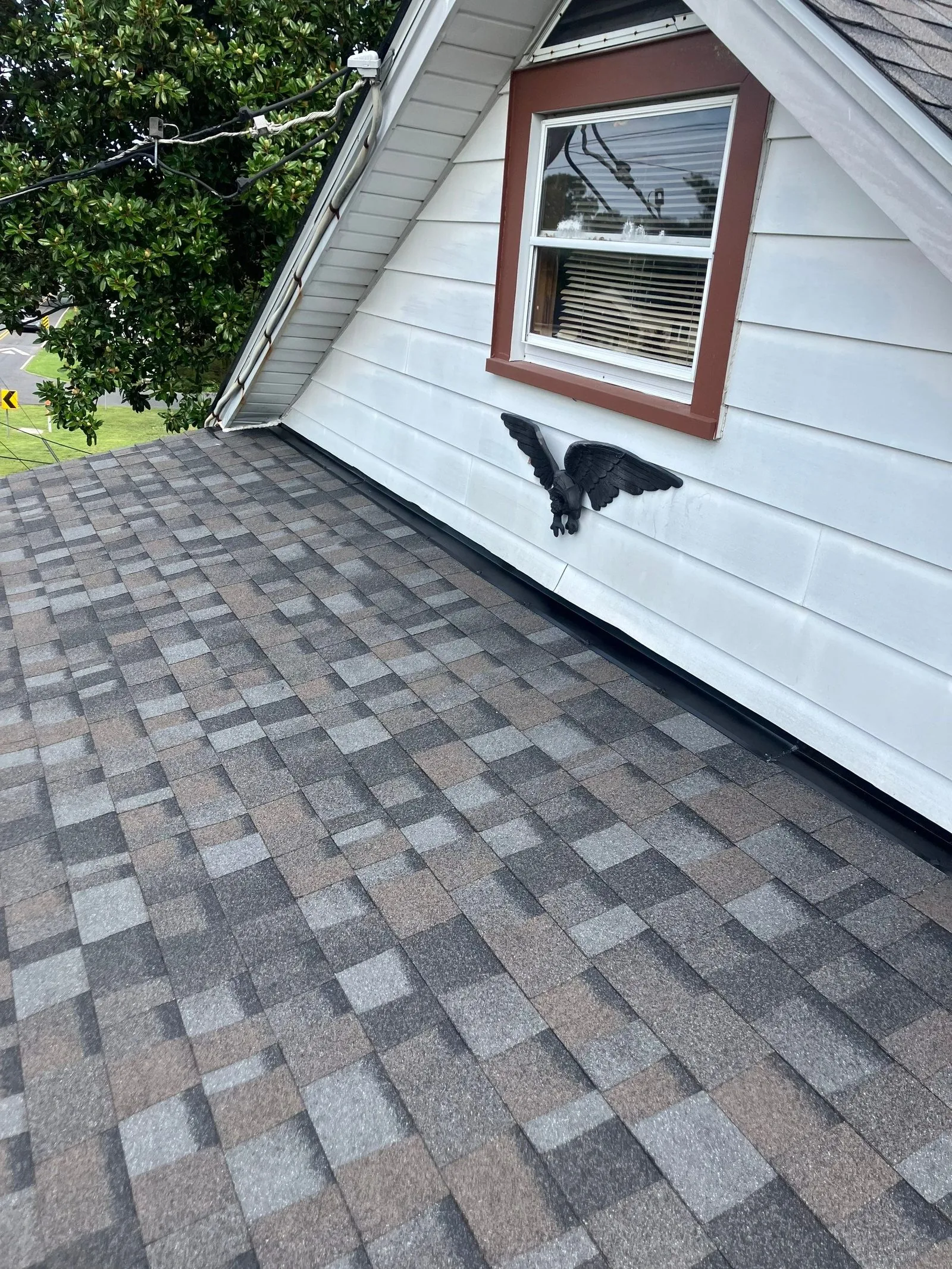
Great job on my roof in Glen Burnie. Handled all the insurance claim. Very good crew. No complaints the roof look great, great clean up as well. I highly recommend.
Catonsville above the fall line, under old trees
Catonsville sits above the Fall Line in the Piedmont, on broad rolling hills cut by streams, and the roofs up here look out over the coastal plain and the bay to the east, so weather coming off the Bay has a clear approach. The Patapsco River forms the western and southern boundary, with Patapsco Valley State Park along it.
Rolling Road, one of the main north-south routes and the one we take south to Elkridge, began as a Native American trail out of Elkridge Landing. It got its name from the hogsheads of tobacco rolled up it.
On the older Catonsville streets the roofs sit on hillside lots under mature trees, so limbs come down in summer thunderstorms, north slopes stay damp enough to grow moss and hold algae streaking, and valleys pack with leaf litter every autumn until water runs under the shingle courses.
Snow averages about 19 inches a winter in the 1991-2020 normals for NOAA's BWI station. On a shaded north slope under Catonsville's old trees it melts last, so the moss and algae already growing there hold the damp against the shingles longer.
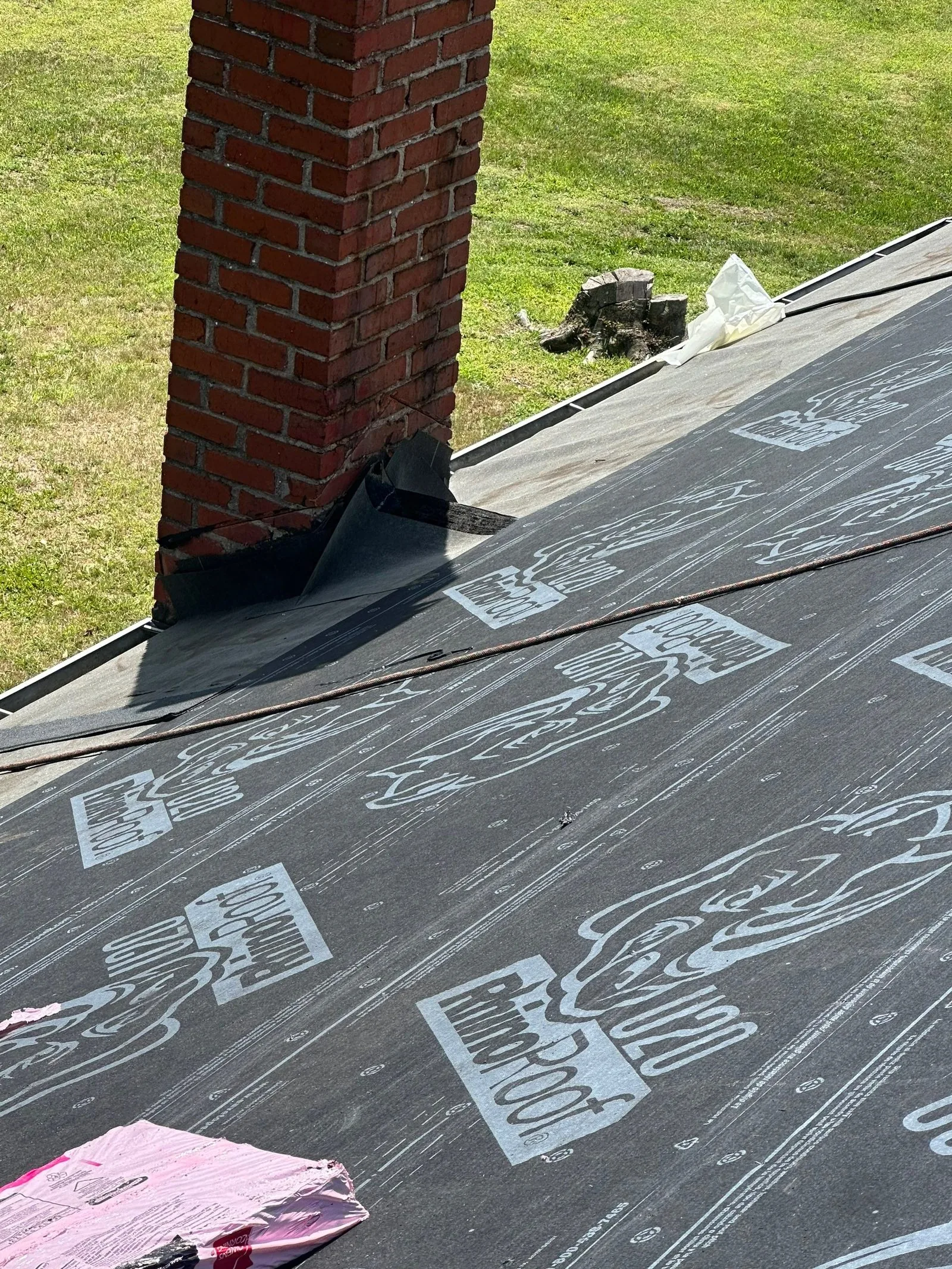
Hail claims and wall work on Baltimore County's West edge
Storm season runs April into June here as it does across the region, and most of the damage is not visible from the ground: hail fractures the mat under a shingle's surface and lifts granules, and wind creases tabs that then lay flat again with the seal broken. The impact count comes from chalked test squares on every slope, and the loss gets written in Xactimate.
We will meet the adjuster at the house and walk it with them. We will not promise you an approval, because that is the carrier's call and not ours.
Siding here splits the same way the roofs do. On the older houses the trim profiles and proportions are part of what the house is, so material choice gets discussed rather than assumed.
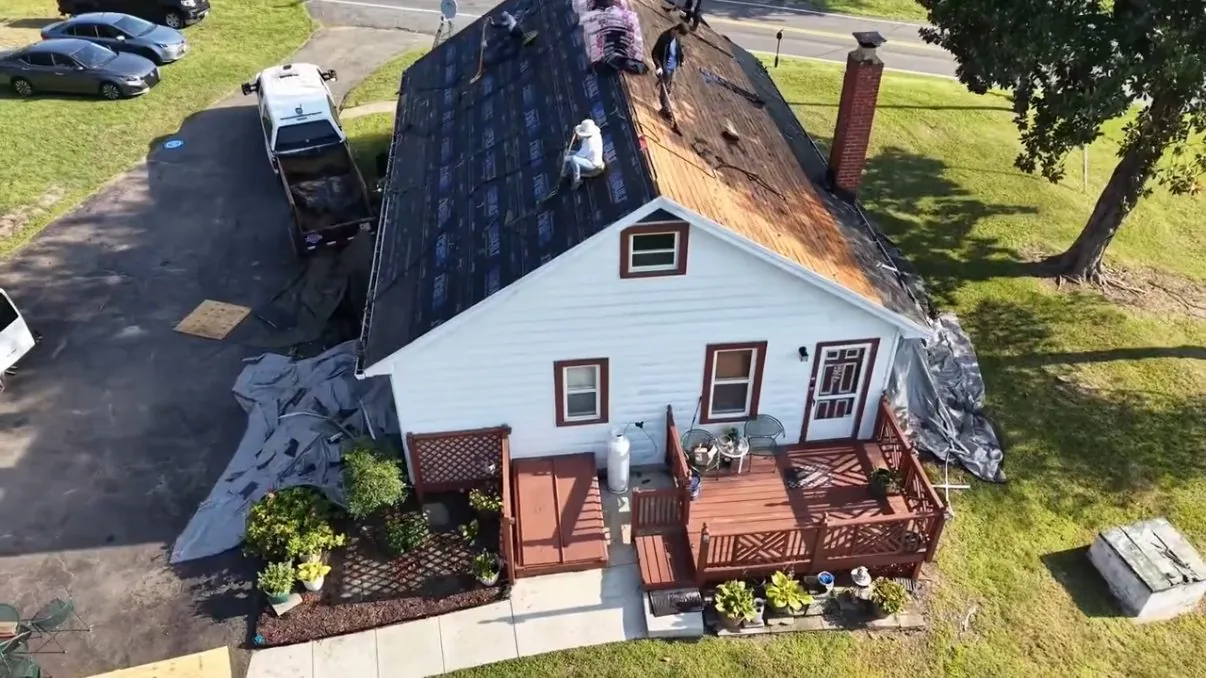
On the 1955 to 1967 stock and the newer developments, the question is usually insulated vinyl or fiber cement, and the answer depends on the wall and the exposure. Either way the panels go on over a properly lapped weather barrier with the flashing done at every opening, and we check the roofline while we are up there.
Free no-obligation quote, working Monday through Saturday 8am to 5pm at (667) 200-6656.
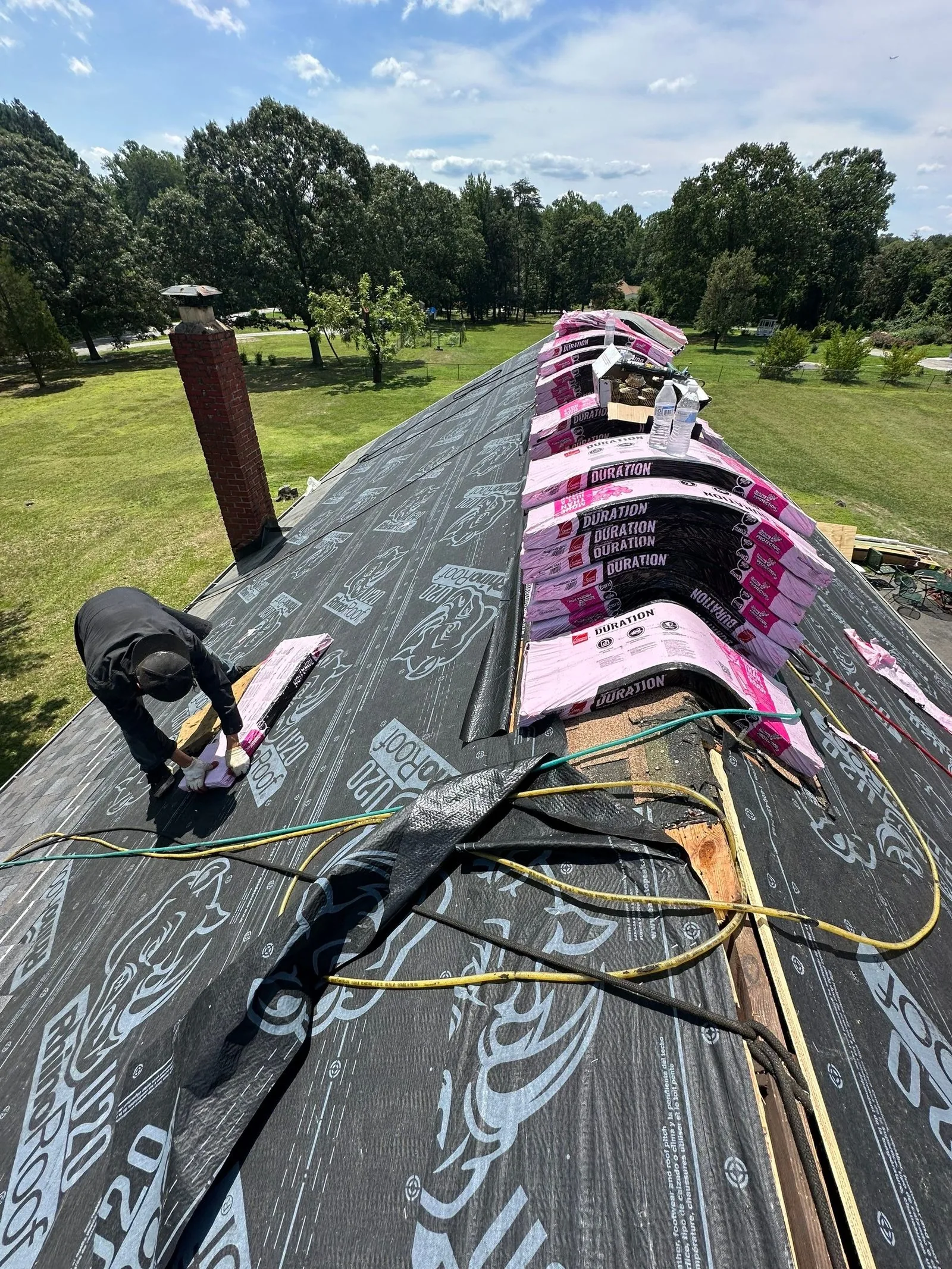
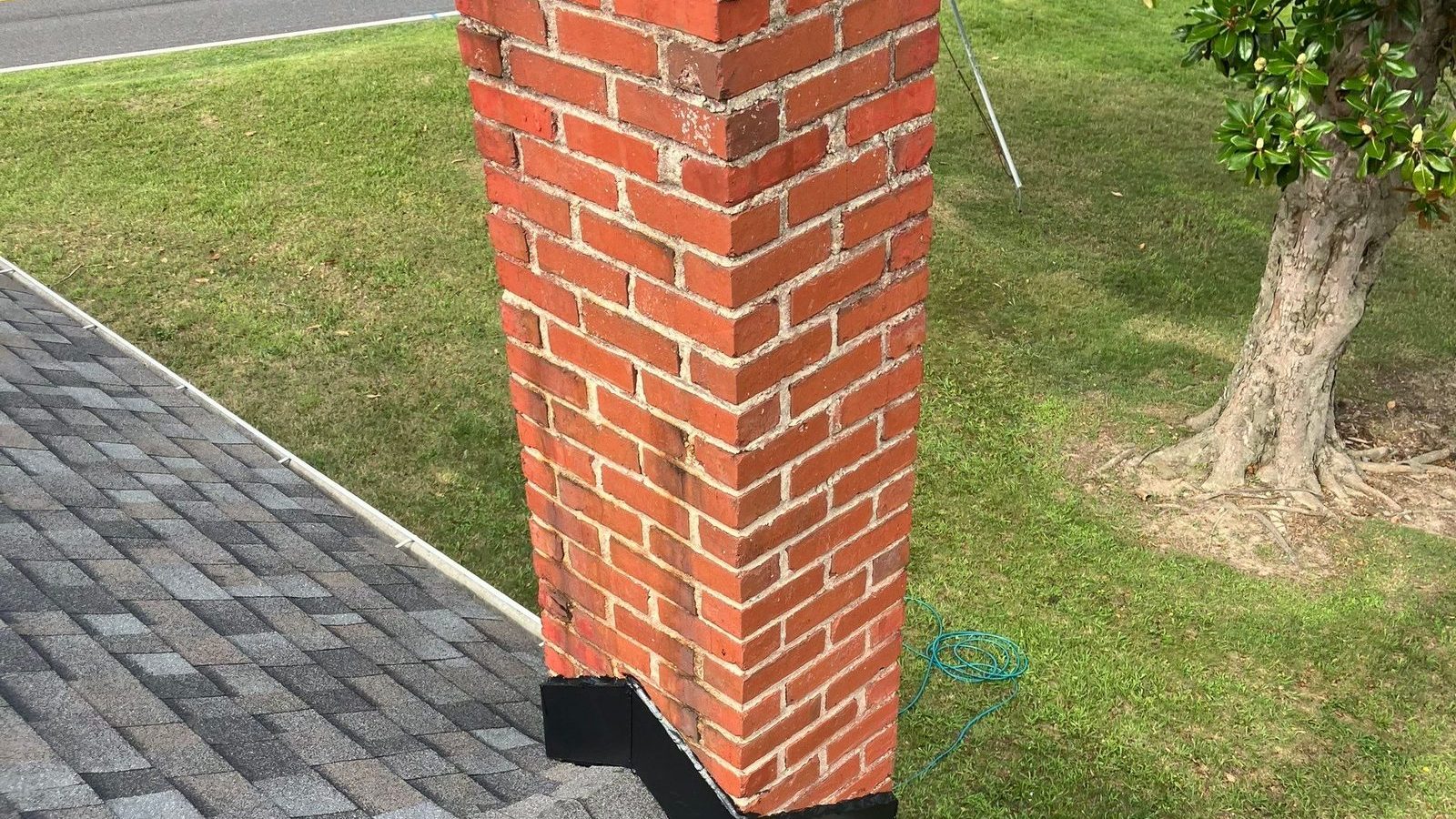
Roofing Catonsville homeowners call
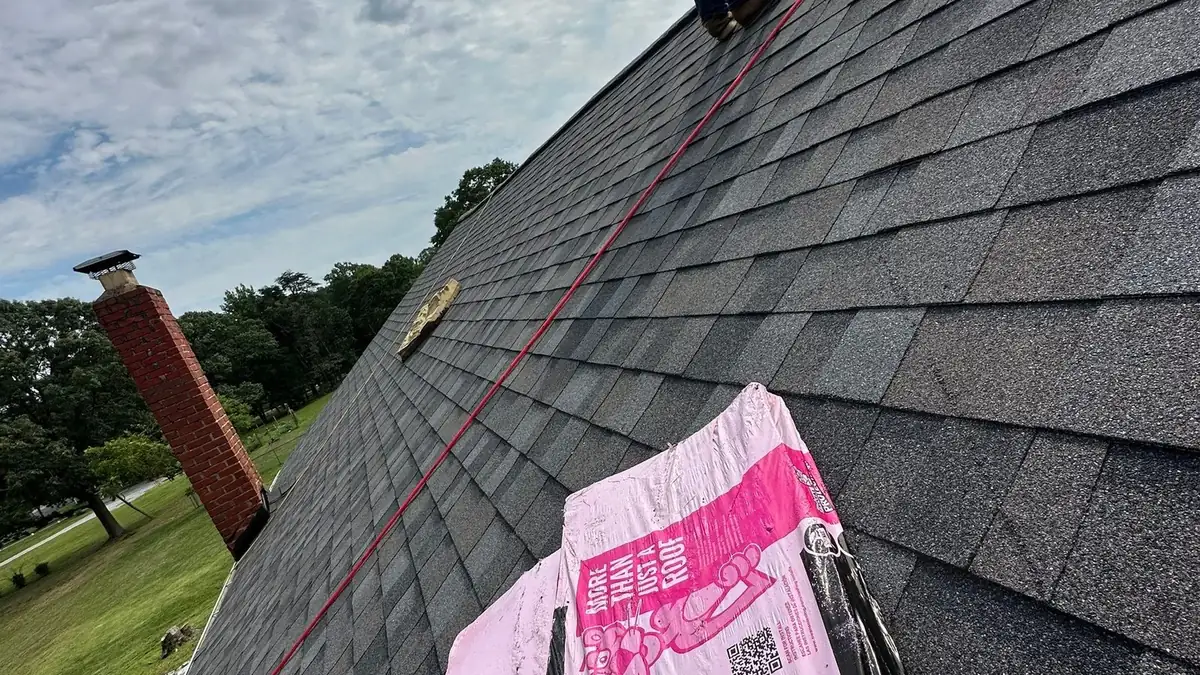
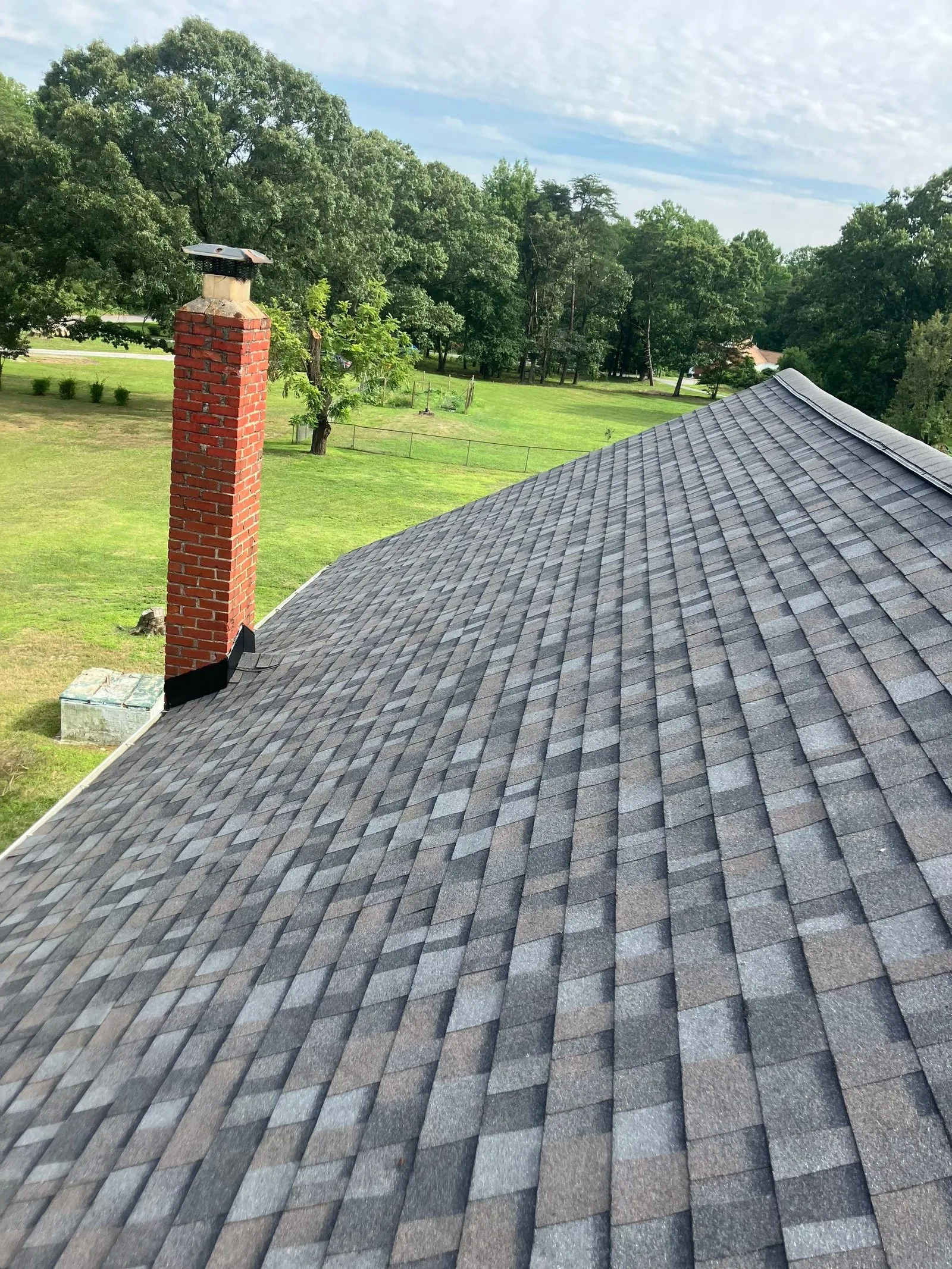
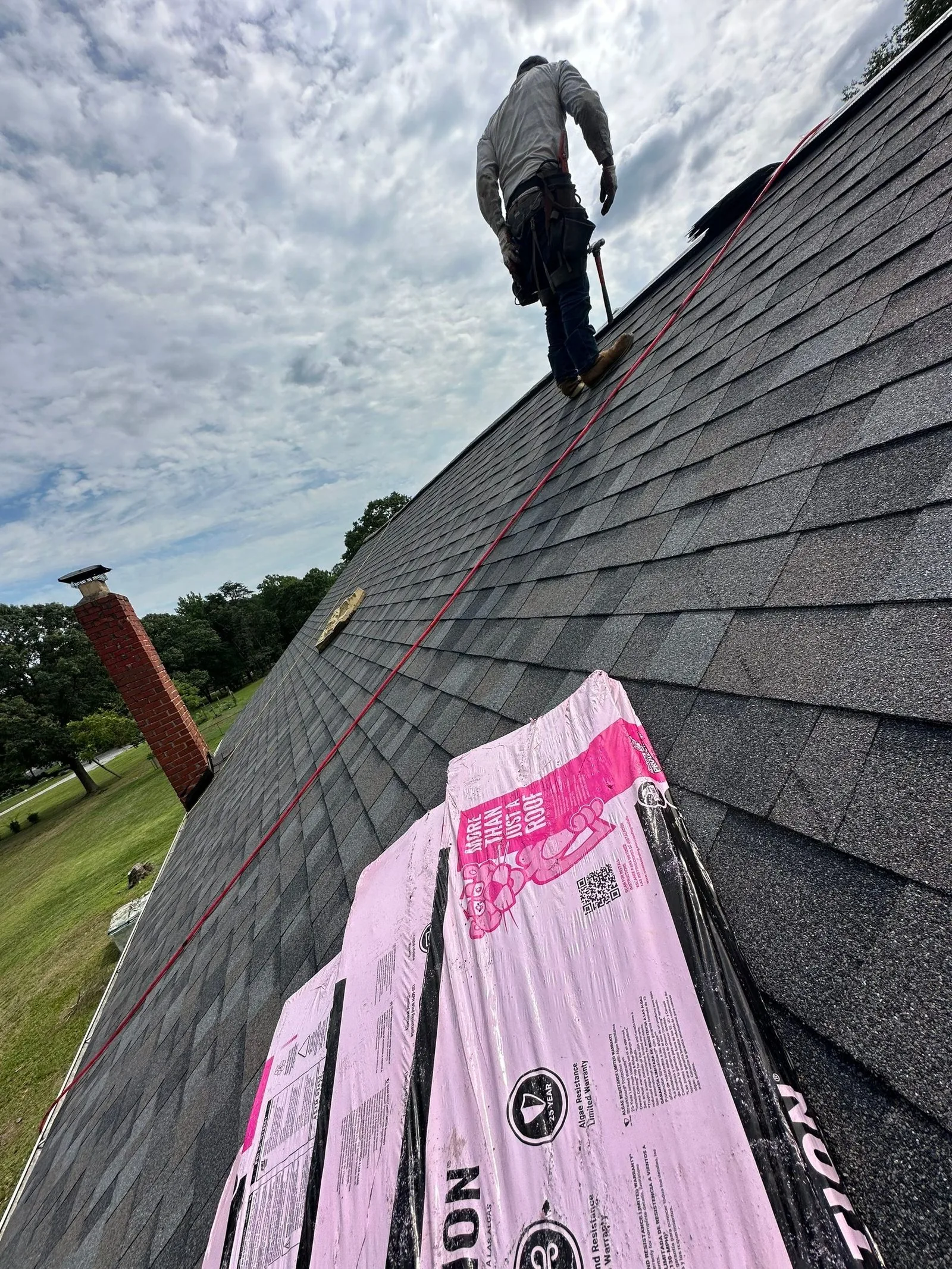
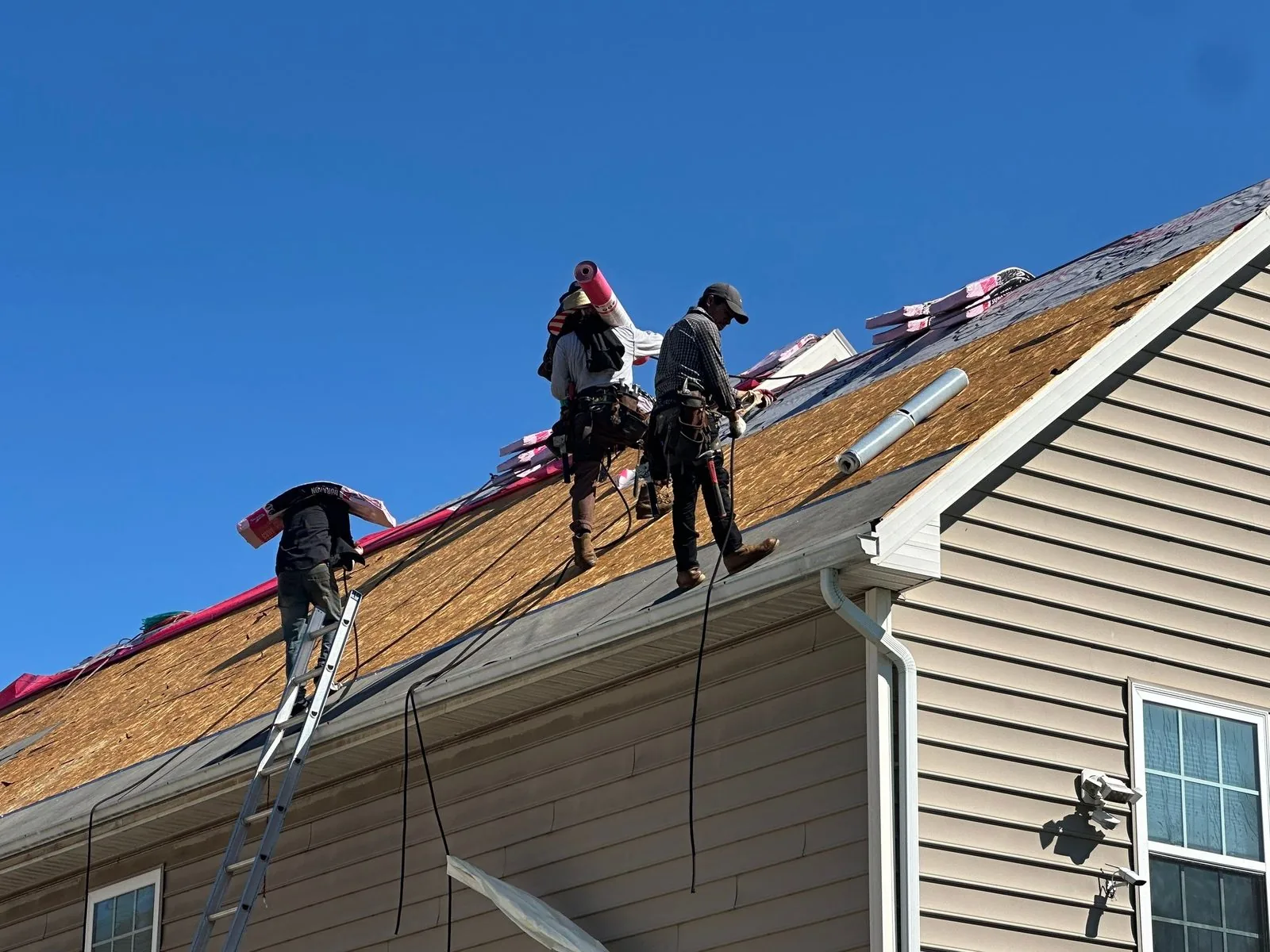
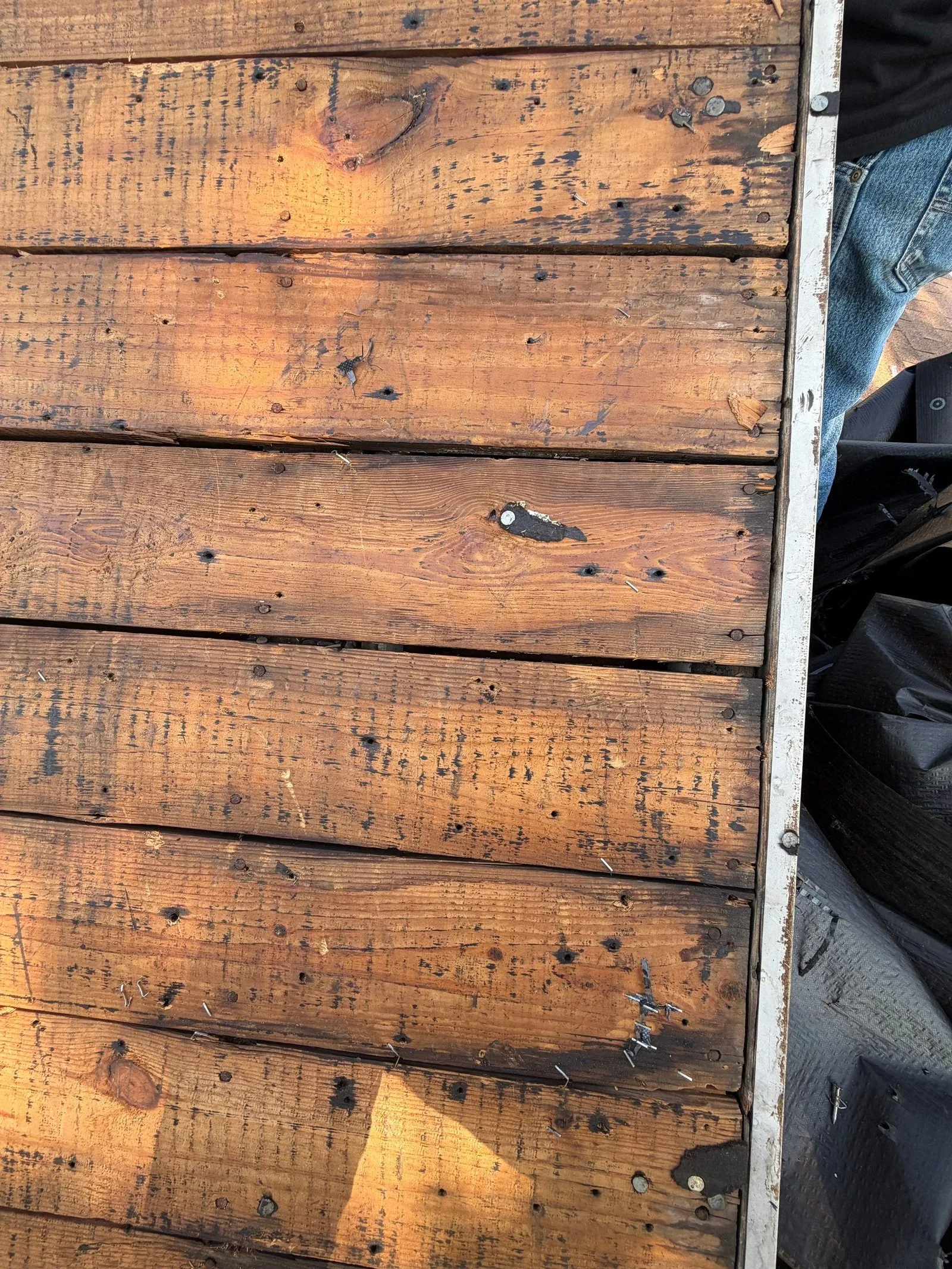
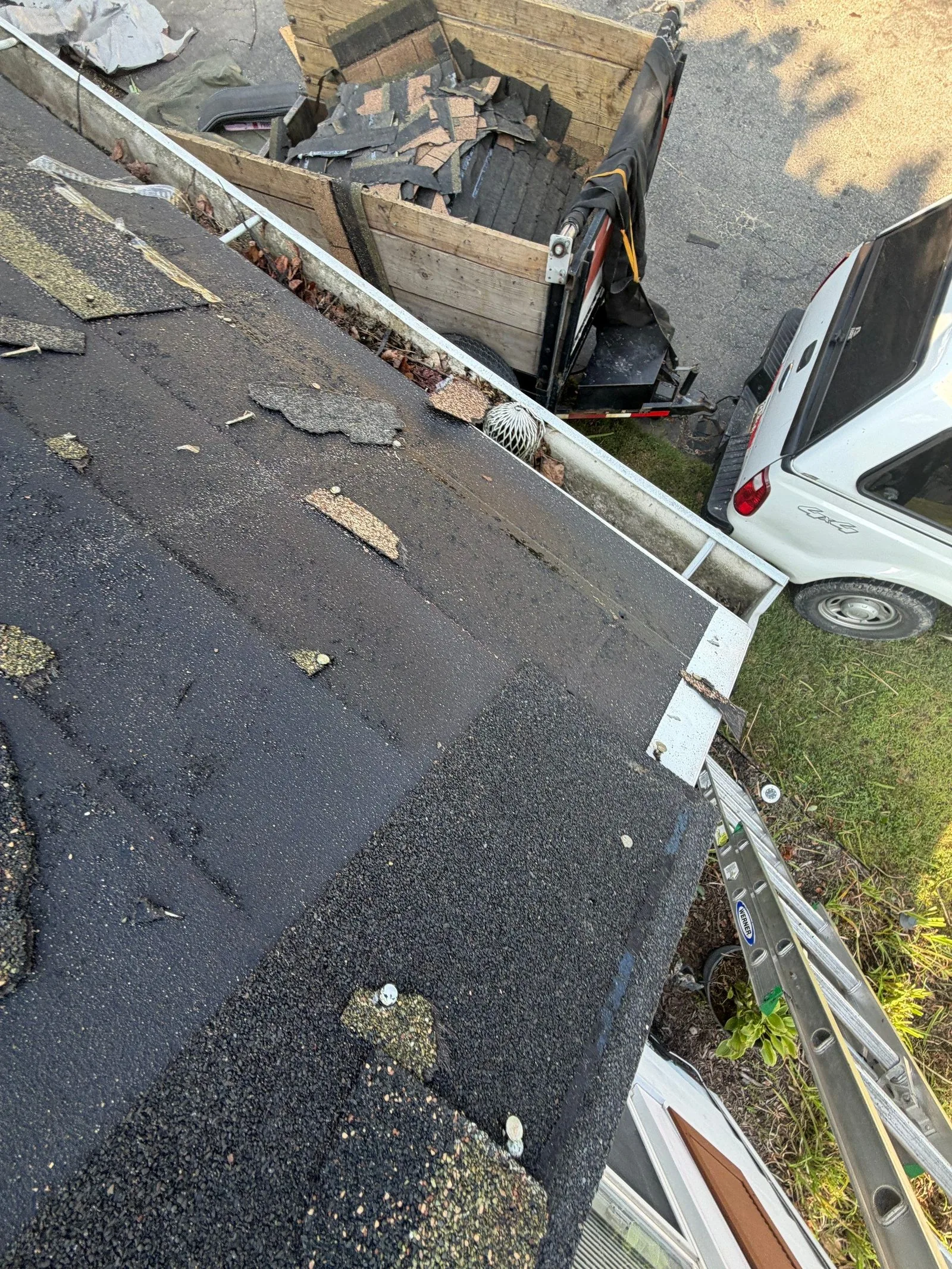
Real jobs photographed on site. Free no-obligation inspection first, every time.
Local Conditions
Common roofing challenges in Catonsville, MD
- Steep, complex Victorian and colonial rooflines on the large summer homes wealthy Baltimore merchants built along the Frederick Turnpike, with the dormers, turrets, and multiple valleys that era favored
- Roofs from more than a century of building in one community, starting with the 1890s streetcar-era developments, so we never judge a roof's age by the address. Westview Park went up in stages from 1955 to 1967, built by the Joseph Meyerhoff Company, and the roughly 1,000 units of Woodbridge Valley followed in the 1970s
- Era-appropriate work on the mostly single-family houses of the Winters Lane Historic District, a historically African American community developed between 1867 and the mid-1940s. The district went on the National Register in 2007 and has 155 properties, 141 of them residential
- A high, exposed Piedmont position above the Fall Line on broad rolling hills that overlook the coastal plain and the Chesapeake to the east, which gives storms coming off the Bay a clear approach to west-facing elevations
- Deep stream-valley woodland along the Patapsco River, which forms Catonsville's western and southern boundary at Patapsco Valley State Park, loading shaded roof slopes with debris and holding moisture against them
Our Work
Recent jobs near Catonsville
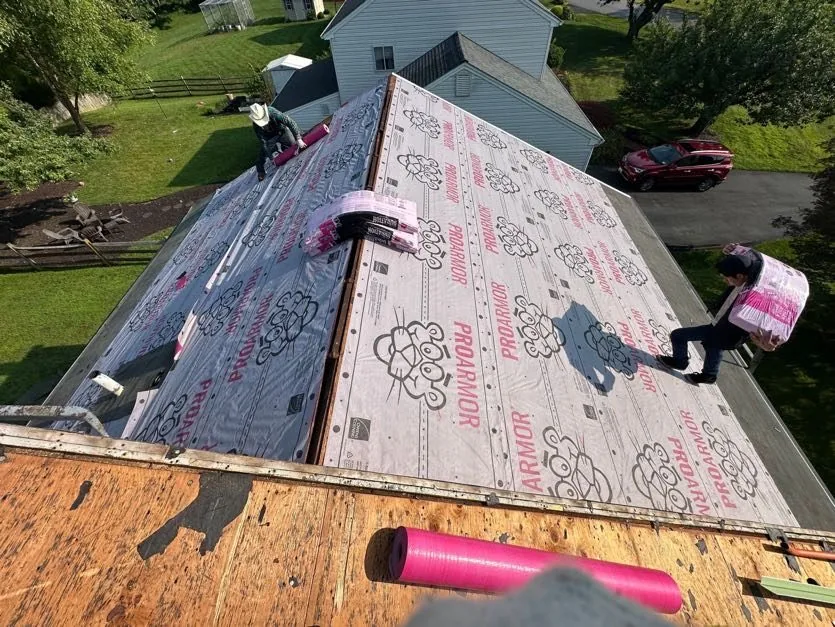
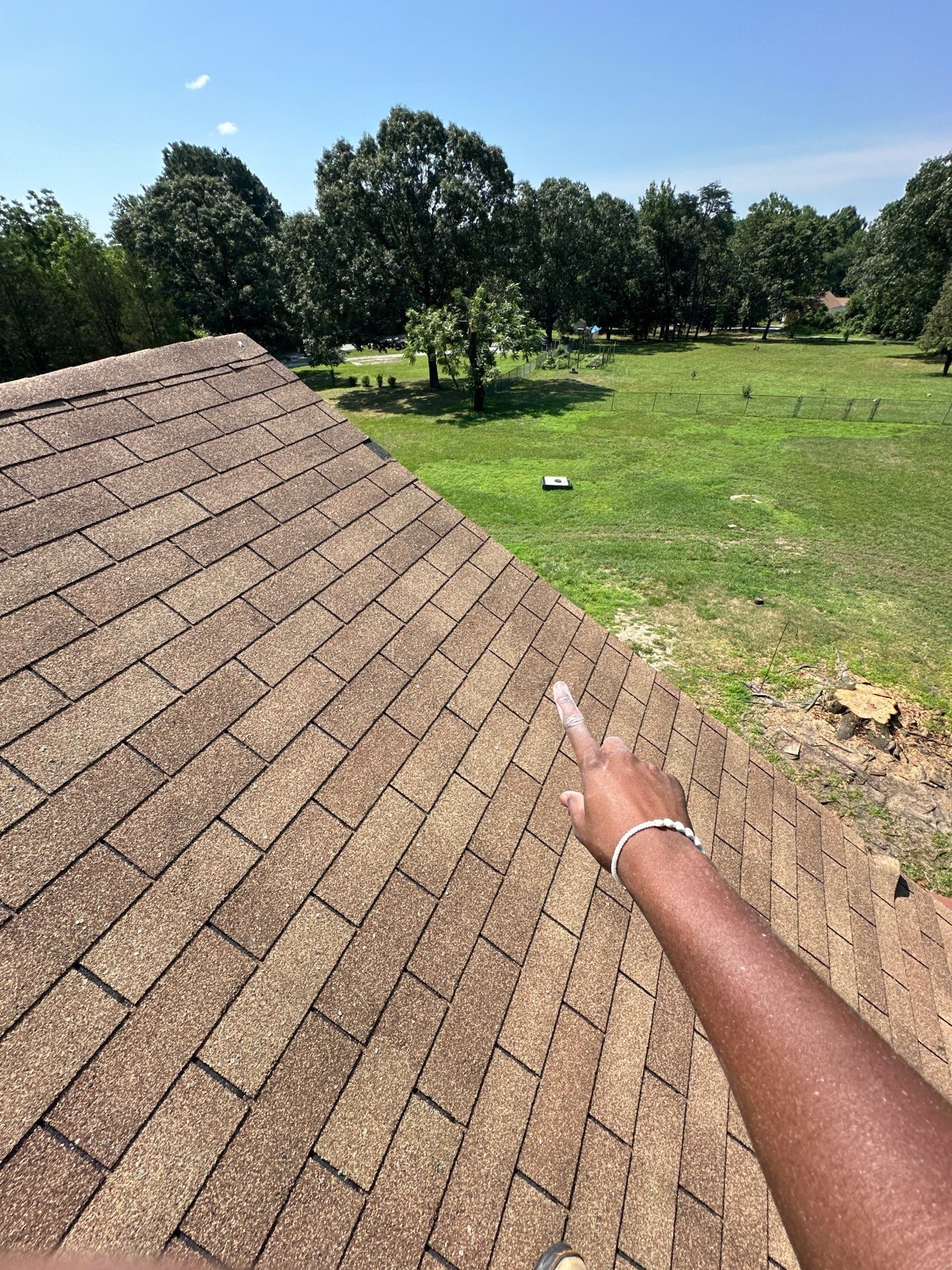
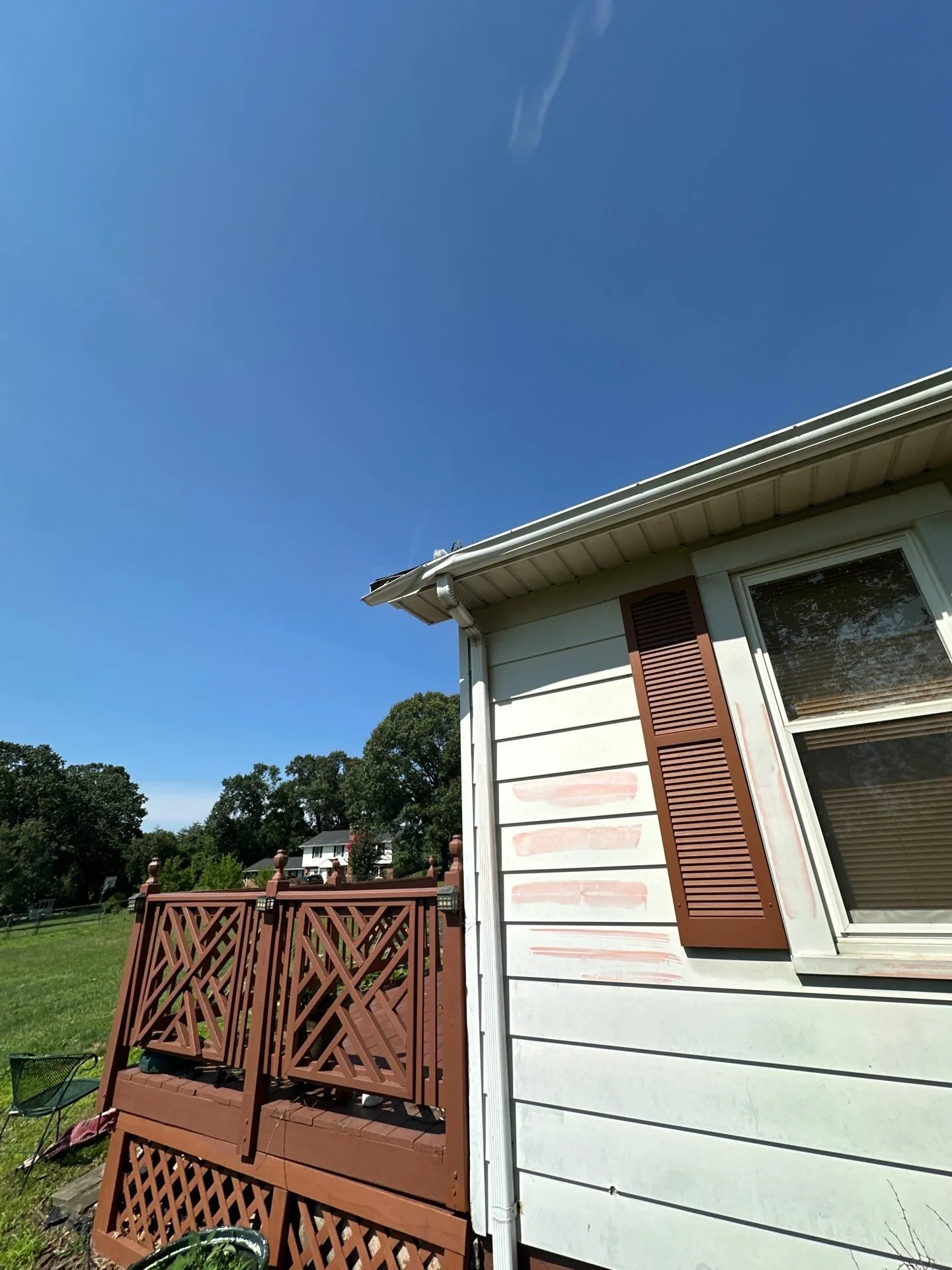
About Catonsville, Baltimore County
Catonsville grew as a streetcar suburb on Baltimore's western edge, and its housing shows every layer of that: grand Victorian and colonial homes from when city merchants summered here, then blocks of every size filling in through the mid-century and later. The town runs along rolling Piedmont hills above the Patapsco, so drainage and steep-slope access come into most jobs. An old slate or wood Victorian roof is a different project from a mid-century subdivision ranch, and we scope each on its own terms.
Catonsville is a town in Baltimore County on the city's western border, and to understand its houses we start where its history does, on its main artery, Frederick Road. In 1787 the Ellicott family built the Frederick Turnpike to move goods from their flour mill at Ellicott Mills to Baltimore harbor. Charles Carroll, a signer of the Declaration of Independence, instructed his son-in-law Richard Caton to develop the land along it.
The steep Victorian roofs along Frederick Road, where flashing and valley work is most of our job, date from the town's summer-home years. Caton and his wife Mary Carroll Caton lived at Castle Thunder, built on the turnpike that same year, 1787, and the community took Caton's name, respelled Catonsville in the 1830s. It grew as a layover stop for travelers between Ellicott City and Baltimore, and the pleasant surroundings drew wealthy Baltimore merchants, who built large Victorian and colonial summer homes to escape the city's summer heat.
Rail and streetcars filled in the town around the old summer homes, and that is where the mix of roof ages on a Catonsville street begins. Horsecar service reached Catonsville in 1862, the Catonsville Short Line railroad opened in 1884 with eight roundtrips daily, and commuter traffic exploded in the 1890s with electric streetcar lines and new housing developments. That made Catonsville a streetcar suburb and one of the first commuter suburbs in the United States.
The mid-century tracts are where we see roofs of the same era coming due together. Homes of all sizes went up rapidly through the 1970s, including Westview Park, developed in stages from 1955 to 1967 by the Joseph Meyerhoff Company, and Woodbridge Valley, roughly 1,000 units developed in the 1970s.
Houses in the Winters Lane Historic District need era-appropriate work, and we scope them that way. The district is a historically African American residential community developed between 1867 and the mid-1940s, and it holds 155 properties and joined the National Register in 2007.
Catonsville sits high, above the Fall Line in the Piedmont, on broad rolling hills punctuated by streams, overlooking the coastal plain and Chesapeake Bay to the east. Weather off the Bay reaches those hills with a clear approach, and we inspect for it on every slope. The Patapsco River forms the town's western and southern boundaries, with Ellicott City as its neighbor to the west.
Some of the town's story is in its names. Rolling Road, one of the town's main north-south routes, began as a trail running north from Elkridge Landing and was later used to roll hogsheads of tobacco. The Maryland legislature declared Catonsville Music City, Maryland in 2002, and the town contains most of the University of Maryland, Baltimore County.
Roof or siding work in Catonsville? Call (667) 200-6656 or book a free inspection.
More about roofing permits in Catonsville
Permits and Coverage
Who issues a roofing permit in Catonsville, MD?
Catonsville sits in Baltimore County, so a residential re-roof permit comes from the Baltimore County Department of Permits, Approvals and Inspections rather than from the town itself. The link is here for the homeowner who would rather read the requirement first-hand than take a contractor's word for it.
| Town | County | Permits issued by | From Columbia |
|---|---|---|---|
| Catonsville | Baltimore County | Department of Permits, Approvals and Inspections | About 8 miles |
| Ellicott City | Howard County | Department of Inspections, Licenses and Permits | About 6 miles |
| Elkridge | Howard County | Department of Inspections, Licenses and Permits | About 7 miles |
| Eldersburg | Carroll County | Bureau of Permits and Inspections | About 16 miles |
Distances are straight-line miles between town centers from geocoded coordinates, not drive times. Permit authorities were checked against each county's own site on 2026-08-06; county sites reorganize, so tell us if a link has moved.
Included on a Full Replacement
100 feet of gutter with your Catonsville roof replacement
Every full roof replacement we do across Central Maryland comes with 100 feet of gutter, gutter guard and downspouts on the same job. It is part of the replacement rather than a second trip and a second invoice, and it is the reason the water coming off a new roof goes where it should.
Included with a full roof replacement. It is not a standalone service, and there is no end date on it.
Book a Free Catonsville InspectionFeatured Google Reviews
What homeowners say
Lassana came out and looked at my roof after all the crazy storms going around and told me that my roof doesn’t have any damages yet whereas all the over roofers told me I need a new roof. My
Roof was only 10 year old
Great experience! The contractor did an excellent job installing my siding. They were professional, efficient, and paid close attention to detail. The finished work looks amazing, and I would definitely recommend them to anyone looking for quality siding work.
Great experience with this company. They were professional, punctual, and thorough during the roof inspection. They explained their findings clearly and provided honest recommendations without pressure. I appreciate their attention to detail and would highly recommend their services.
Great job on my roof in Glen Burnie. Handled all the insurance claim. Very good crew. No complaints the roof look great, great clean up as well. I highly recommend.
This whole experience was stress- free and professional. Lass explained everything clearly step by step and made sure I was comfortable with the whole process. The work was neat and punctual and all the materials were cleaned up quickly. The roof looks great! I highly recommend their services, you will be very pleased with the results.
Excellent service from start to finish! The team is professional, responsive, and delivers high-quality work. I highly recommend them!
This company was very professional and very prompt. They explained everything to me in detail, along with pictures and videos. They got the job done quickly and thoroughly, and at a reasonable price. I would highly recommend Diakite Roofing and Restoration, and I would use them again if I needed to in the future.
Good to Know
Catonsville roofing: frequently asked questions
Do you work on the old Victorian homes along Frederick Road in Catonsville?
Yes. Wealthy Baltimore merchants built large Victorian and colonial summer homes along the Catonsville stretch of the old Frederick Turnpike to escape the city's heat, and those roofs are steep and complicated, with dormers, turrets, and multiple valleys. They are a different job from a tract gable, and we quote them that way after a free inspection.
Catonsville houses seem to be from every possible decade. Does that matter for a quote?
It matters a lot. A Catonsville house can date from the Winters Lane district, developed between 1867 and the mid-1940s, or from the 1890s streetcar-era developments. It can also be in Westview Park, built in stages from 1955 to 1967, or in Woodbridge Valley from the 1970s, and we inspect before we price, because a Catonsville street address tells us far less than a Catonsville roof does.
Is Catonsville more exposed to storms than the towns west of it?
Somewhat, and it is the elevation profile that does it. Catonsville sits above the Fall Line on broad rolling hills that overlook the coastal plain and the Chesapeake to the east, so weather coming off the Bay reaches these hills with a clear approach. Storm and hail damage restoration is one of our three core services.
Can you do siding in Catonsville and handle the insurance side?
Both. We replace Catonsville siding as well as roofs, and we write claim scopes in Xactimate, the platform the carriers use. The inspection is free and carries no obligation. We install Owens Corning shingles and include 100 feet of gutter, gutter guard, and downspouts with a full roof replacement.
Nearby
Towns near Catonsville we also serve
West across the Patapsco, which is the Baltimore County line, Frederick Road carries us into roofing and siding in Ellicott City. The road exists because the Ellicott family built it in 1787 to move flour from their mills to Baltimore harbor.
South along Rolling Road, which began as the trail running north out of Elkridge Landing, we handle roof replacement in Elkridge, the oldest settlement in Howard County and home to the 1833 Thomas Viaduct.
Upstream along the Patapsco into south Carroll County we cover roofing and storm restoration in Eldersburg, where a fifth of the community is still rural and the wind reaches roofs unbroken.
East along Frederick Road the work continues into the city line, covered on the Baltimore roofing page.
For the full tear-off and replacement detail, see the Catonsville roof replacement page.
Local Routes
How we get to Catonsville, MD
Catonsville is about 8 miles straight-line from our Columbia base. Between here and the neighboring towns the trucks run Frederick Road to Ellicott City and Rolling Road down to Elkridge, and Eldersburg is out past the Patapsco in Carroll County.
From Ellicott City
Catonsville to Ellicott City
- Roads we run
- Frederick Road
- Landmarks on the way
- the Patapsco and the Baltimore County line
- Straight-line distance
- About 5 miles, not a drive time
From Elkridge
Catonsville to Elkridge
- Roads we run
- Rolling Road
- Landmarks on the way
- Elkridge Landing
- Straight-line distance
- About 5 miles, not a drive time
From Eldersburg
Catonsville to Eldersburg
- Landmarks on the way
- the Patapsco
- County
- Carroll County
- Straight-line distance
- About 15 miles, not a drive time