
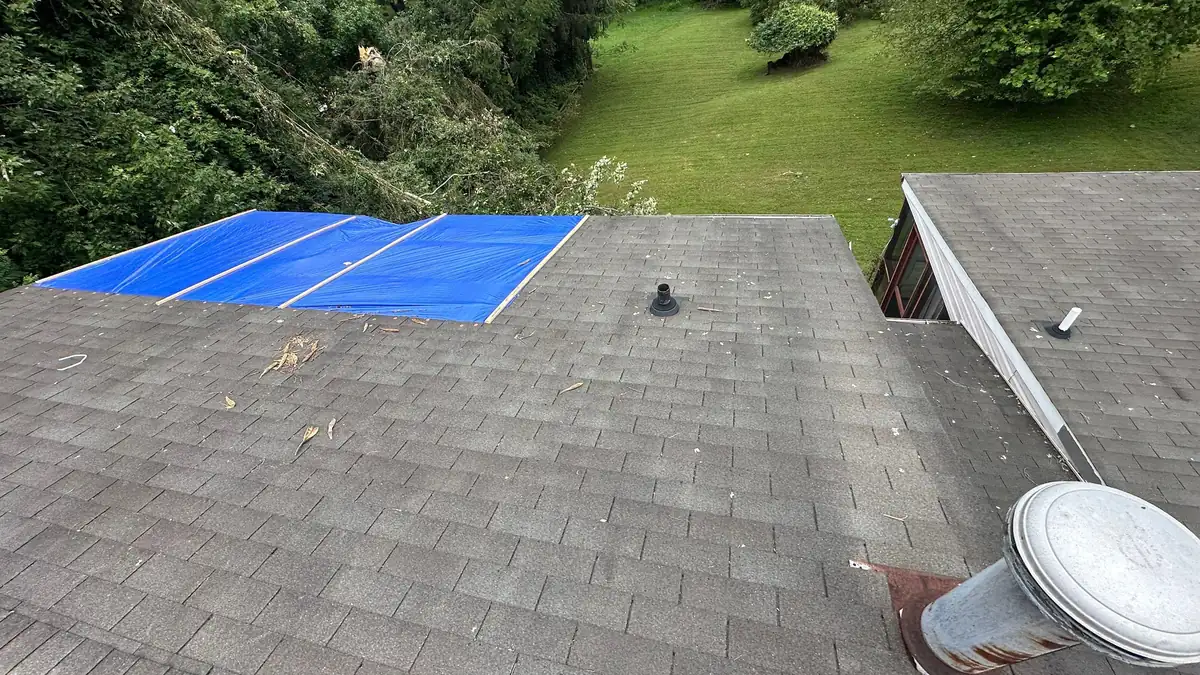
Emergency Roof Tarping in Columbia, MD
5.0 on GoogleEmergency Roof Tarping in Columbia, MD, Before the Water Spreads
Diakite Roofing & Restoration tarps storm-opened roofs across Columbia and Howard County, photographs the damage while the evidence is still fresh, and gets the work that actually ends the problem, the replacement, onto the calendar. The tarp is a temporary cover that keeps water out of the ceilings, the insulation, and the wall cavities until the new roof goes on.
- Free Roof Inspections
- 5.0 Stars on Google
Free & No Obligation
Book your free roof inspection
The Short Answer
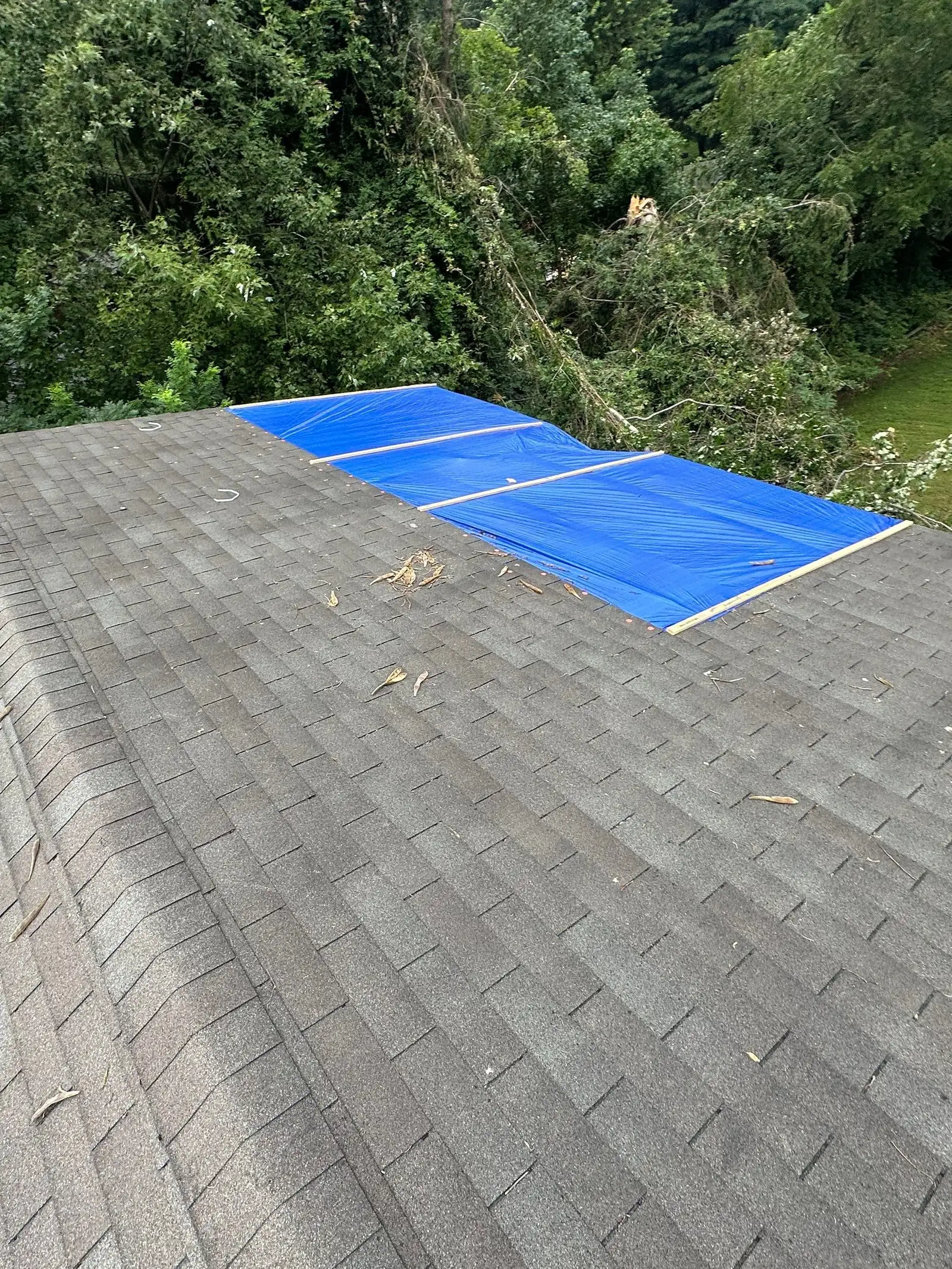
When a storm opens up a roof in Columbia or Howard County, Diakite Roofing & Restoration tarps it to keep water out of the insulation, drywall, and wiring. Tarping is stabilization, not a repair. It buys time while we document the damage for your insurer and get your replacement onto the schedule.
- Is a tarp a repair on a Maryland storm claim? No. It is a temporary cover that stops water from spreading.
- How long can a tarp stay on a Central Maryland roof? Long enough to work a claim and reach an install date, not a season.
- Will insurance pay for tarping in Maryland? Emergency mitigation is often a line item on a storm loss and we scope it in Xactimate with the rest.
- Can you come out at night or on a Sunday in Howard County? Our crews work Monday through Saturday, 8am to 5pm.
In Plain Terms
- Diakite Roofing & Restoration is a roofing contractor based in Columbia, MD.
- Diakite Roofing & Restoration provides emergency roof tarping for property owners in Columbia, MD and the surrounding Central Maryland counties.
- Diakite Roofing & Restoration opens every job with a free no-obligation roof inspection.
- Diakite Roofing & Restoration installs Owens Corning architectural shingles on the roofs it replaces.
Emergency roof tarping across Central Maryland
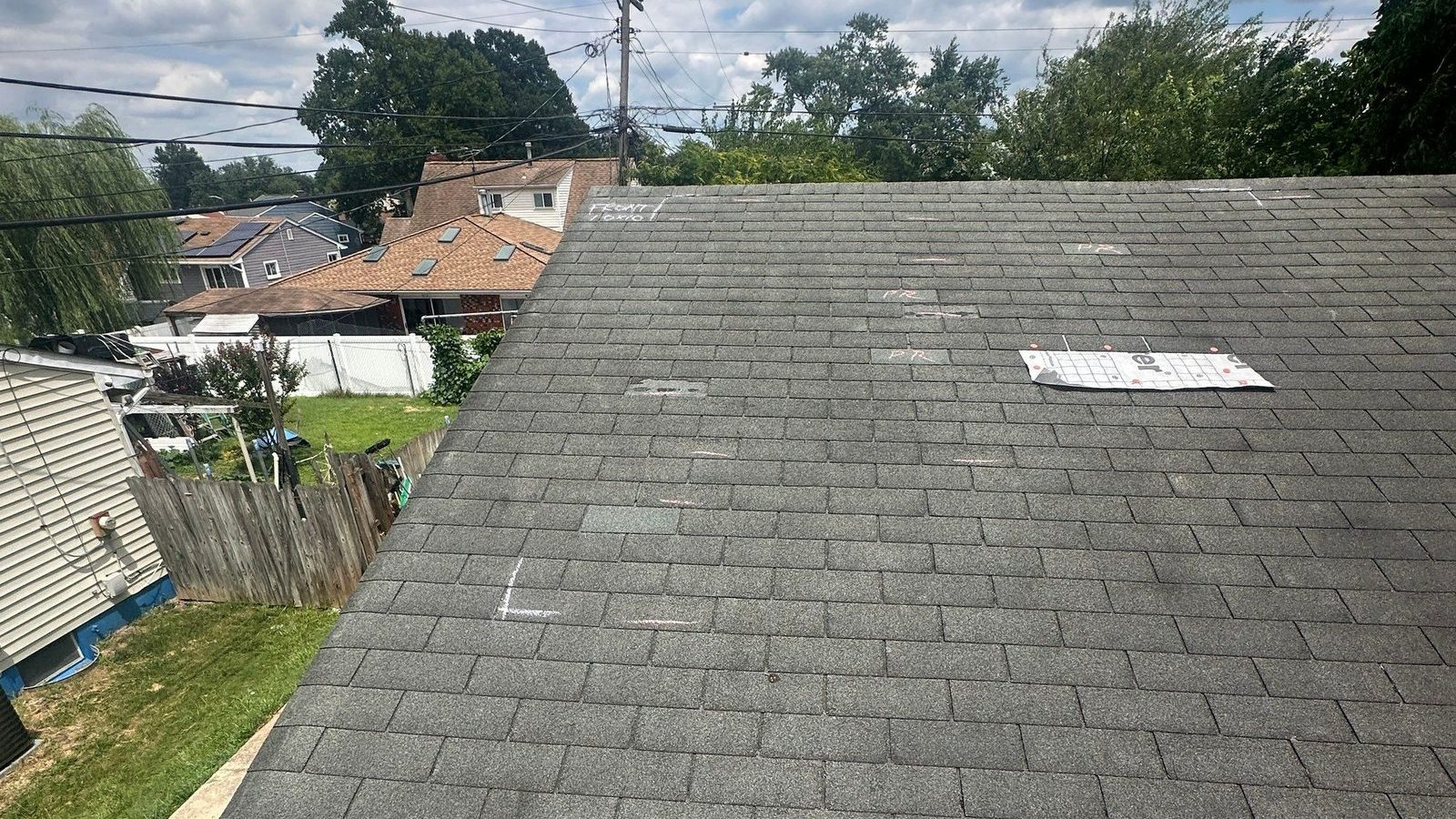
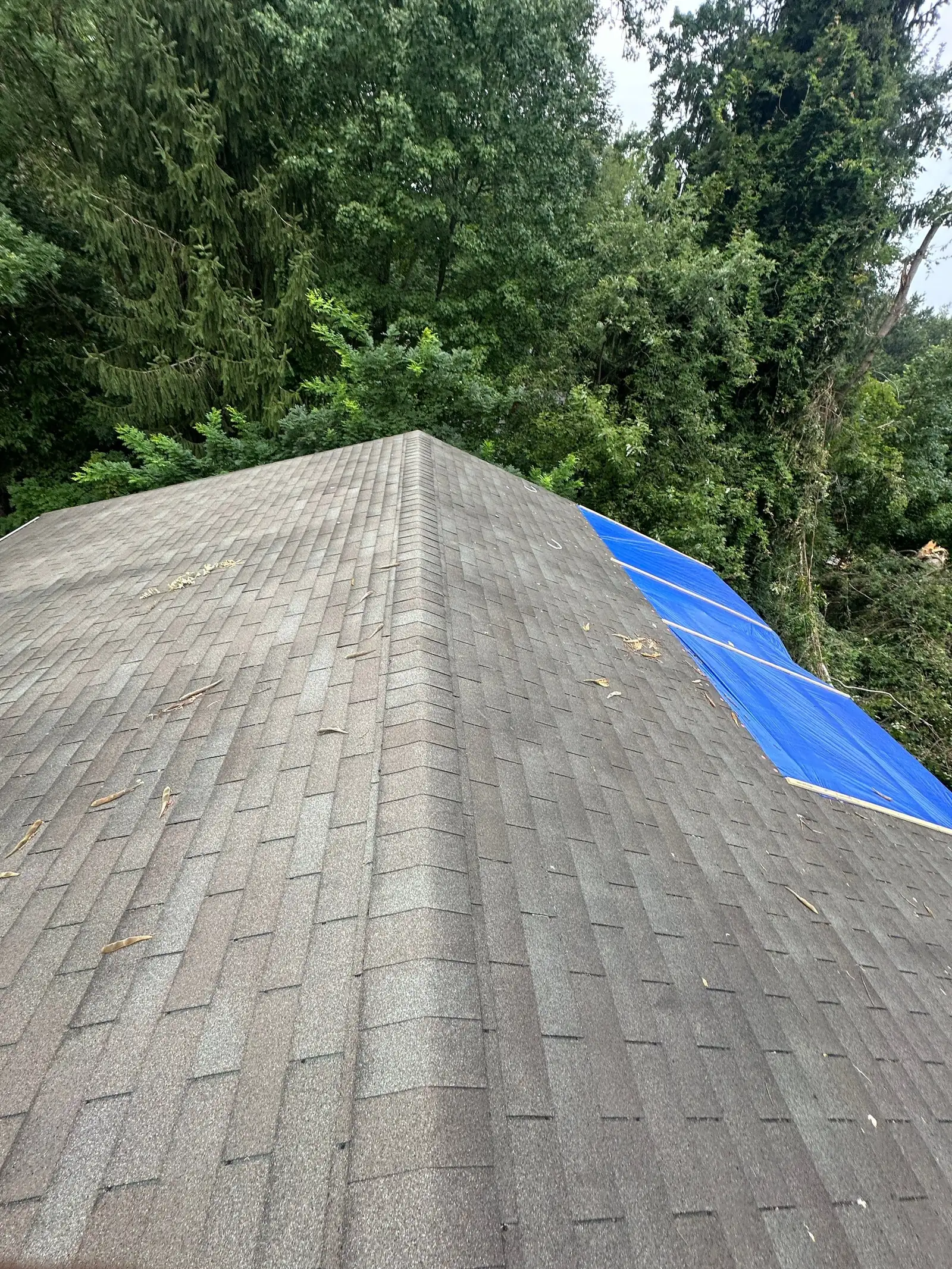
A real frame from our own site camera. We have no photograph of a tarp going down yet, so we are not going to show you one that is not ours. Every emergency roof tarping call opens with a free no-obligation inspection.
The Difference
Why homeowners choose Diakite Roofing & Restoration for emergency roof tarping
More about Diakite Roofing & Restoration
Who We Work With
Emergency roof tarping in Columbia: materials, standards and permits
- Owens Corning. The architectural shingle we install is Owens Corning TruDefinition Duration, and you pick the color off real samples held against your own brick or siding.
- Xactimate. Insurance scopes are written in Xactimate, the estimating software your carrier already prices from.
- Howard County Department of Inspections, Licenses and Permits. We are based in Columbia, and the county office that issues the permit is the office to ask about the permit.
Good to Know
Emergency roof tarping: what Central Maryland homeowners should know
What tarping buys you
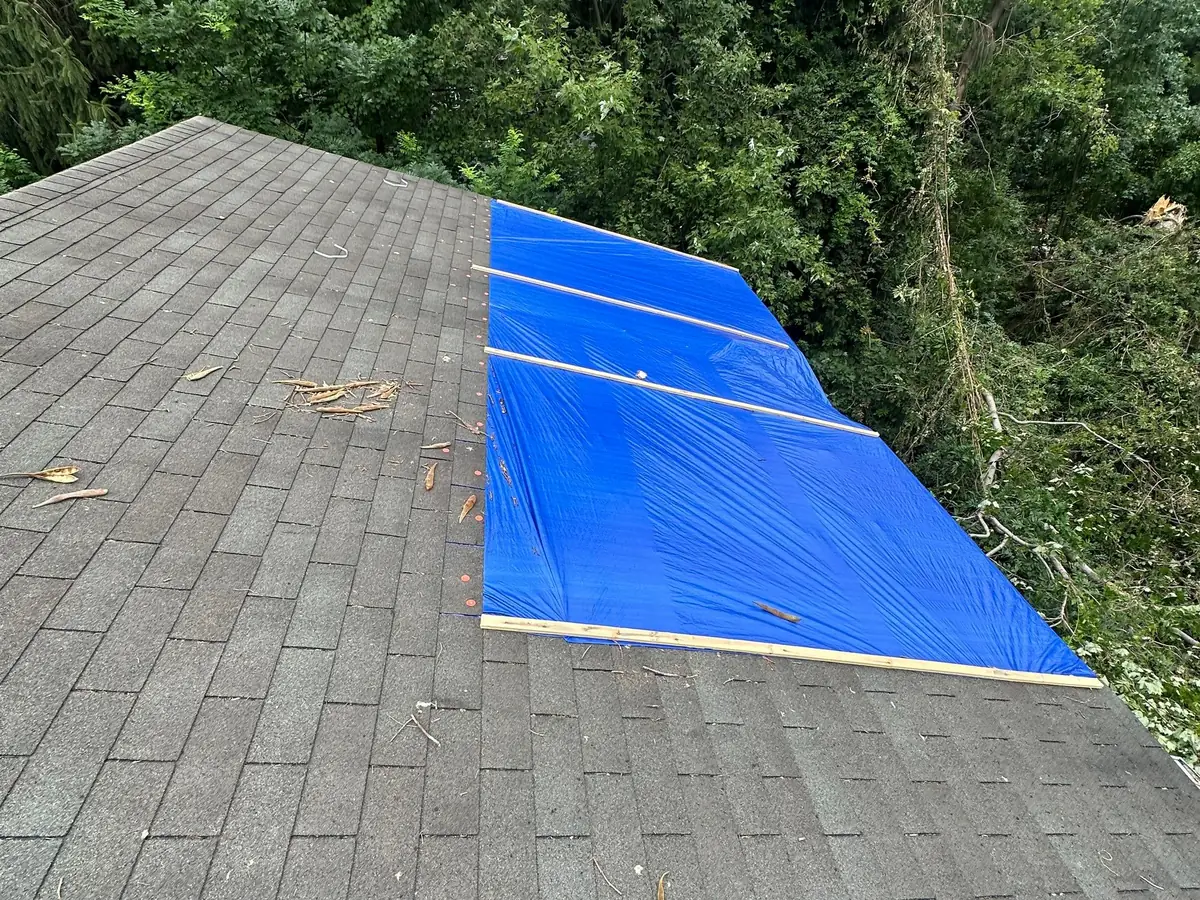
A tarp keeps water out while the permanent work gets scoped, permitted, and scheduled.
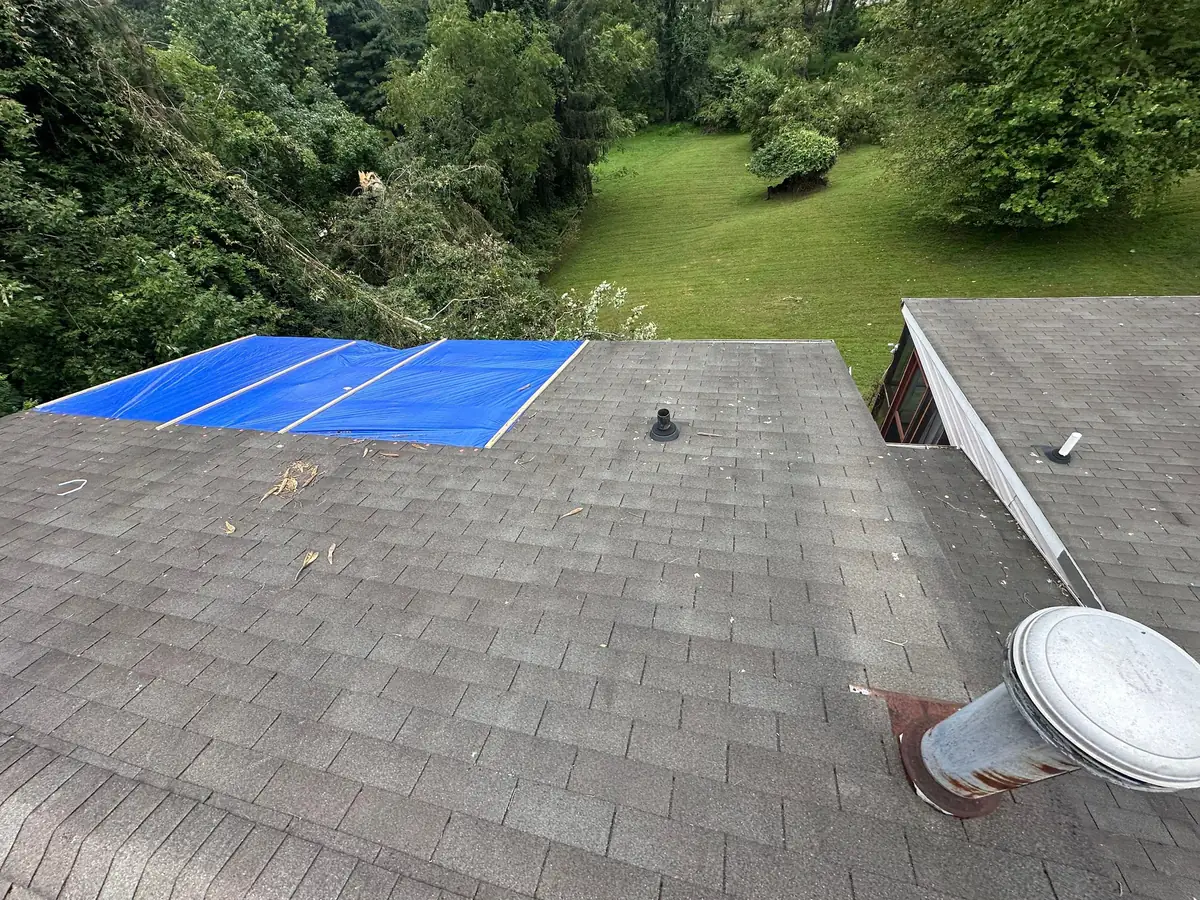
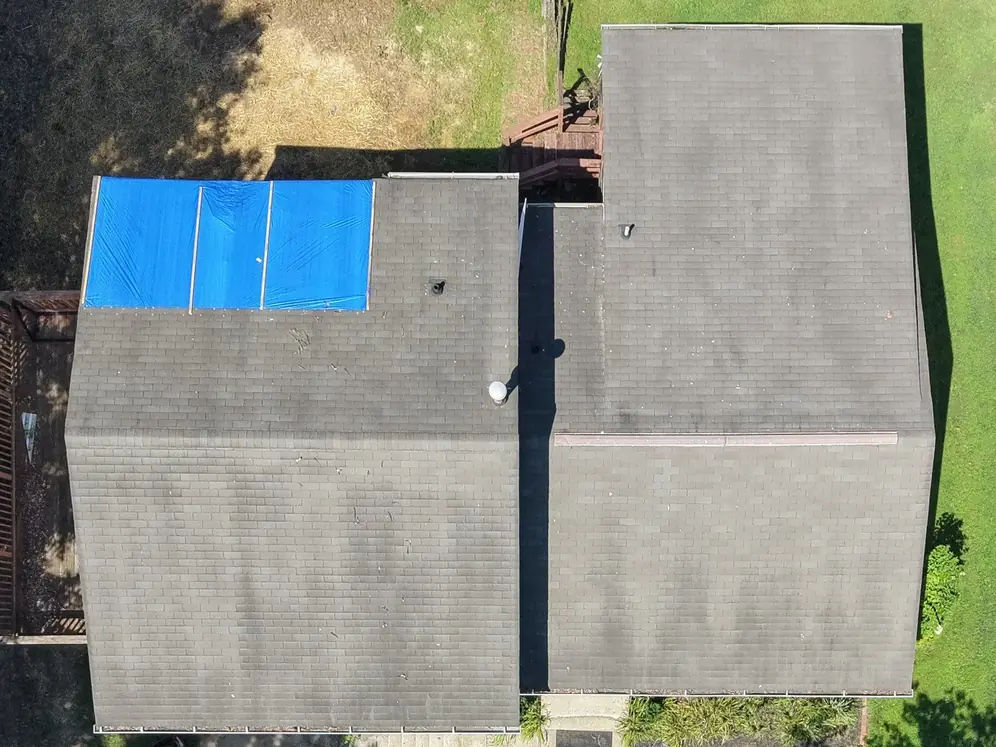
We run the tarp over the ridge so water cannot drive up under the top edge, it gets secured with battens rather than loose weights that the next front will move, it extends well past the damage in every direction, and the fastening lands where the new roof will cover the penetrations anyway.
Free inspection, firm written quote. Call (667) 200-6656.
More about emergency roof tarping
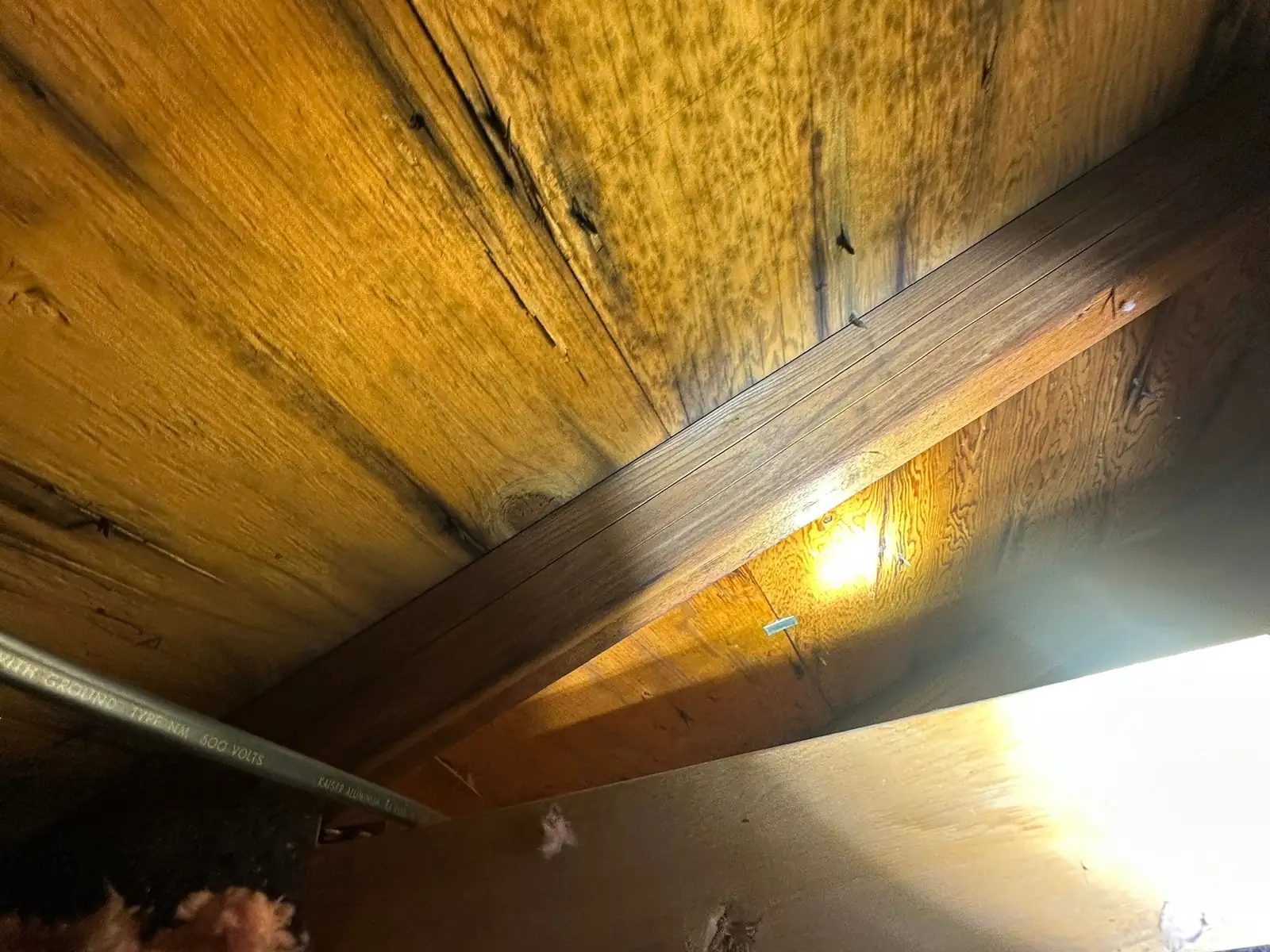
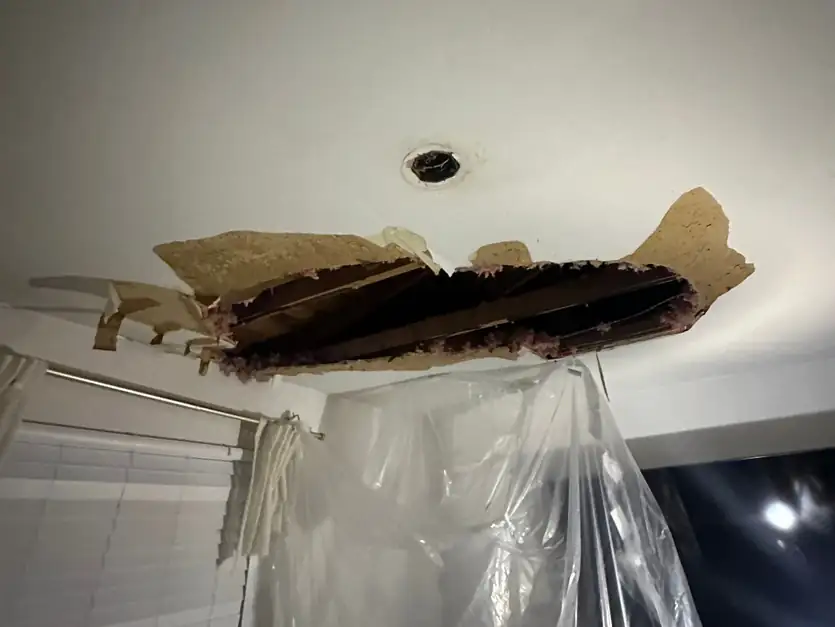
Water crossing an attic soaks the insulation first, and wet insulation holds moisture against the framing and drywall until the ceilings stain and sag.
Water in a ceiling box or a can light is a genuine hazard, so the first move after a roof opens up is shutting off power to the affected circuits.
Great experience with this company. They were professional, punctual, and thorough during the roof inspection. They explained their findings clearly and provided honest recommendations without pressure. I appreciate their attention to detail and would highly recommend their services.
The first hours after a Maryland storm opens your roof
Before anyone gets on a ladder, move what you can out from under the leak and get containers under active drips. A small relief hole in a bulging ceiling lets the water drain into a bucket instead of forty pounds of it bringing the drywall down.
Photograph the standing water, the ceiling, and the contents while it is happening, because your insurer will ask for that record.
Then stay off the roof, because storm-damaged decking, wet shingles, and a slope in the dark are how people get badly hurt. Call (667) 200-6656 and let a crew with harnesses and staging handle it.
We work Monday through Saturday, 8am to 5pm. If you reach us outside those hours, leave the address and what happened and you are first on the list.
Documenting while the damage is fresh
The tarp visit is also the best evidence-gathering opportunity anyone gets, and that shapes how we run it. We photograph the opening before covering it, the interior water path, the surrounding slopes, and any wind or hail signature on the rest of the roof, and we note the date and the weather event. That package goes into the claim scope written in Xactimate, alongside the permanent replacement. The adjuster meeting and the rest of the claim are explained on our storm and hail damage roof restoration page.
Carriers generally expect a homeowner to take reasonable steps to prevent further damage. Tarping is that step, and we document it as such.
When you are ready, the same crew handles the full replacement, so nobody has to re-explain the building. Call (667) 200-6656.
Read First
A guide on this
How a Maryland Roof Insurance Claim Actually Works Diakite Roofing & Restoration handles storm and hail damage roof claims in Columbia, MD and across Howard County. Covered against excluded, what an adjuster expects to see, and the parts of a claim nobody can promise you.
Diakite Roofing & Restoration documents storm damage slope by slope and writes the scope in Xactimate, the software your carrier already prices from. Our owner does the inspections himself.
Watch For These
Signs you need emergency roof tarping
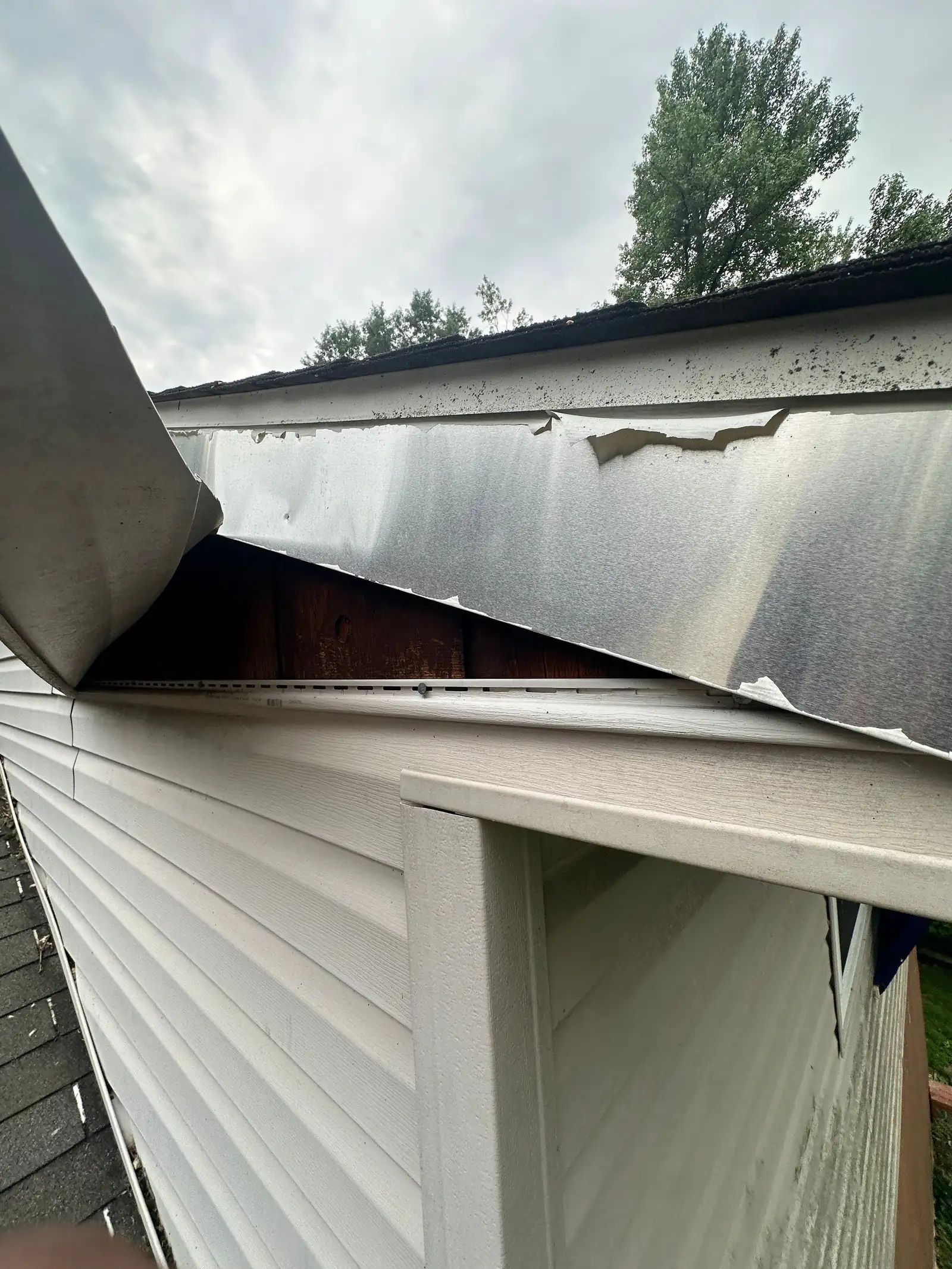
- Shingles or a whole section of roof gone after a windstorm
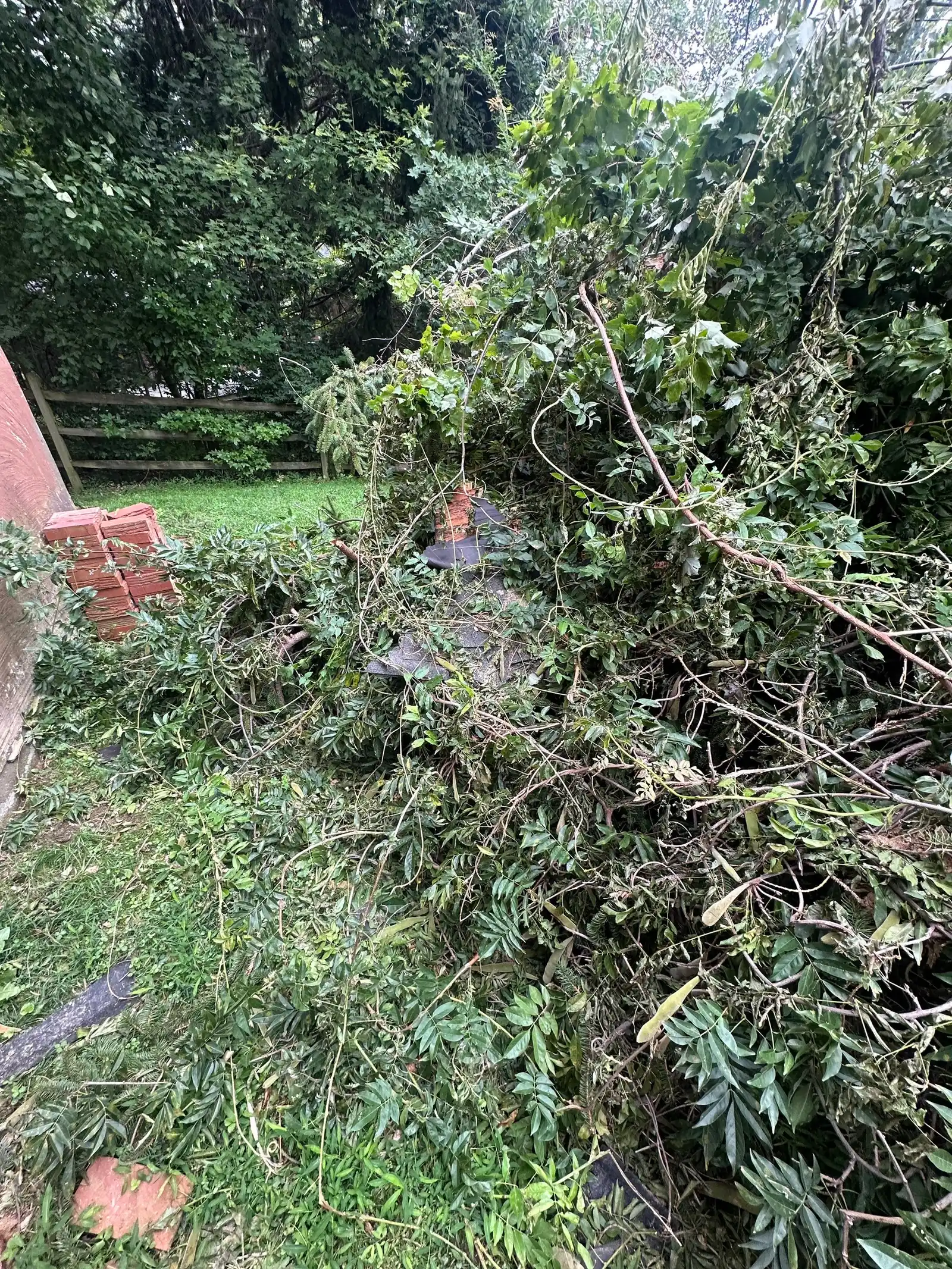
- A tree limb or storm debris that punched through the deck
- Water actively running into an upstairs room or down an interior wall
- Daylight visible through the roof when you look up from the attic
- Your adjuster asking you to prevent further damage while the claim is open
Seeing one of these? Call (667) 200-6656 or request a free estimate.
Our Work
Recent emergency roof tarping jobs
Our Process
The Diakite Roofing & Restoration emergency roof tarping process
- 01
Call and tell us what happened
Call (667) 200-6656. We need to know where the water is coming in and how big the opening is, so the truck shows up with the right materials.
- 02
Photograph the opening
Before anything is covered, the damage and its cause get photographed for your claim file.
- 03
Tarp and secure
Reinforced tarp run over the opening and fastened down so it holds through the next round of weather instead of flapping loose by morning.
- 04
Documentation and install date
The photos and the loss go into the claim scope in Xactimate, and your replacement goes on the schedule.
Featured Google Reviews
What homeowners say
Lassana came out and looked at my roof after all the crazy storms going around and told me that my roof doesn’t have any damages yet whereas all the over roofers told me I need a new roof. My
Roof was only 10 year old
Great experience! The contractor did an excellent job installing my siding. They were professional, efficient, and paid close attention to detail. The finished work looks amazing, and I would definitely recommend them to anyone looking for quality siding work.
Great experience with this company. They were professional, punctual, and thorough during the roof inspection. They explained their findings clearly and provided honest recommendations without pressure. I appreciate their attention to detail and would highly recommend their services.
Great job on my roof in Glen Burnie. Handled all the insurance claim. Very good crew. No complaints the roof look great, great clean up as well. I highly recommend.
This whole experience was stress- free and professional. Lass explained everything clearly step by step and made sure I was comfortable with the whole process. The work was neat and punctual and all the materials were cleaned up quickly. The roof looks great! I highly recommend their services, you will be very pleased with the results.
Excellent service from start to finish! The team is professional, responsive, and delivers high-quality work. I highly recommend them!
This company was very professional and very prompt. They explained everything to me in detail, along with pictures and videos. They got the job done quickly and thoroughly, and at a reasonable price. I would highly recommend Diakite Roofing and Restoration, and I would use them again if I needed to in the future.
Good to Know
Emergency roof tarping: frequently asked questions
Is a tarp a repair on a Maryland storm claim?
No. It is a temporary cover that stops water from spreading. The roof still has to be replaced, and the tarp is what protects the inside of your house until it is.
How long can a tarp stay on a Central Maryland roof?
Long enough to work a claim and reach an install date, not a season. Tarps break down under sun and wind, so it is a short-term cover.
Will insurance pay for tarping in Maryland?
Emergency mitigation is often a line item on a storm loss and we scope it in Xactimate with the rest. Whether it gets paid depends on your policy and your adjuster, so we will not promise it.
Can you come out at night or on a Sunday in Howard County?
Our crews work Monday through Saturday, 8am to 5pm. Call (667) 200-6656 with the details and you are first up when the day starts. If water is coming in right now, get containers under it and shut the power to the affected rooms.
Can you just repair my Central Maryland roof instead?
Sometimes. When the storm damage is limited to a few shingles or one flashing detail, the tarp comes off and it becomes a roof repair in Columbia, MD. Damage across the whole roof usually means a replacement, and the inspection photos show which one you have.
Where We Work
Areas we serve
More about where we work
Service Radius
Where we take emergency roof tarping calls across Central Maryland
Columbia is the hub every emergency roof tarping crew rolls out of, and the run is the same one the trucks make every morning: US-29, MD-108, MD-100, I-95 and Washington Boulevard. Those corridors are what put Howard, Anne Arundel, Montgomery, Prince George's, Carroll, Frederick & Baltimore Counties inside a working day, on a 35-mile radius out of Columbia.
| Town | County | From Columbia |
|---|---|---|
| Clarksville | Howard County | About 4 miles |
| Ellicott City | Howard County | About 6 miles |
| Laurel | Prince George's County | About 7 miles |
| Silver Spring | Montgomery County | About 16 miles |
| Rockville | Montgomery County | About 17 miles |
| Annapolis | Anne Arundel County | About 25 miles |
Straight-line miles between town centers, measured from geocoded coordinates. They are not drive times and not route mileage. We are a service-area business, so emergency roof tarping happens at your property, not at a counter.
For the Baltimore County end of the radius, see roofing in Baltimore County.
Emergency roof tarping coverage runs out from Columbia, MD, through Howard County and the six neighboring counties.
Related services
Roof replacement
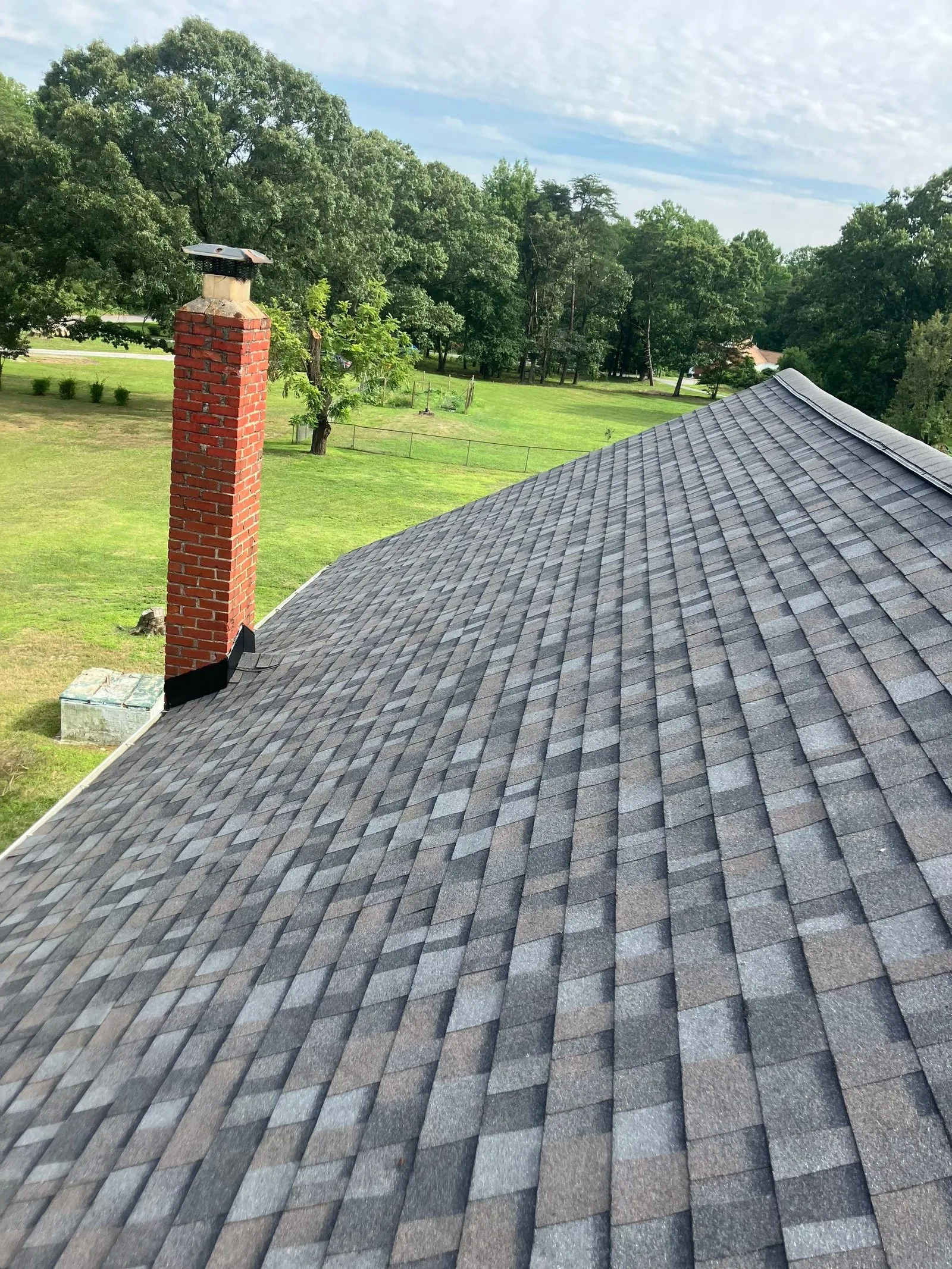
Full tear-off and a new Owens Corning shingle system, with most Columbia homes finished in a single day.
Roof replacement in Columbia, MD →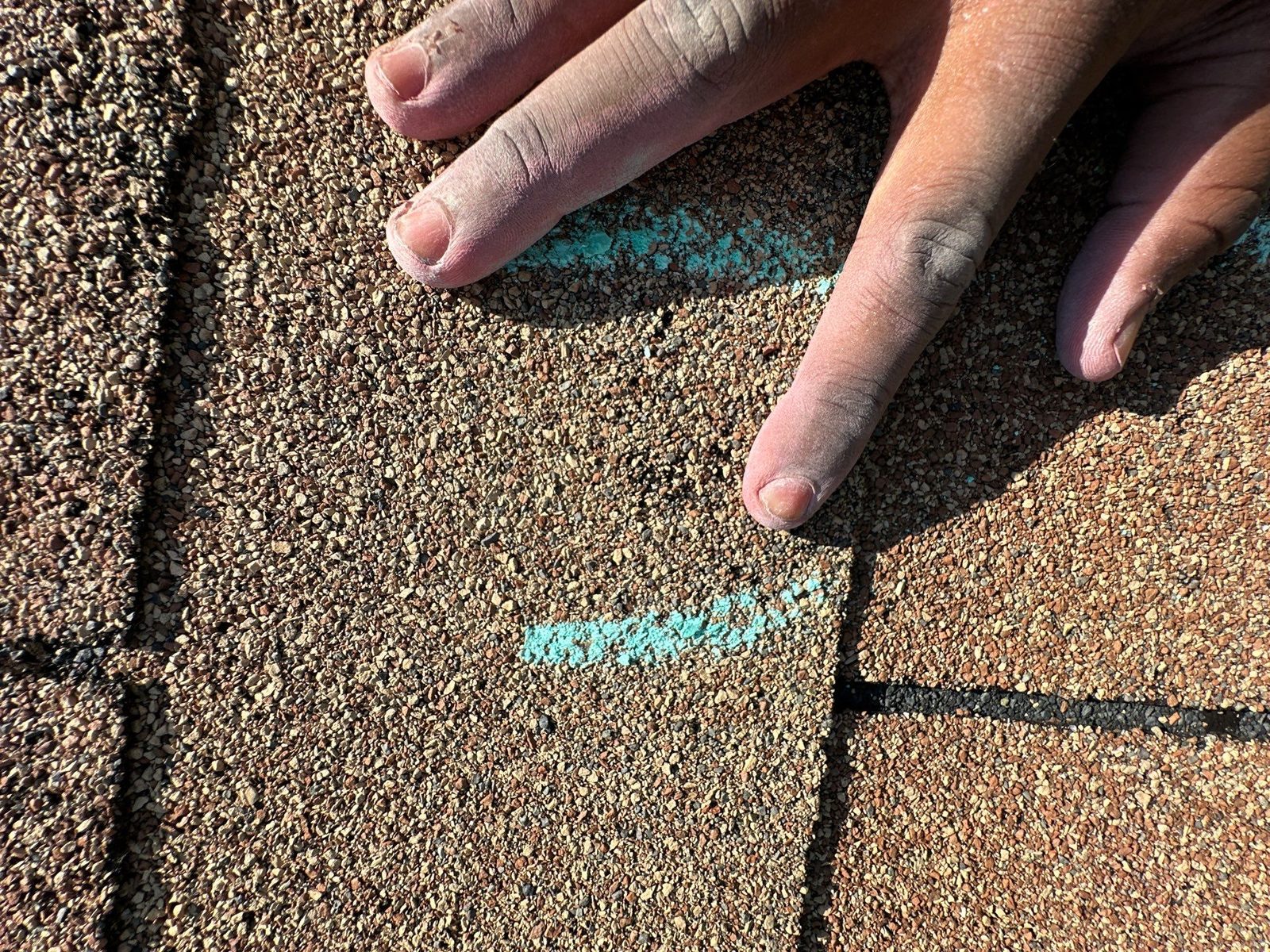
Storm & hail damage restoration
Roof hail damage chalked and photographed slope by slope, then scoped in Xactimate for your insurance claim.
Storm & hail damage restoration in Columbia, MD →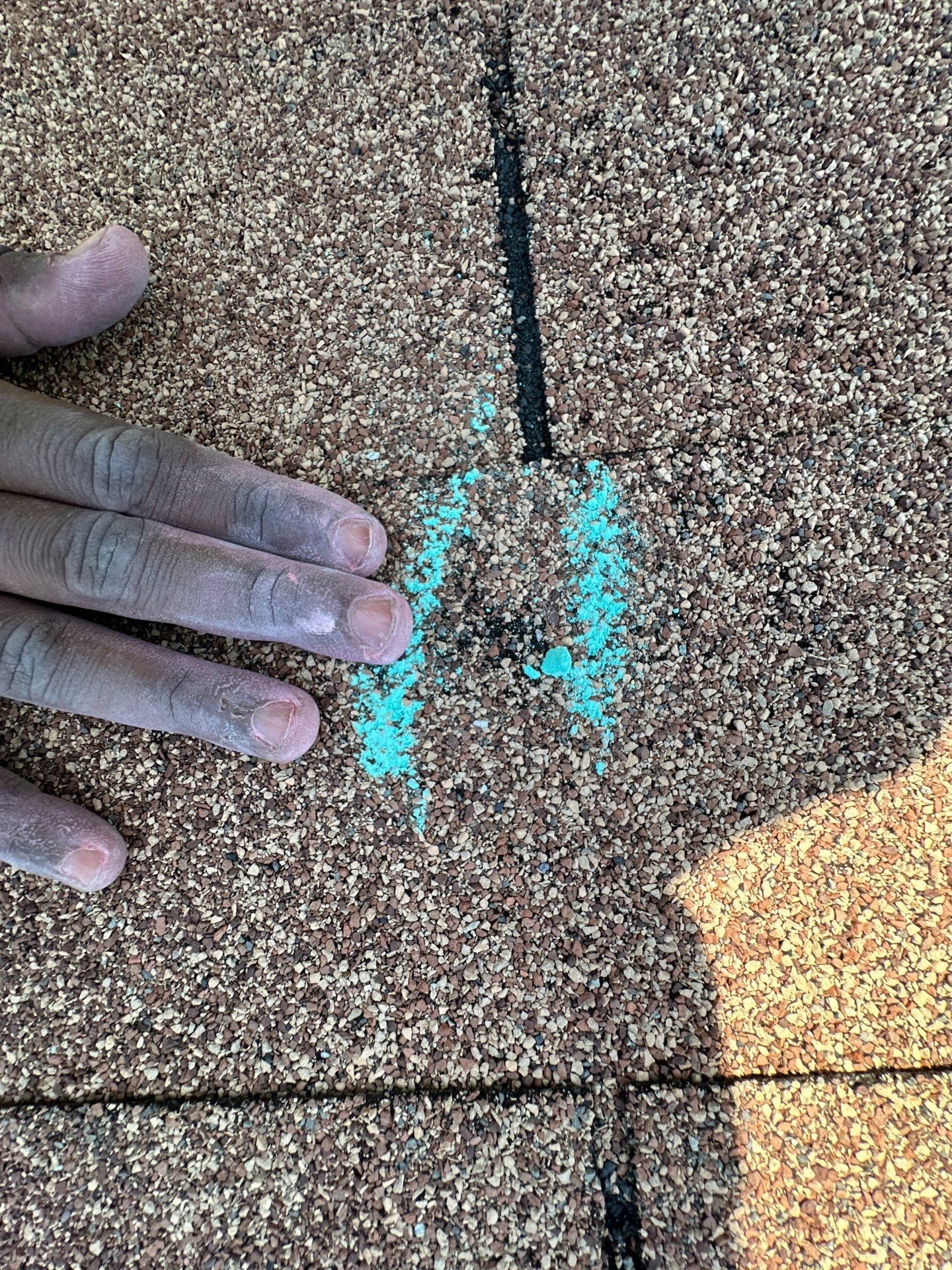
Free roof inspection
We walk the roof, photograph every slope, and tell you what you actually need. No cost, no obligation.
Free roof inspection in Columbia, MD →