
Siding Replacement in Columbia, MD
5.0 on GoogleSiding Replacement in Columbia, MD, Wrapped and Flashed Right
Diakite Roofing & Restoration replaces siding across Columbia and Howard County. Siding keeps Maryland weather out of your walls, and it is the first thing anyone sees from the street.
Because the same crew handles the roof, the wall and the roofline get detailed together rather than two trades pointing at each other over a leak at the transition. The Google rating is 5.0, and siding work starts with the same free inspection.
- Free Roof Inspections
- 5.0 Stars on Google
Free & No Obligation
Book your free roof inspection
The Short Answer
Diakite Roofing & Restoration replaces siding on homes across Columbia and Howard County, Maryland. We tear off the old panels, inspect the sheathing underneath, correct the house wrap, flash the openings, then install new siding and trim. The measure happens on site and the quote is firm before we start.
- Do you replace bad sheathing and house wrap on Central Maryland homes? Yes, and you see it before we cover it.
- What does finished siding work look like on a Howard County house? One customer described it on Google: "Great experience!
- Is storm damaged siding covered by insurance in Maryland? Often, when hail or wind caused it.
- Can you do the roof and the siding together on one Central Maryland job? Yes, and it usually makes sense.
In Plain Terms
- Diakite Roofing & Restoration is a roofing contractor based in Columbia, MD.
- Diakite Roofing & Restoration provides siding replacement for property owners in Columbia, MD and the surrounding Central Maryland counties.
- Diakite Roofing & Restoration opens every job with a free no-obligation roof inspection.
Siding replacement across Central Maryland
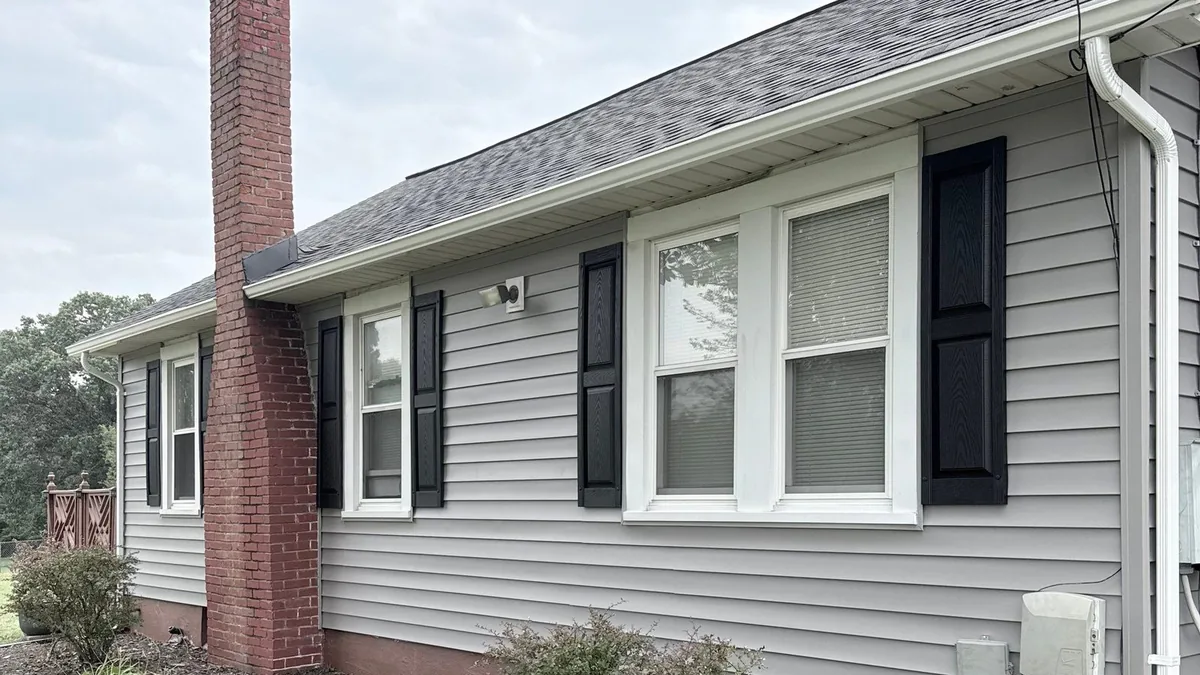
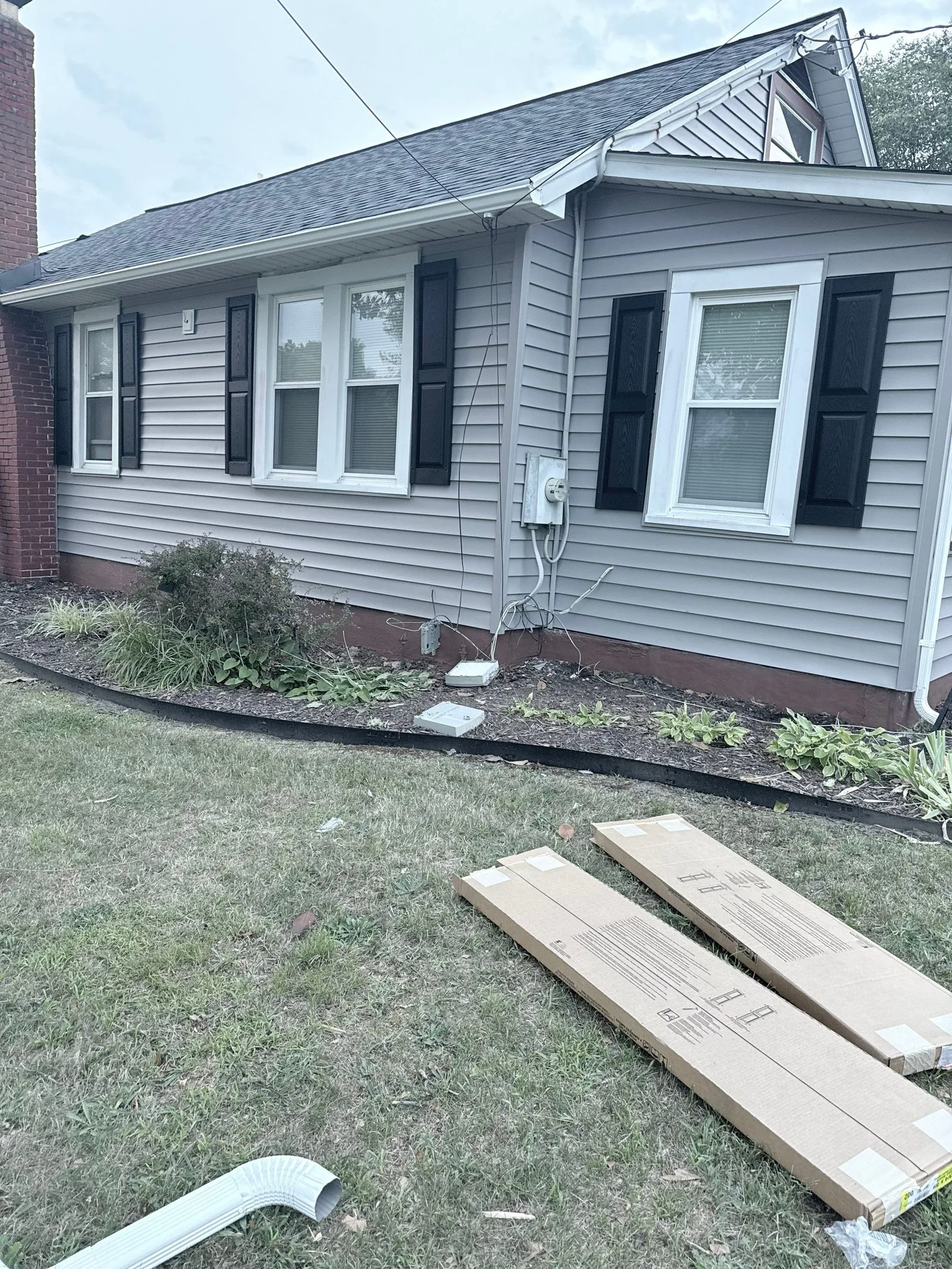
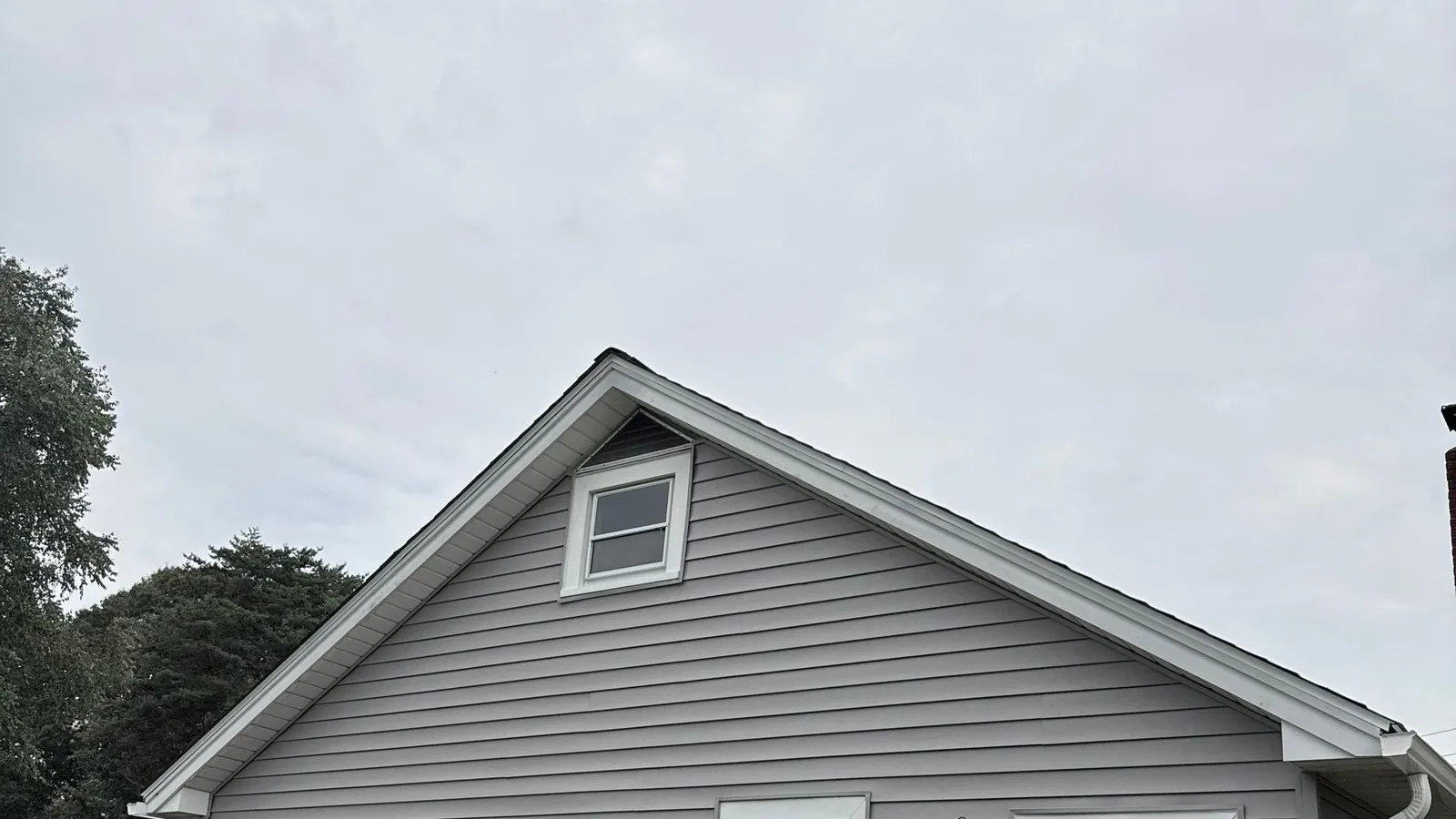
Real job photos from our own site camera. Every siding replacement job opens with a free no-obligation inspection.
The Difference
Why homeowners choose Diakite Roofing & Restoration for siding replacement
More about Diakite Roofing & Restoration
Who We Work With
Siding replacement in Columbia: materials, standards and permits
- Xactimate. Insurance scopes are written in Xactimate, the estimating software your carrier already prices from.
- Howard County Department of Inspections, Licenses and Permits. We are based in Columbia, and the county office that issues the permit is the office to ask about the permit.
Good to Know
Siding replacement: what Central Maryland homeowners should know
The point where siding stops being worth patching
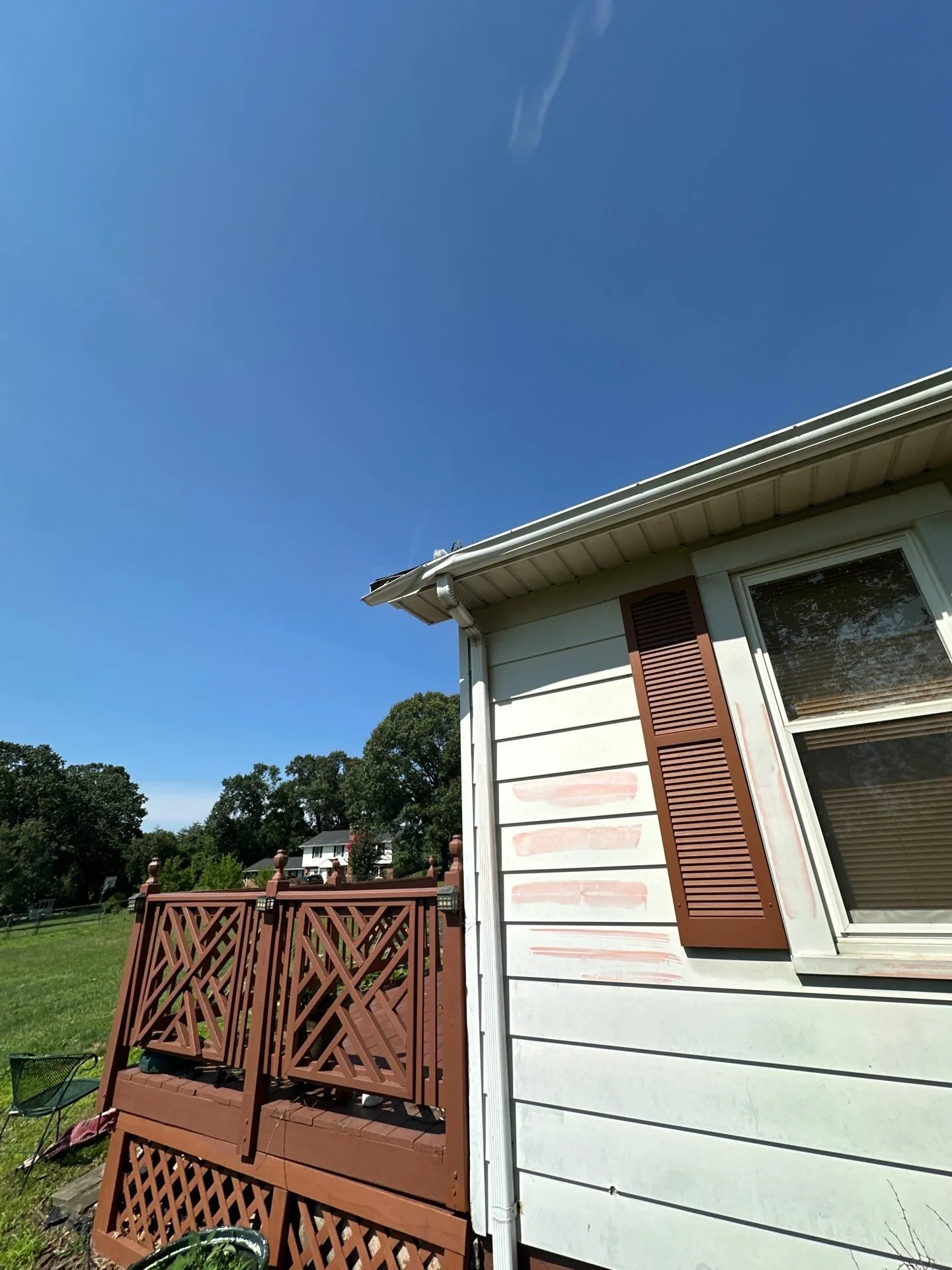
Vinyl near the end goes brittle and cracks at the nail hem, chalks color onto your hand, and ripples or pulls loose where the original installer nailed it tight. Hail leaves dents and star cracks on whichever elevation took the storm, usually south and west, and wood or composite shows its age as soft butt ends, paint that will not hold a second season, and rot creeping up from the water table.
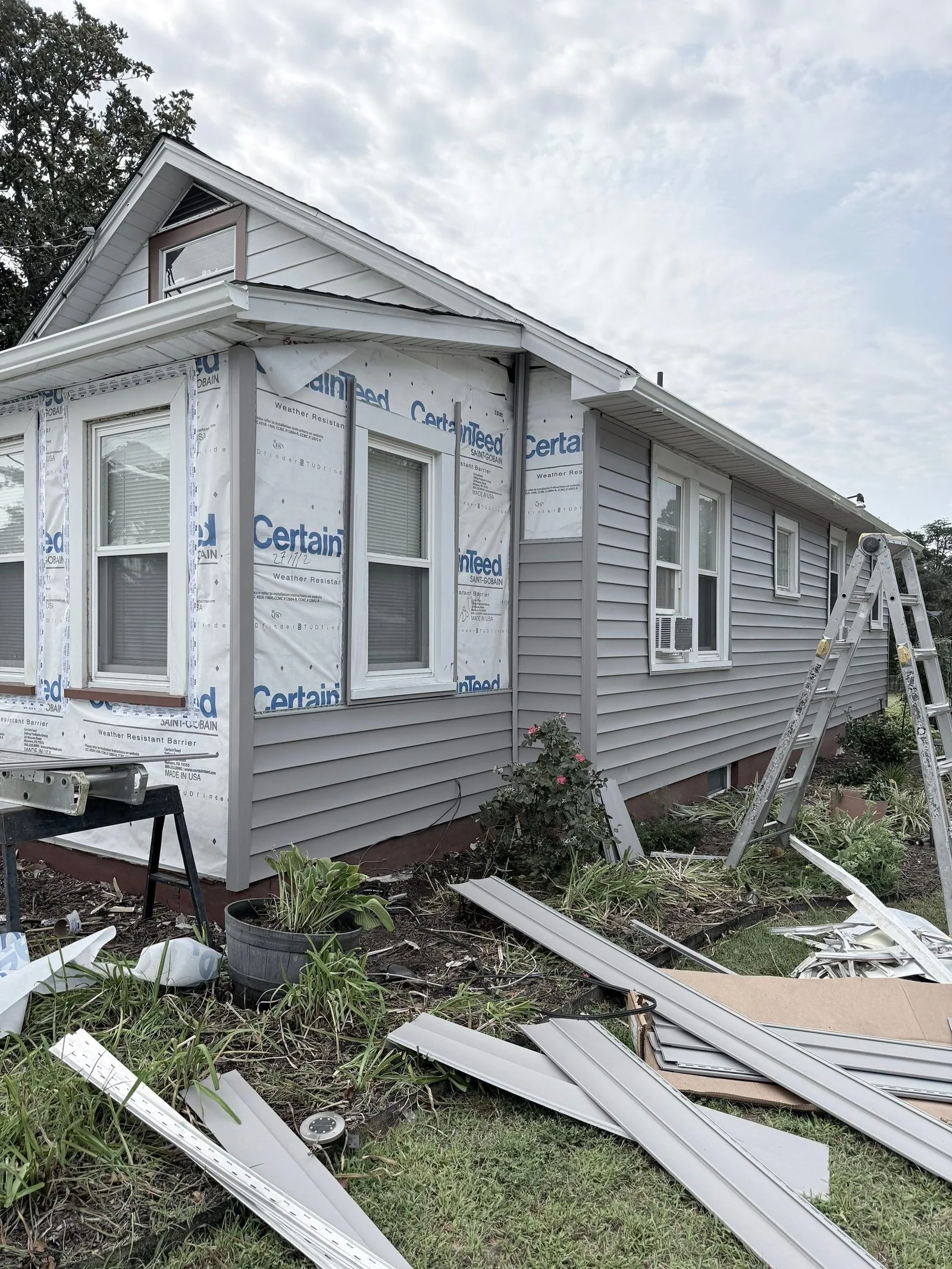
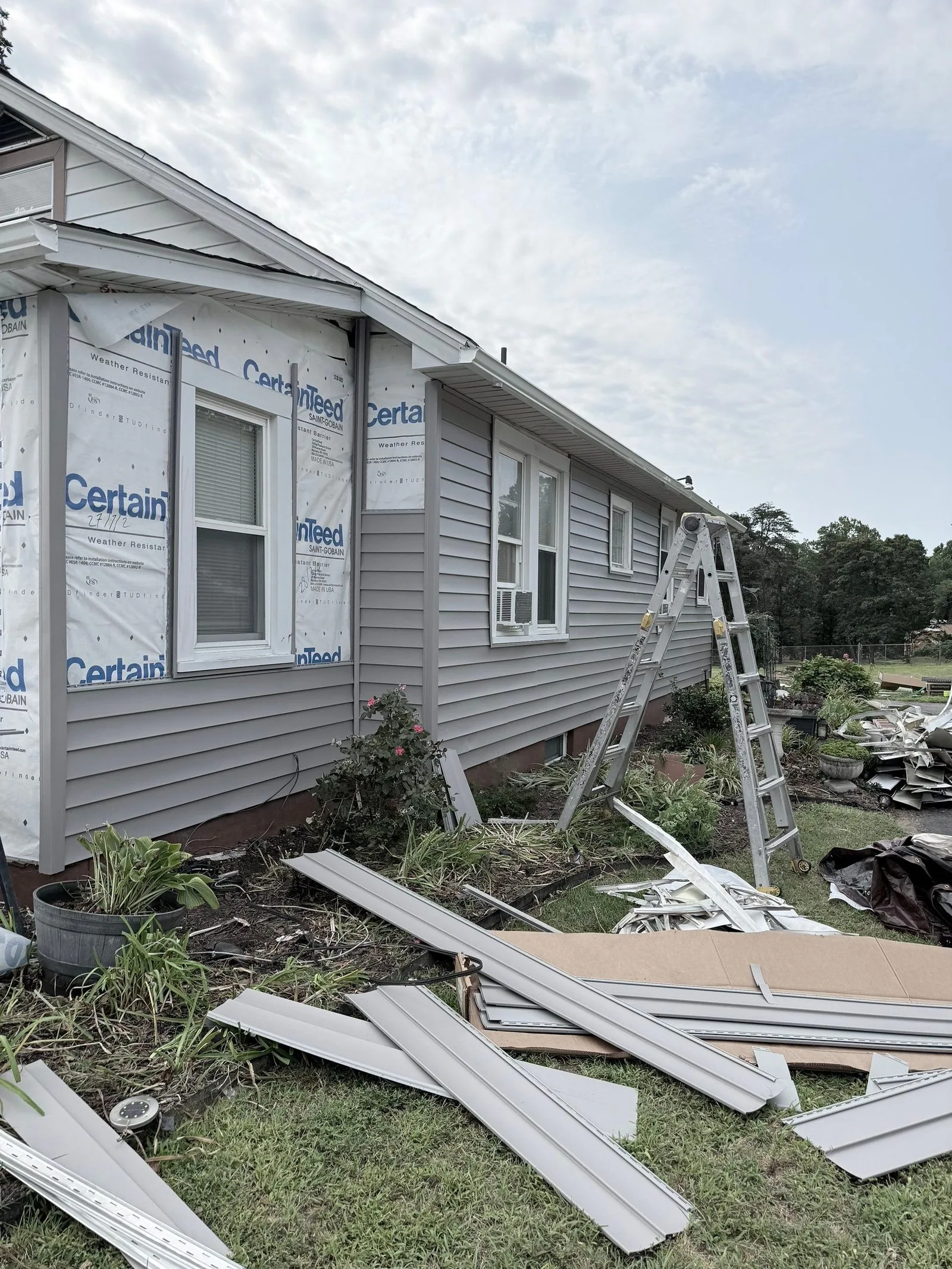
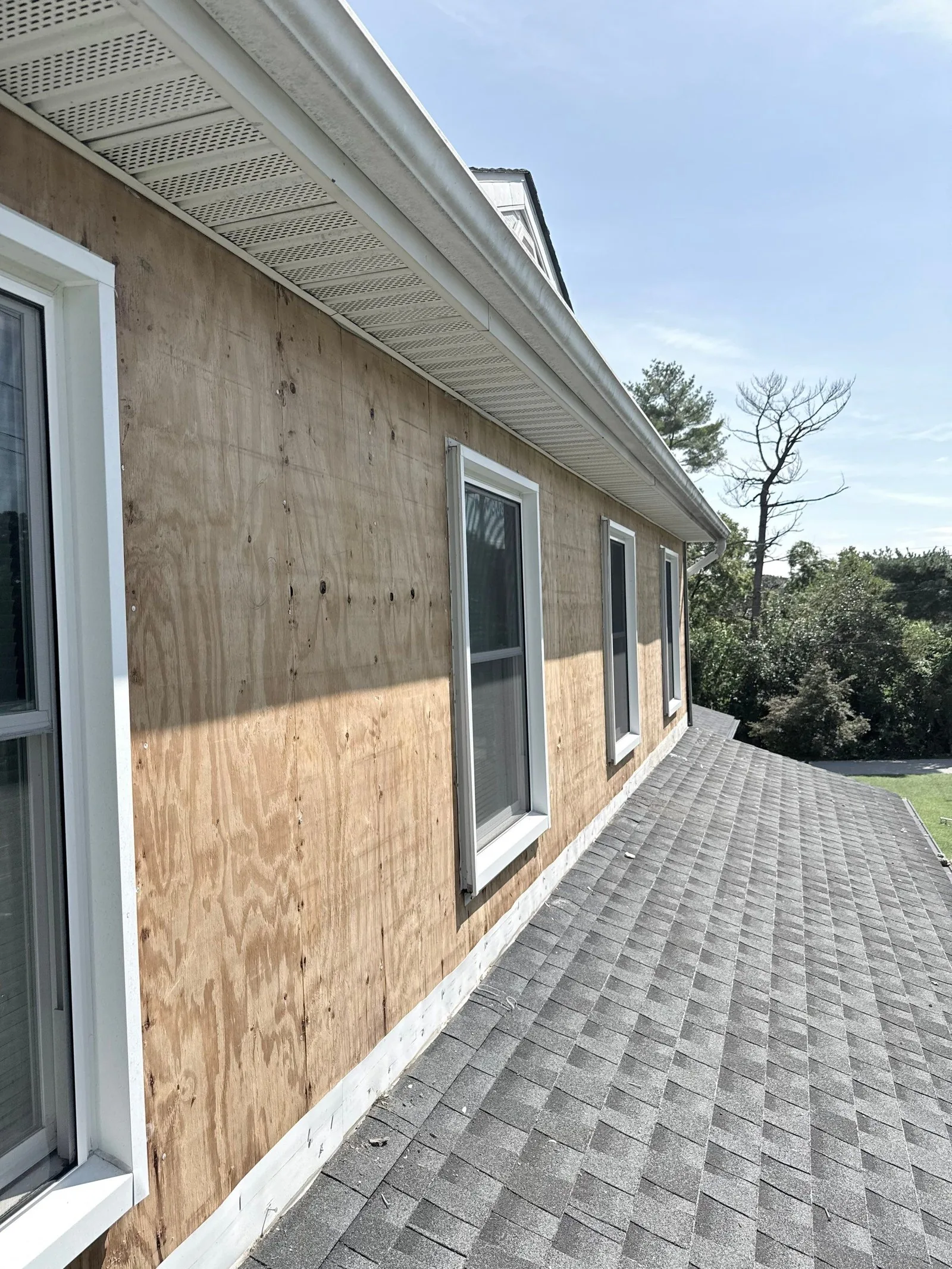
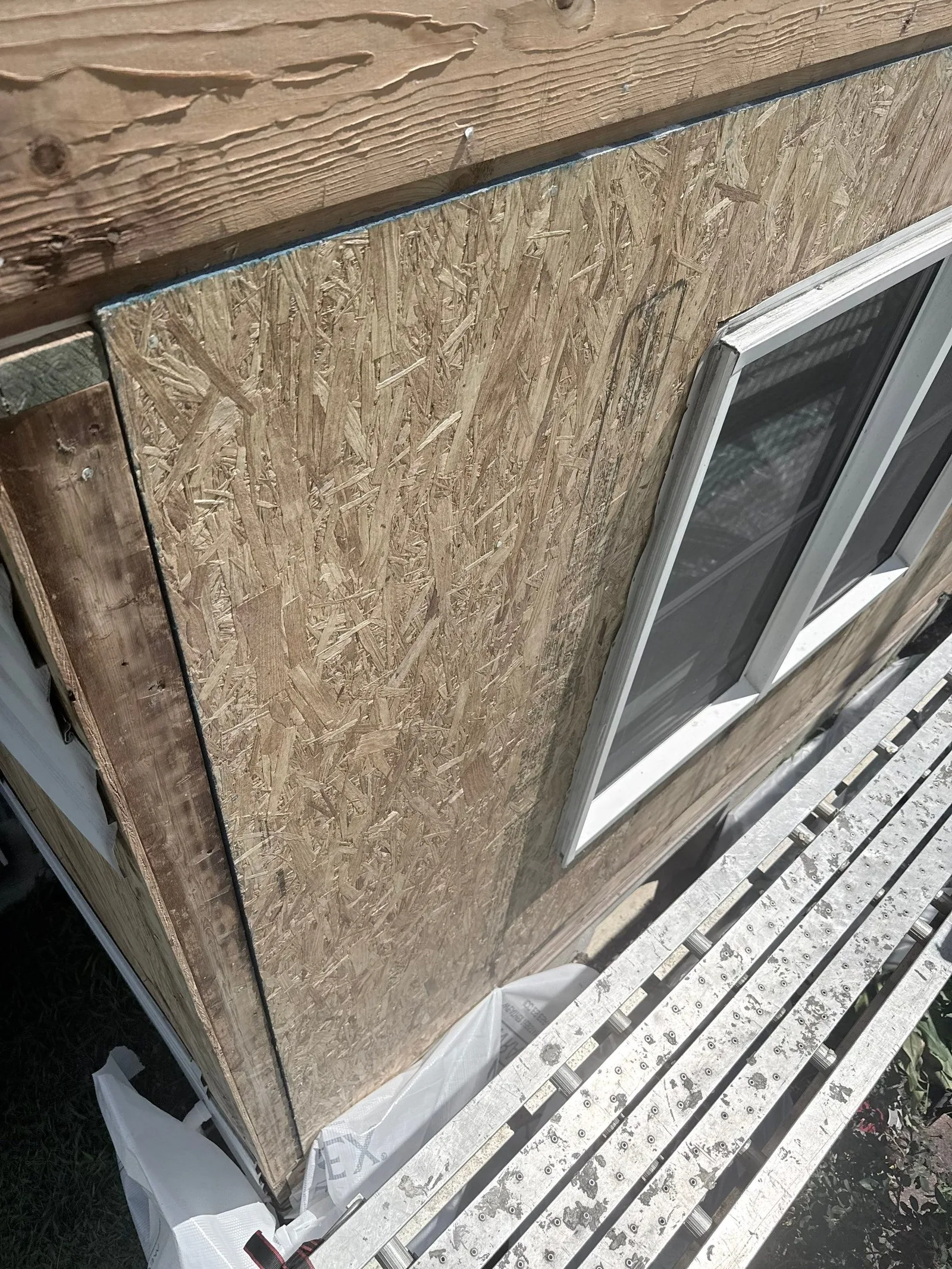
Moisture behind the wall is where patching stops making sense, because by then the sheathing and framing are soaking it up. When we replace, the old material comes off, we inspect the sheathing and repair it where it is wet or soft, and the wall gets rebuilt from the weather barrier out.
More about siding replacement
House wrap and flashing behind the siding
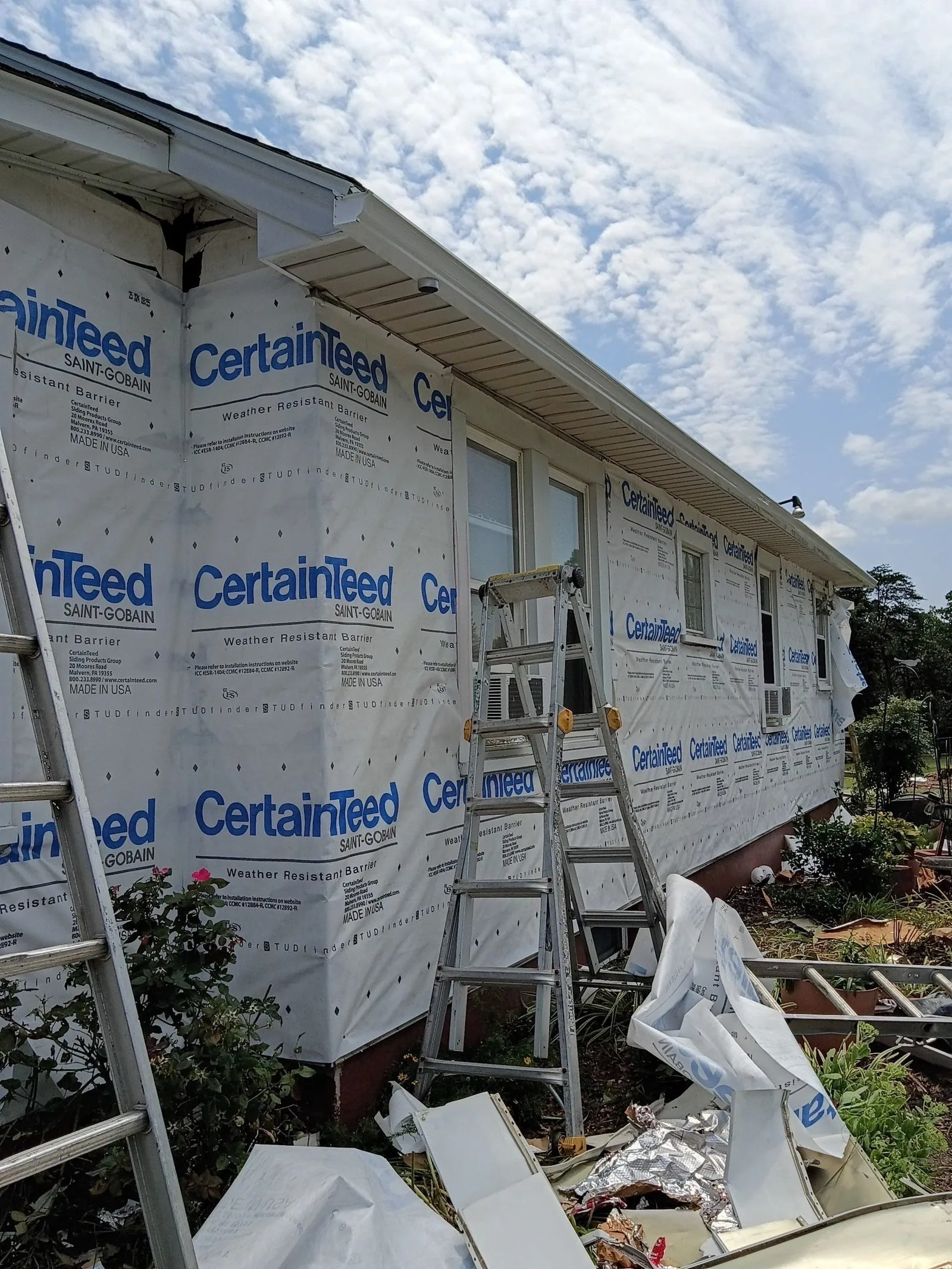
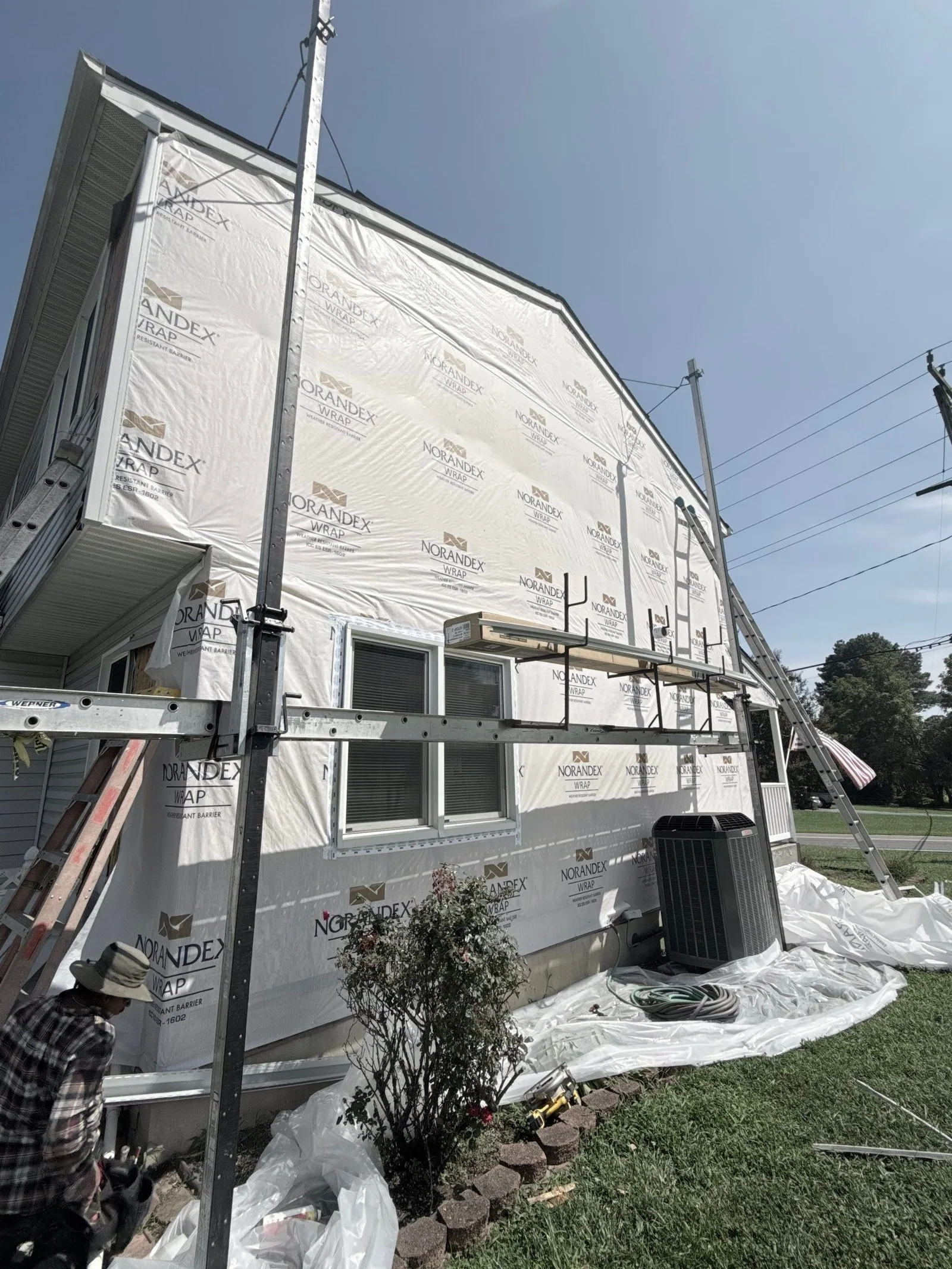
Siding sheds most of the water, and the weather-resistive barrier behind the panels handles the rest, tied into every opening with flashing.
We lap the house wrap so water runs down and out, set head flashing over the wrap at windows and doors, and put a kick-out flashing wherever a roof edge meets a wall. A missing kick-out is one of the most common reasons we open a wall and find rotted sheathing.
Great job on my roof in Glen Burnie. Handled all the insurance claim. Very good crew. No complaints the roof look great, great clean up as well. I highly recommend.
Vinyl nails go in the center of the slot, snug but not driven, so the panel can move as a Maryland wall swings from a 20 degree January night to a 95 degree July afternoon.
Fiber cement goes on the other way, with sealed cut ends, correct gapping at butt joints, and blind nailing to the stud layout.
Vinyl, insulated vinyl, and fiber cement in Central Maryland
Insulated vinyl is the practical middle for most homes we work on around Columbia. The foam backing adds real rigidity, so the wall reads flatter and takes an impact better than hollow panel, and it gives up less heat than the bare product.
Standard vinyl still makes sense on a rental or a wall nobody sees from the street. Fiber cement costs more and takes longer to hang because it is heavy and every cut has to be handled properly, but it holds paint for years and does not soften in the humidity that sits over central Maryland all summer.
Hugo Arredondo left us the review that speaks to this work: "The contractor did an excellent job installing my siding. They were professional, efficient, and paid close attention to detail."
Free measure, firm written quote. Call (667) 200-6656.
Profiles and Materials
Siding profiles and materials we install around Columbia
Vinyl, insulated vinyl and fiber cement cover most of the walls we replace across Howard County, and a handful of profiles and materials get asked for by name. Here is what each one is and where it suits a Central Maryland elevation.
- Hardie plank. Hardie plank is the fiber cement lap siding made by James Hardie, and it is usually what a homeowner means when they ask for fiber cement by brand. It comes primed or with a baked-on color finish, holds that color for years in the humidity that sits over Central Maryland all summer, and does not soften or feed insects the way wood can. It is heavy and every cut has to be handled properly, so the labor runs longer than vinyl. On a front elevation that has to look right up close, that trade is often worth it.
- Shiplap. Shiplap is a board profile with a rabbeted edge, so each board laps the one below it in a flush, tight line instead of the stepped shadow of traditional lap siding. Run horizontally it gives a clean, modern face, and some homeowners use it on a gable accent or a porch ceiling. We install it in fiber cement and engineered wood rated for exterior use, so it stands up to Maryland weather rather than the interior pine version people see online.
- Board-and-batten. Board-and-batten runs vertically, with wide boards and a narrow batten strip covering every seam. It is the farmhouse look that has come back into demand, and it reads well on gable ends, dormers and additions where you want the wall to feel taller. We install it in fiber cement and in vinyl panels made for the profile, flashed at the top so water sheds off the vertical joints instead of collecting in them.
- Vertical vinyl. Vertical vinyl is standard vinyl siding hung on the vertical rather than the horizontal. It sheds water fast, which suits a wall that takes a lot of driven rain, and it is a common way to set a gable or a porch skirt apart from the horizontal runs around it. It fastens the way any vinyl does, nailed loose in the center of the slot so the panel can move as the temperature swings across a Maryland year.
- Aluminum. Aluminum was the standard on a lot of older Central Maryland homes before vinyl took over, and we still match and replace it. It will not burn or feed insects and it takes paint well, which is why some owners of mid-century houses keep it rather than change materials. Its weak point is denting from hail and impact, so on an elevation that catches storms we will walk through whether matching the aluminum or moving to insulated vinyl or fiber cement fits the house better.
If your vinyl still has sound panels and the real problem is faded color, painting is sometimes worth weighing before a full replacement. Our guide on whether vinyl siding can be painted covers when that holds up, what the prep and paint take, and the point where a new wall is the better call.
Watch For These
Signs you need siding replacement
- Panels cracked, split, or hanging loose after a windstorm
- Hail dents or punch-throughs across one elevation of the house
- Color faded unevenly, with chalk coming off on your hand
- Soft spots in the wall, or paint peeling on the inside of an exterior wall
- Wasps, squirrels, or water getting in behind loose and missing panels
Seeing one of these? Call (667) 200-6656 or request a free estimate.
See recent siding replacement jobs in our project gallery.
One Siding Job, in Order
From the original wall to the new vinyl going on
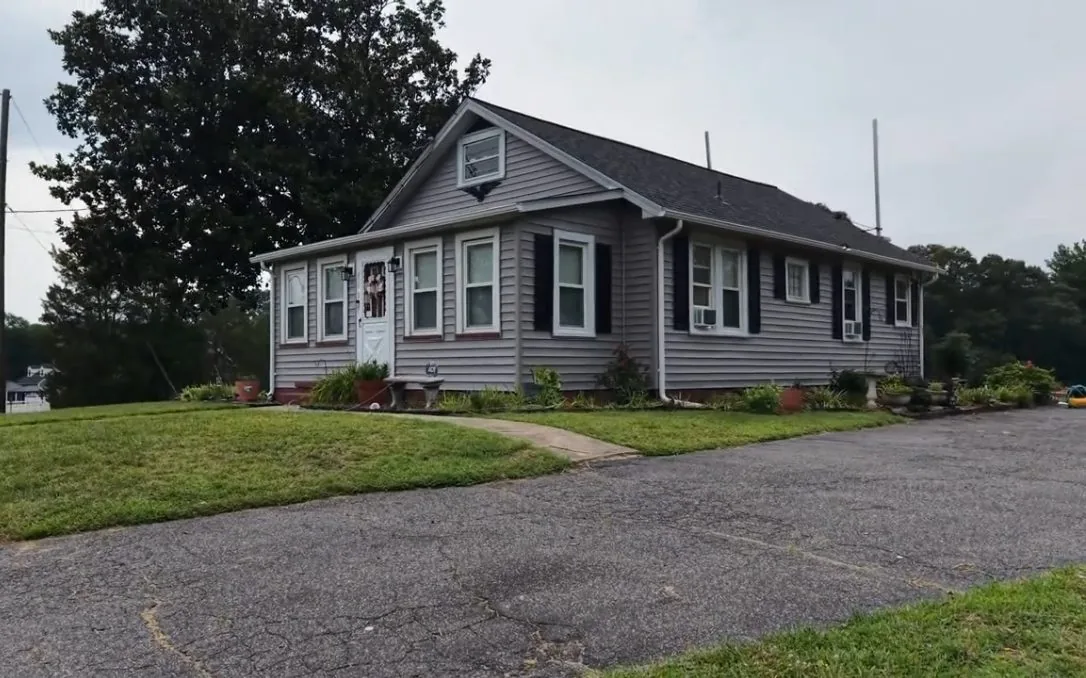
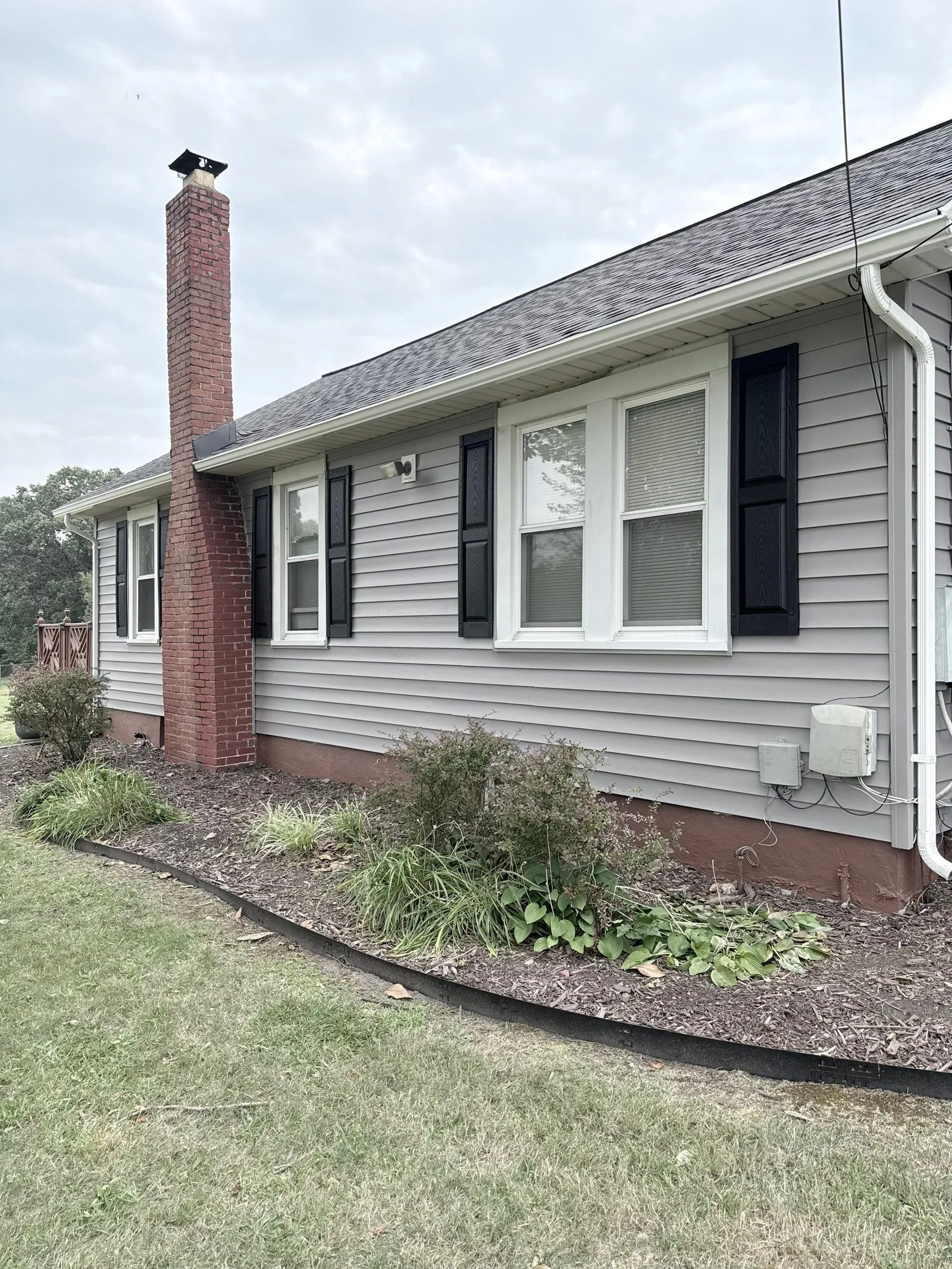
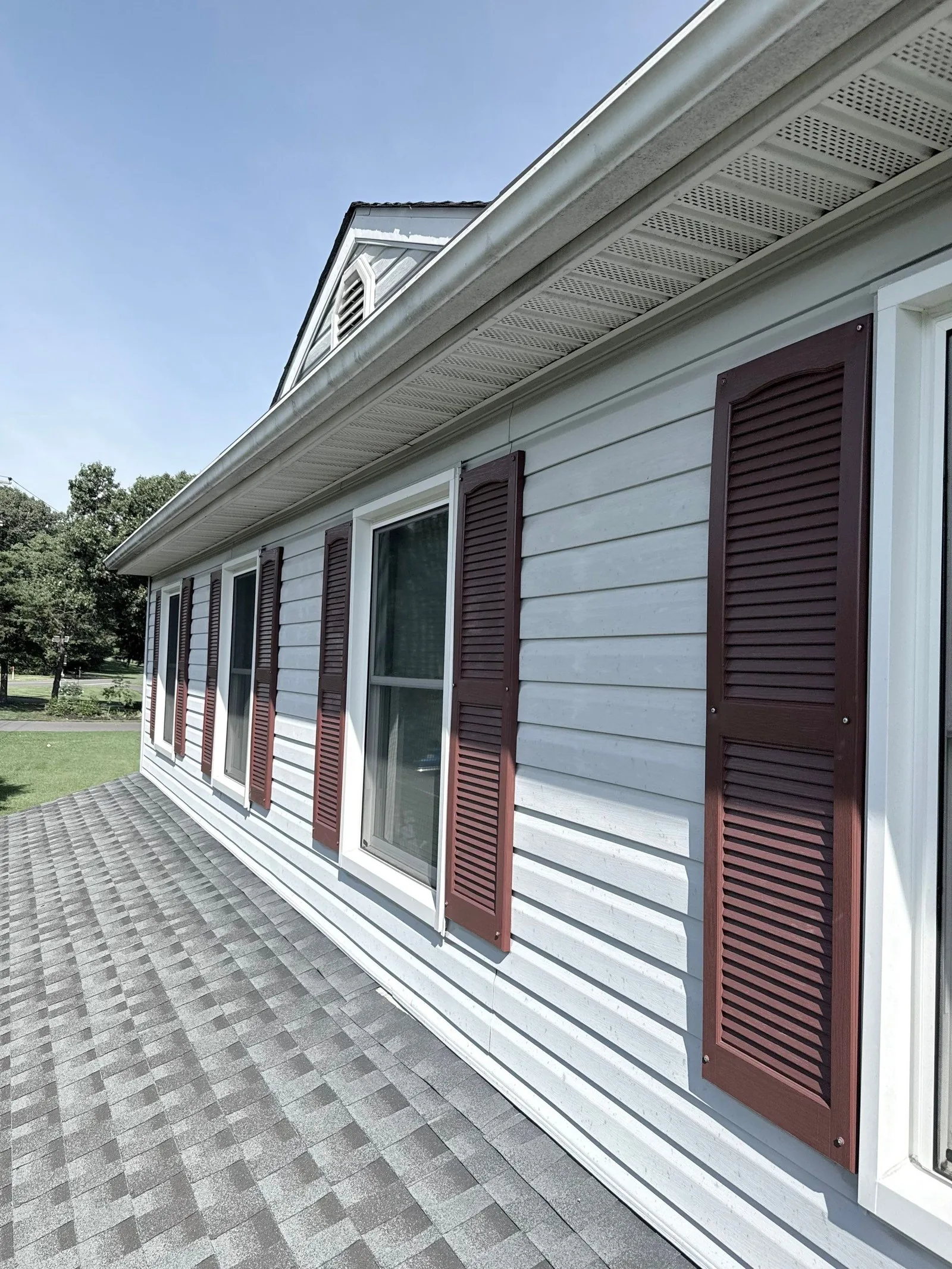
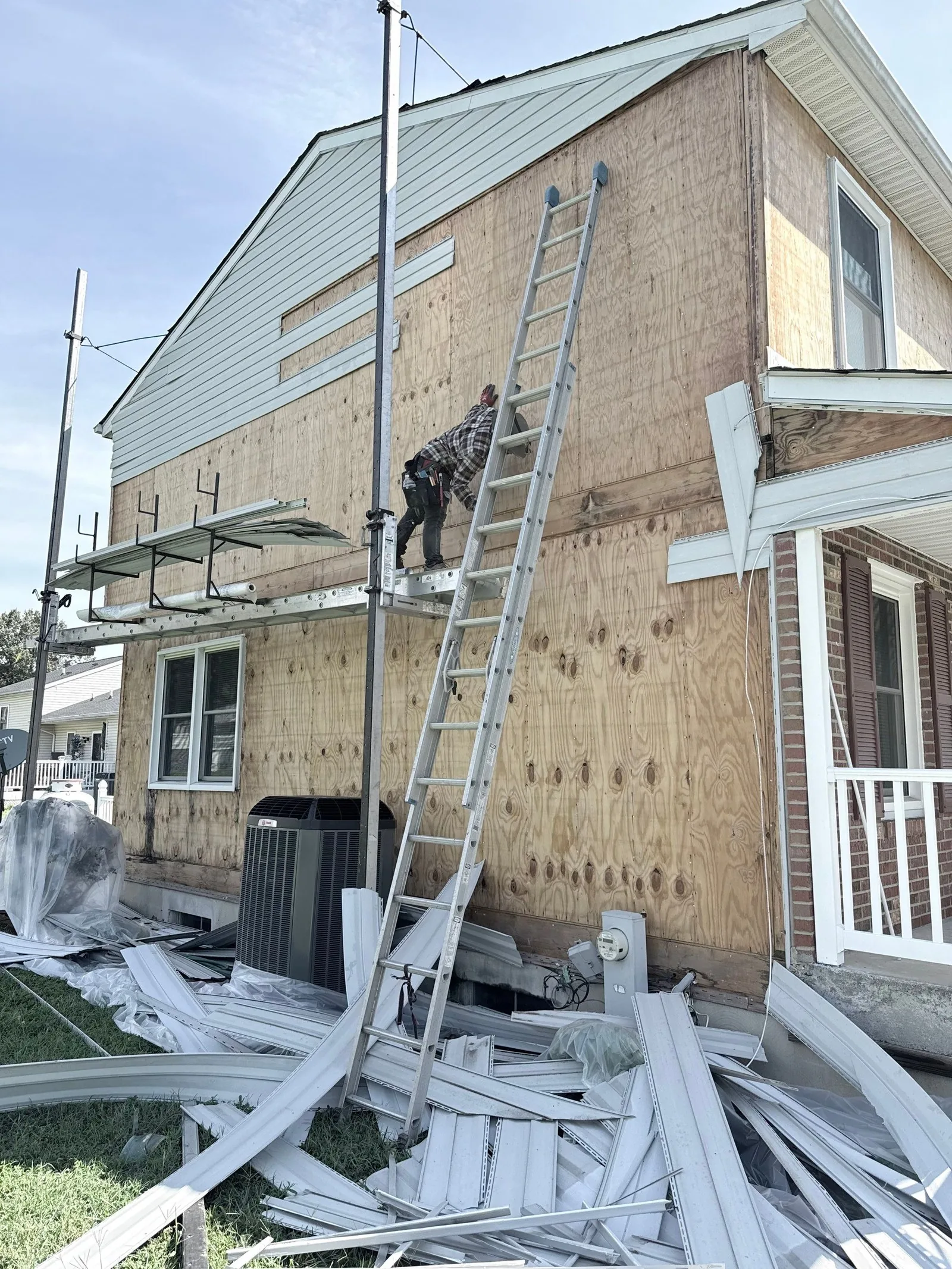
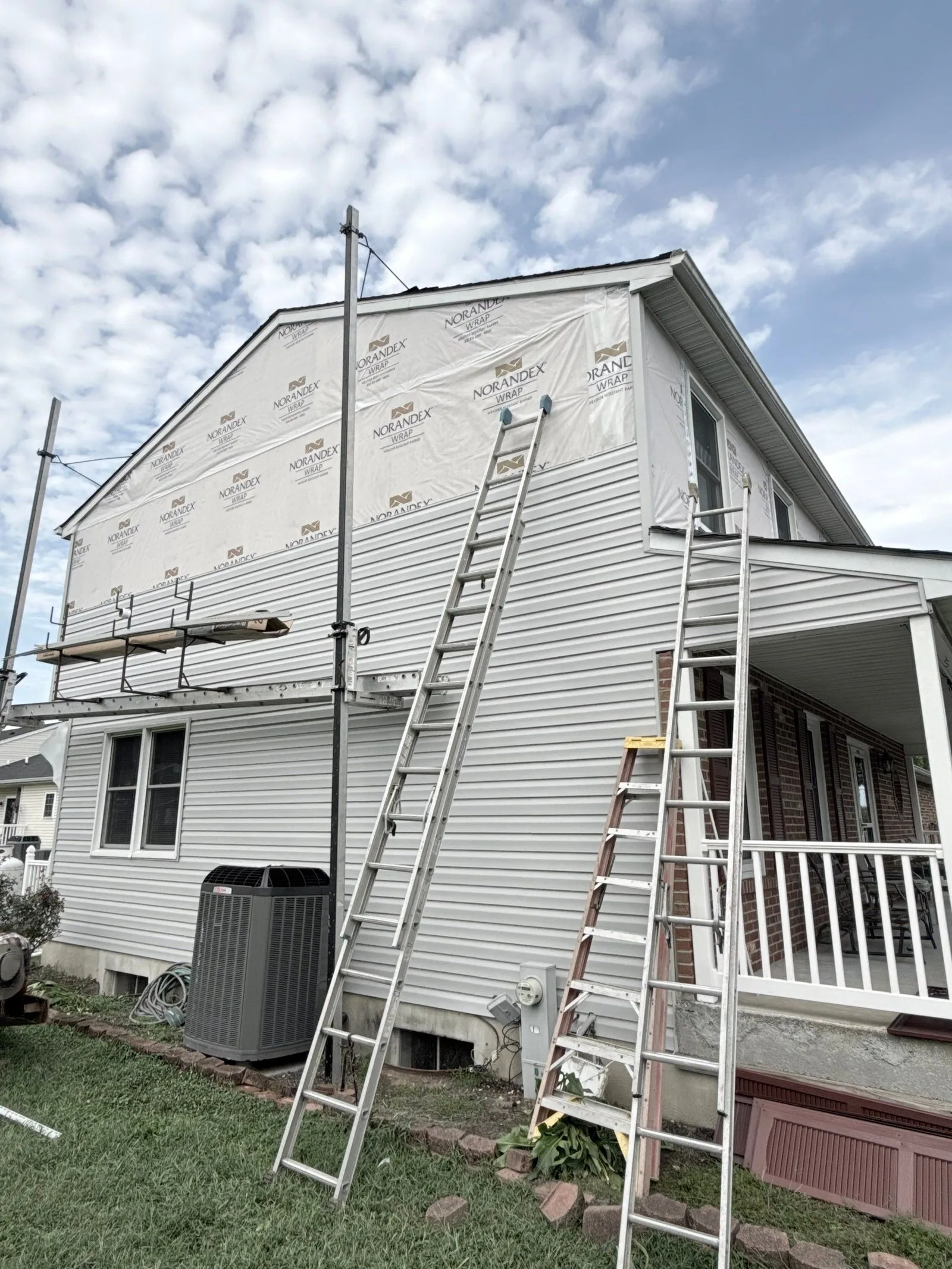
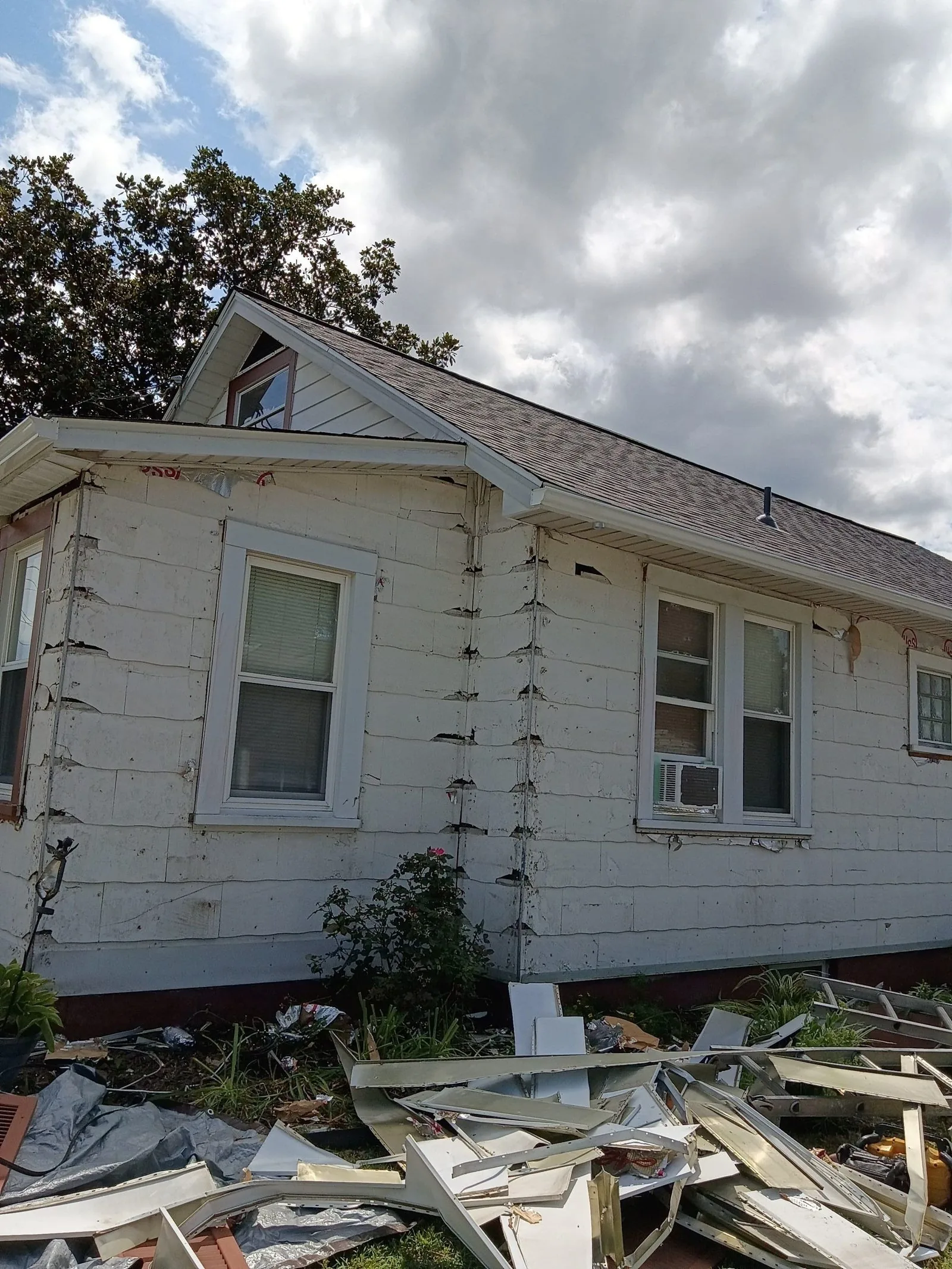
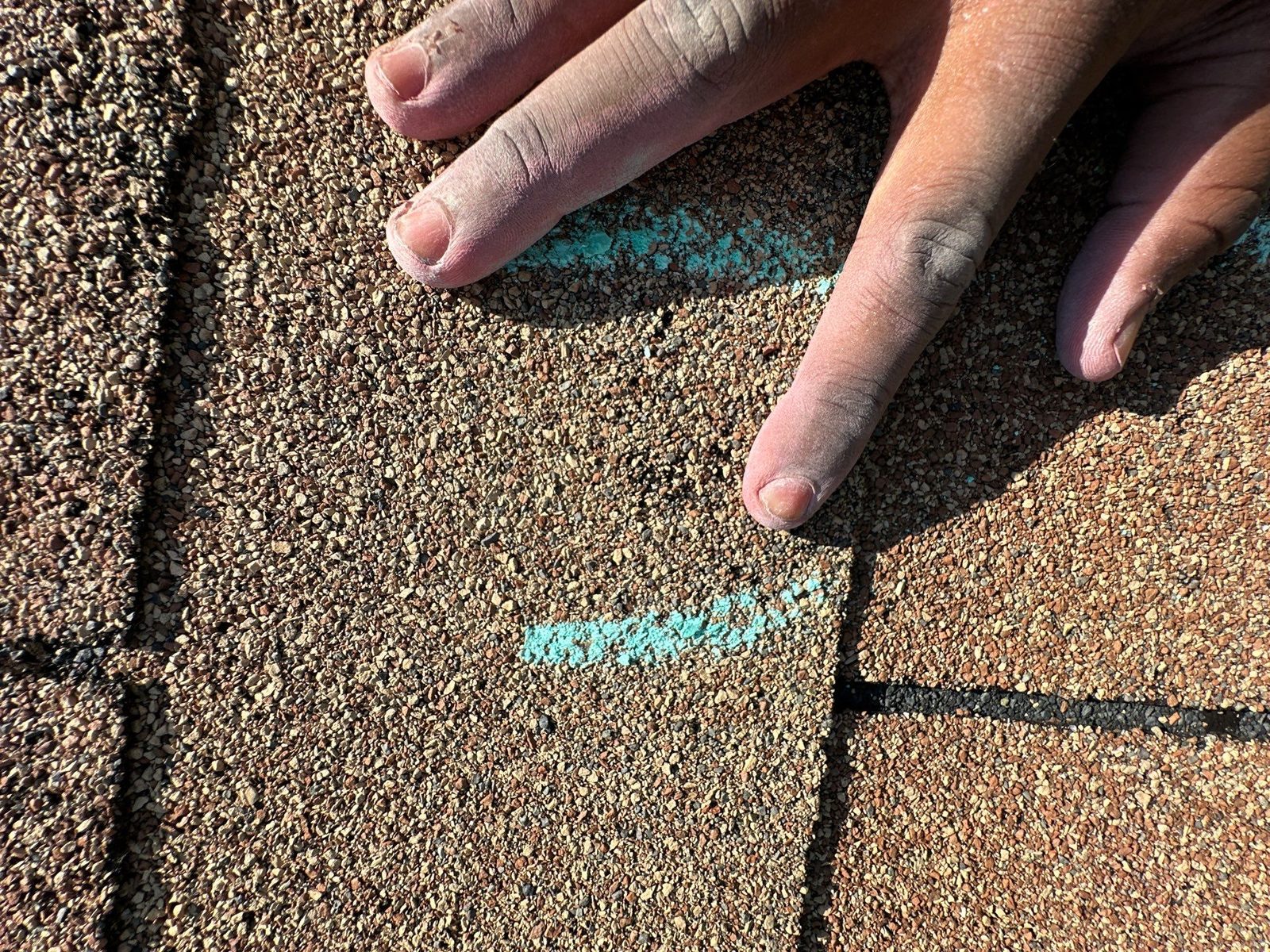
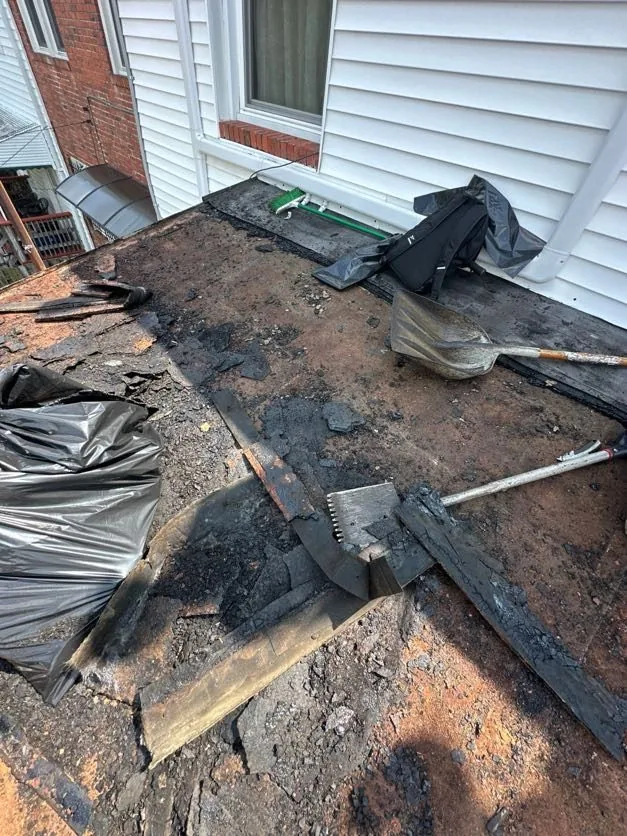
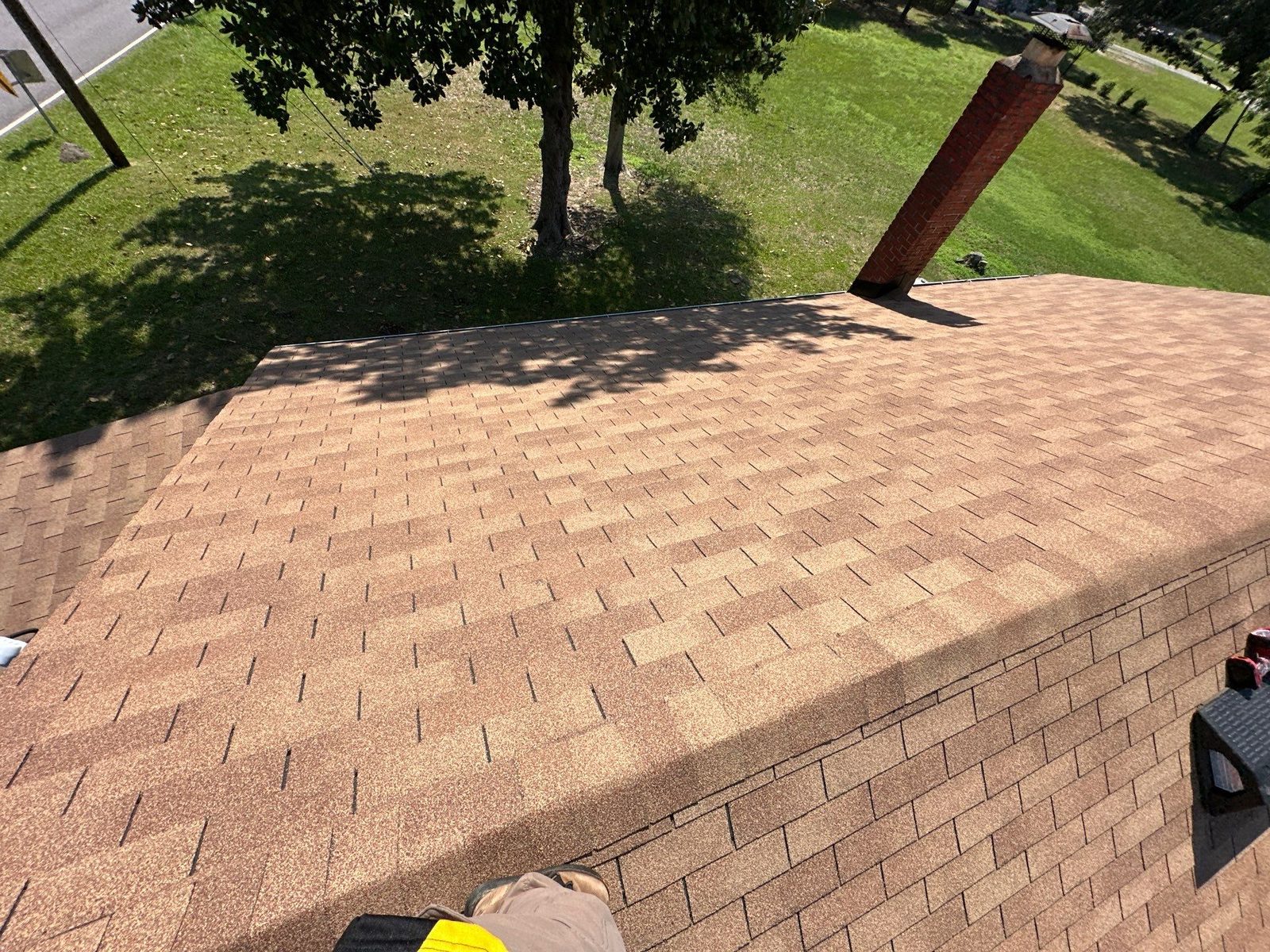
These six frames came from one workday. The last picture is still an active job, with the upper wall wrapped, so it is labelled as installation in progress rather than finished work.
Our Work
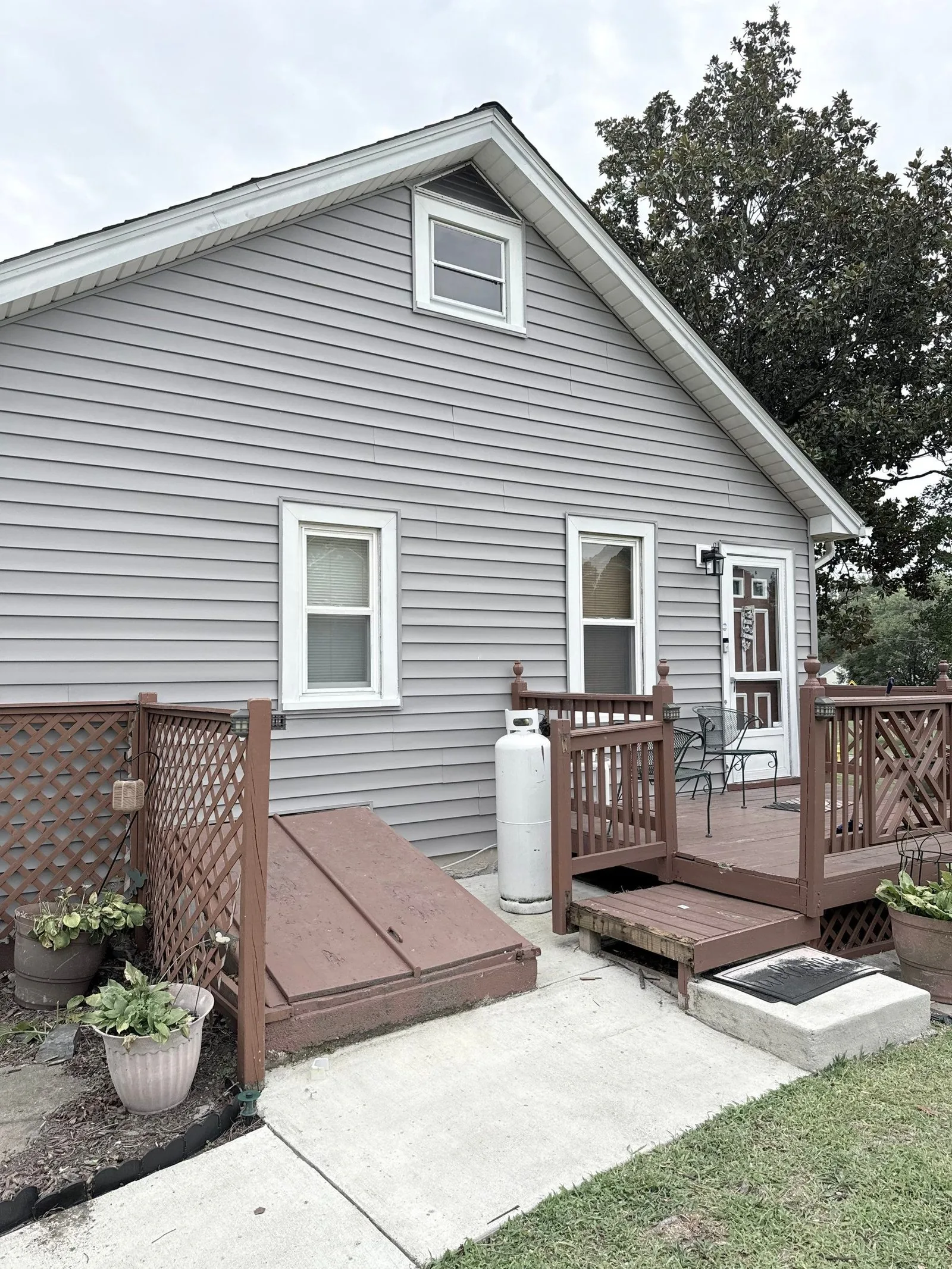
Recent siding replacement jobs
Our Process
The Diakite Roofing & Restoration siding replacement process
- 01
Exterior walkthrough
We look at every elevation, note the damage, and measure. If the roof is in the same shape, we say so, so you can decide once instead of twice.
- 02
Scope and selection
Profile, color, and trim details get chosen and written into the scope with the price.
- 03
Tear-off and wall inspection
Old siding comes off, the sheathing and wrap get inspected and corrected, and the openings get flashed.
- 04
Install, trim, and cleanup
New siding, corners, and trim go on. We police the yard for nails and offcuts before we leave.
Working out how to pay for it? Financing is offered through Enhancify and its lending partners.
Featured Google Reviews
What homeowners say
Lassana came out and looked at my roof after all the crazy storms going around and told me that my roof doesn’t have any damages yet whereas all the over roofers told me I need a new roof. My
Roof was only 10 year old
Great experience! The contractor did an excellent job installing my siding. They were professional, efficient, and paid close attention to detail. The finished work looks amazing, and I would definitely recommend them to anyone looking for quality siding work.
Great experience with this company. They were professional, punctual, and thorough during the roof inspection. They explained their findings clearly and provided honest recommendations without pressure. I appreciate their attention to detail and would highly recommend their services.
Great job on my roof in Glen Burnie. Handled all the insurance claim. Very good crew. No complaints the roof look great, great clean up as well. I highly recommend.
This whole experience was stress- free and professional. Lass explained everything clearly step by step and made sure I was comfortable with the whole process. The work was neat and punctual and all the materials were cleaned up quickly. The roof looks great! I highly recommend their services, you will be very pleased with the results.
Excellent service from start to finish! The team is professional, responsive, and delivers high-quality work. I highly recommend them!
This company was very professional and very prompt. They explained everything to me in detail, along with pictures and videos. They got the job done quickly and thoroughly, and at a reasonable price. I would highly recommend Diakite Roofing and Restoration, and I would use them again if I needed to in the future.
Good to Know
Siding replacement: frequently asked questions
Do you replace bad sheathing and house wrap on Central Maryland homes?
Yes, and you see it before we cover it. Rotted sheathing is extra work priced honestly on the spot, never a surprise line added at the end.
What does finished siding work look like on a Howard County house?
One customer described it on Google: "Great experience! The contractor did an excellent job installing my siding. They were professional, efficient, and paid close attention to detail. The finished work looks amazing, and I would definitely recommend them to anyone looking for quality siding work." (Hugo Arredondo, 5 stars)
Is storm damaged siding covered by insurance in Maryland?
Often, when hail or wind caused it. We document siding damage the same way we document a roof and scope it in Xactimate, then the insurer decides. We do not predict that decision for you.
Can you do the roof and the siding together on one Central Maryland job?
Yes, and it usually makes sense. One crew, one schedule, and the wall-to-roof flashing gets handled as one detail instead of two half-details.
How long does a siding job take in Howard County?
It depends on the size of the house and how many elevations are coming off. You get a day count with the quote. We work Monday through Saturday, 8am to 5pm.
Where We Work
Areas we serve
More about where we work
Service Radius
Where we take siding replacement calls across Central Maryland
Columbia is the hub every siding replacement crew rolls out of, and the run is the same one the trucks make every morning: US-29, MD-108, MD-100, I-95 and Washington Boulevard. Those corridors are what put Howard, Anne Arundel, Montgomery, Prince George's, Carroll, Frederick & Baltimore Counties inside a working day, on a 35-mile radius out of Columbia.
| Town | County | From Columbia |
|---|---|---|
| Clarksville | Howard County | About 4 miles |
| Ellicott City | Howard County | About 6 miles |
| Laurel | Prince George's County | About 7 miles |
| Silver Spring | Montgomery County | About 16 miles |
| Rockville | Montgomery County | About 17 miles |
| Annapolis | Anne Arundel County | About 25 miles |
Straight-line miles between town centers, measured from geocoded coordinates. They are not drive times and not route mileage. We are a service-area business, so siding replacement happens at your property, not at a counter.
Where we replace siding: centered on Columbia, MD, across Howard County and six counties around it.
Related services
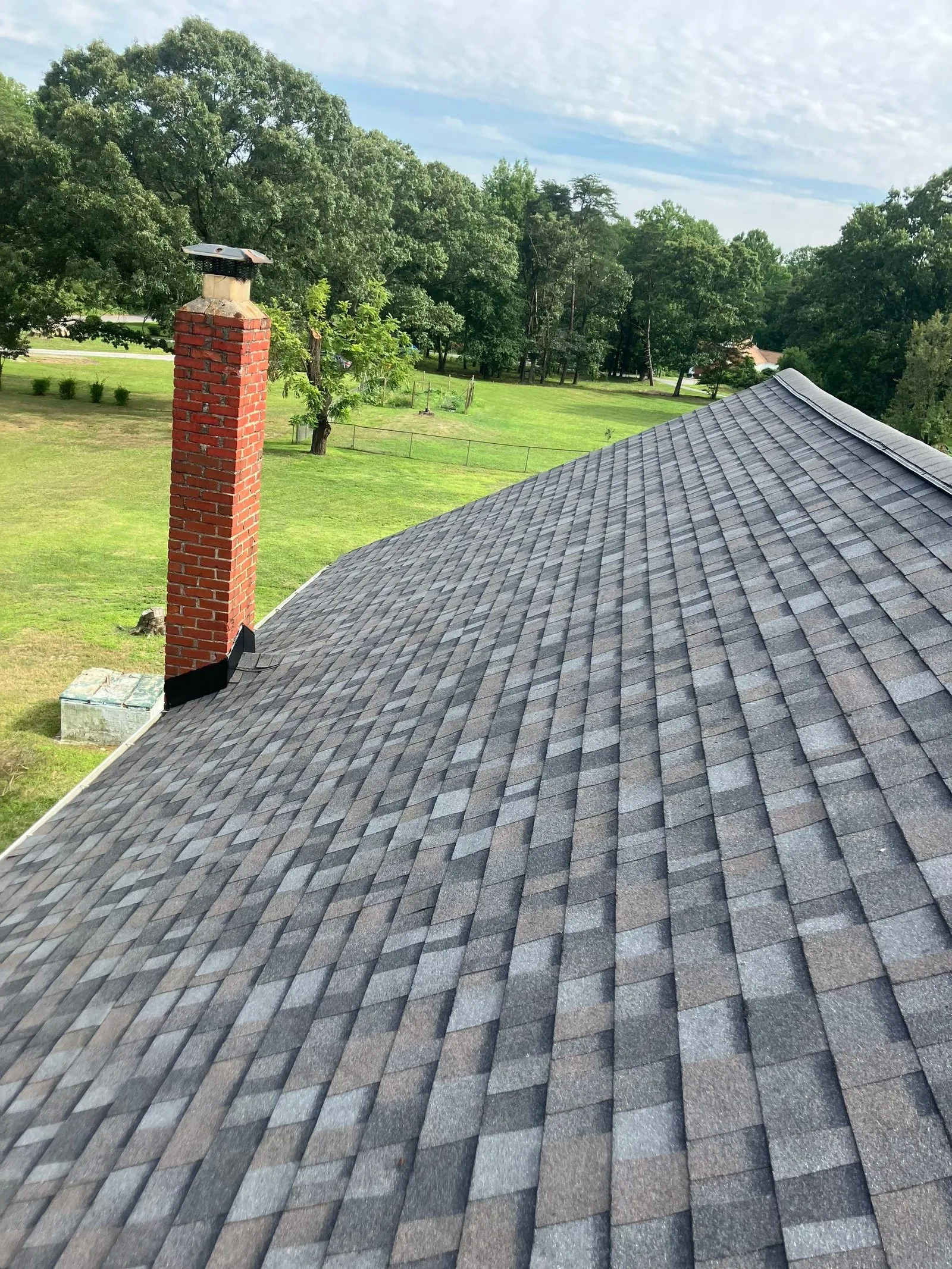
Roof replacement
Full tear-off and a new Owens Corning shingle system, with most Columbia homes finished in a single day.
Roof replacement in Columbia, MD →Storm & hail damage restoration
Roof hail damage chalked and photographed slope by slope, then scoped in Xactimate for your insurance claim.
Storm & hail damage restoration in Columbia, MD →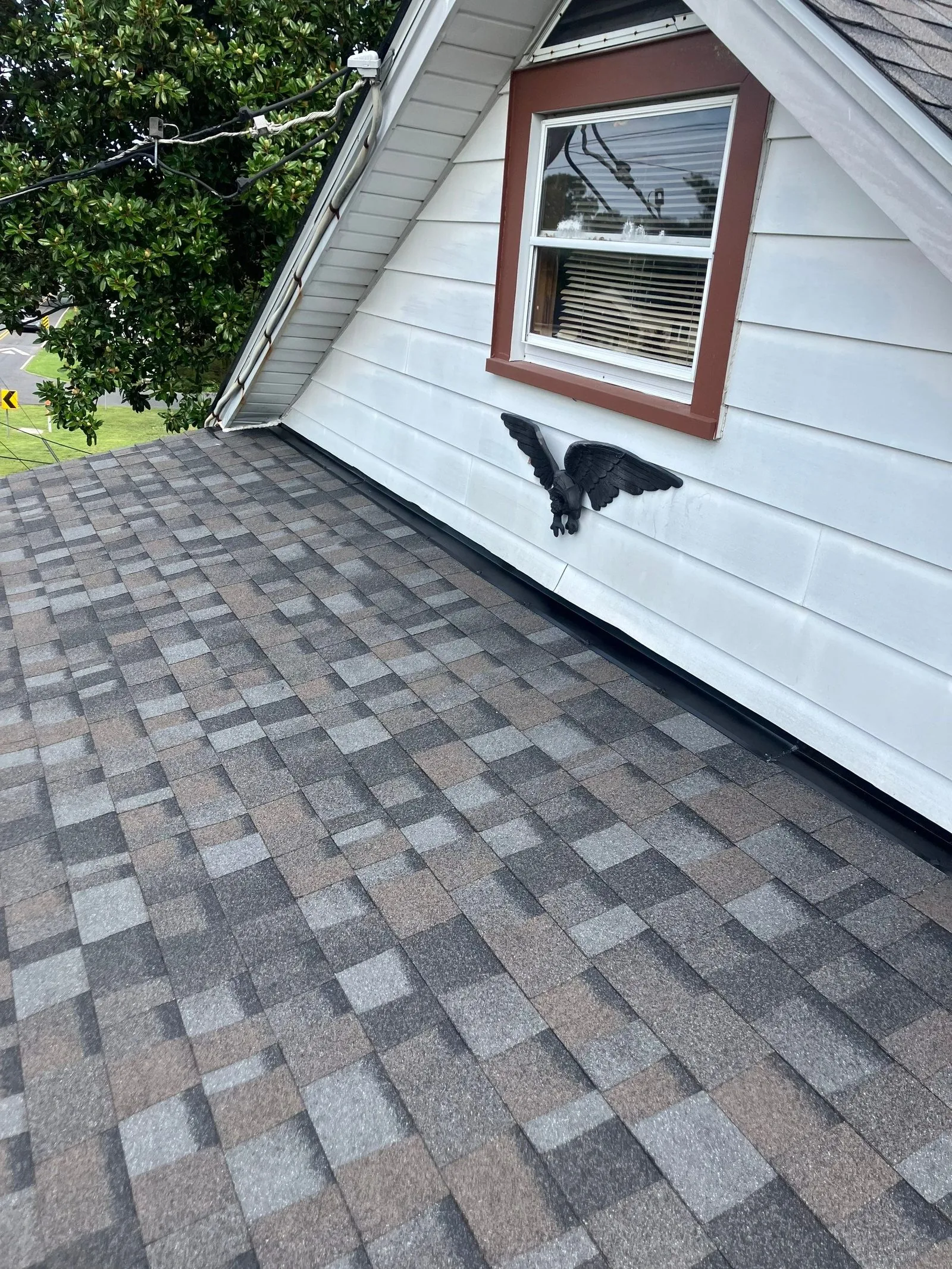
Asphalt shingle roofing
Owens Corning architectural shingles installed with the nailing, ice barrier, flashing, and ventilation details that decide how long a roof lasts.
Asphalt shingle roofing in Columbia, MD →