Blog
Choosing a Flat Roof: TPO vs EPDM vs Modified Bitumen
A flat roof works differently from the sloped, shingled roof on most homes. Water does not run off it the way it does off a pitch, so instead of shingles that shed rain, a flat roof relies on a continuous membrane that seals the whole surface.
If you have a flat or low-slope roof on a home addition, a porch, a rowhouse, or a commercial building in Central Maryland, the material you put on it matters a lot. Here is a plain look at the common flat-roof systems, what sets them apart, and what actually decides how long one lasts.
Why Flat Roofs Work Differently
A pitched roof gets rid of water with gravity and overlapping shingles. A flat roof, which is almost never truly flat but built with a slight slope, cannot rely on that, so it has to be watertight across its entire surface, seams and edges included. That is why flat roofing is a membrane job.
The whole roof becomes one sealed membrane, and the weak points are the seams, the edges, and anywhere a pipe or a wall comes through. Choosing a flat-roof material is mostly about how that membrane is made and how its seams are joined, because the seams are where these roofs usually leak. Our post on flat and low-slope roofs in Maryland goes into the drainage side in more depth.
TPO: The Reflective Single-Ply
TPO is a single-ply thermoplastic membrane, and it has become one of the most common choices on both commercial buildings and modern homes. It usually comes in a light color, and that reflective surface bounces sunlight and heat rather than soaking it up, which can help keep the space below cooler through a Maryland summer.
Its seams are heat-welded, meaning the sheets are fused together with hot air into a bond that is as strong as the membrane itself, which is a big part of why it holds up. It is a solid, cost-conscious option when it is installed well, and like any single-ply, the quality of the seam work decides how it holds up.
EPDM: The Proven Rubber Membrane
EPDM is a synthetic rubber membrane, usually dark in color, and it has one of the longest track records in flat roofing. Contractors have trusted it for decades because it is durable, flexible, and forgiving of a building that expands and contracts through the seasons, which matters in a climate that swings from humid heat to hard freezes. It handles that movement and the constant ultraviolet exposure of an open flat roof without getting brittle quickly.
The traditional knock on EPDM is the seams, which are joined with adhesives or seam tape rather than heat-welded, so the workmanship on those joints is where attention has to go. A dark EPDM roof also absorbs heat rather than reflecting it, which is the trade-off against a light TPO.
Modified Bitumen: Built-Up, Modernized
Modified bitumen is the modern descendant of the old tar-and-gravel built-up roof. It is an asphalt-based material reinforced with fabric and rolled on in layers, with the plies sealed together into a thick, tough surface.
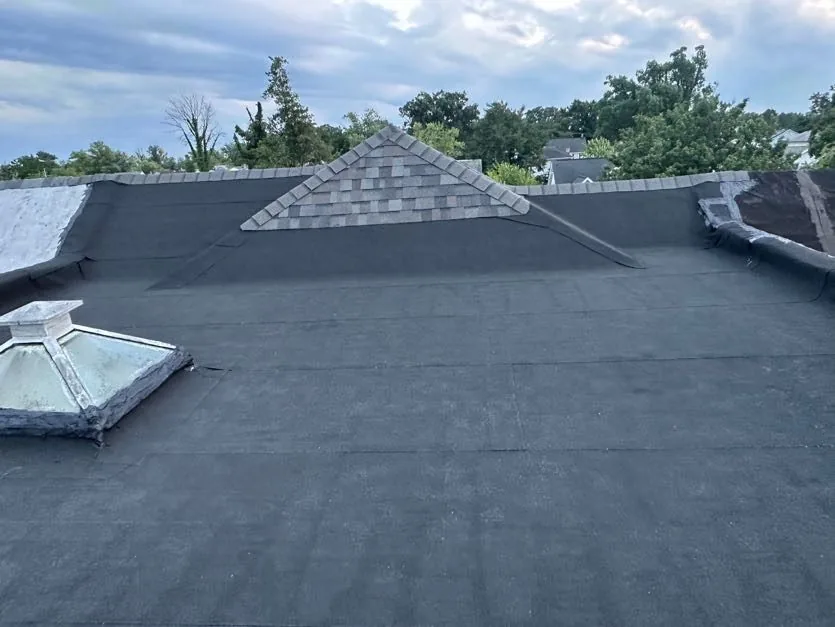
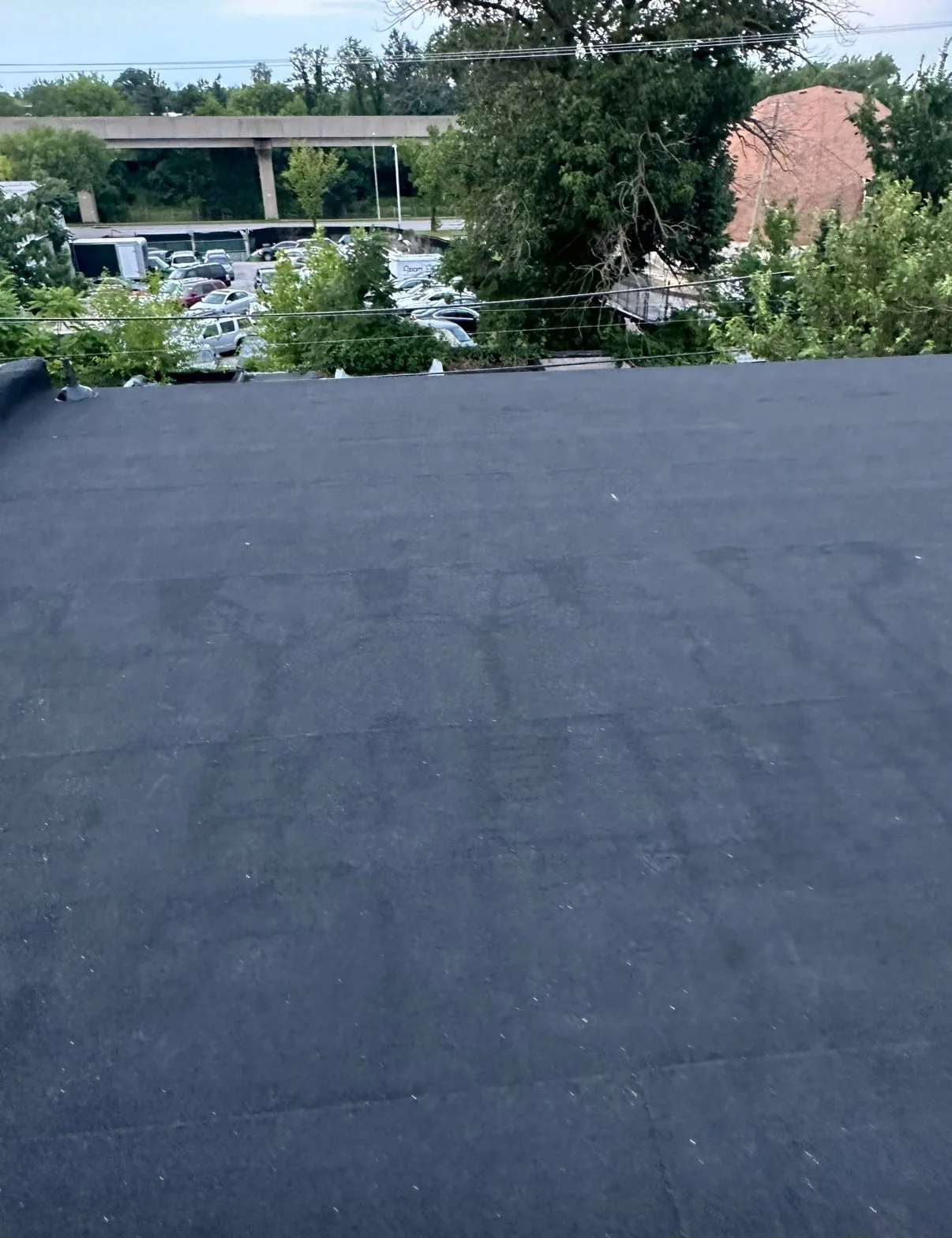
Depending on the product it can be torch-applied, set in cold adhesive, or self-adhered, and the layered build gives it real resistance to punctures and foot traffic, which is useful on a roof that people walk on for maintenance or that carries equipment. It is a well-understood, rugged system, and it is a natural fit where an older asphalt-based roof is being replaced with something in the same family. The photos on this page show a modified-bitumen roof of this kind.
What Actually Decides How Long a Flat Roof Lasts
The material matters, but installation and drainage matter more. Standing water does the most damage to a flat roof. Because the slope is so gentle, a low spot that holds a puddle long after the rain stops will work on the membrane and the seams and shorten the roof's life no matter which system is up there, so getting the drainage right is not optional.
After that it comes down to the seams and the flashing details around pipes, walls, and edges, which is where leaks almost always start. A well-installed membrane with good drainage and clean seam work commonly protects a building for a couple of decades or more, while the same material dropped over ponding water and sloppy seams can fail in a fraction of that.
Reading a Flat Roof That Is Aging
Flat roofs tend to show their age at the seams and the low spots. Seams that are lifting, splitting, or opening up, blisters and bubbles in the membrane, cracking or a chalky brittleness on the surface, and areas that stay wet long after rain are all signs the system is wearing out.
Inside, water stains on the ceiling below a flat section usually mean a seam or a flashing detail has already let go. A few small issues on an otherwise sound roof can sometimes be repaired, but widespread seam failure or ponding damage usually means it is time to plan a replacement rather than keep patching.
Which One Is Right for Your Building
There is no single best flat-roof material, only the right match for the building, the budget, and how the roof gets used. A reflective TPO can make sense where summer heat gain is a concern, EPDM brings a long, proven track record and easy flexibility, and modified bitumen offers a rugged, walkable, layered surface, especially as a replacement in kind.
We install and restore flat and low-slope roofs across Central Maryland, both residential and commercial, and our commercial flat roofing page covers the systems we work with. If your flat roof is aging or leaking, a free inspection will tell you honestly whether it needs a repair or a replacement, and which system fits, with no pressure either way. For a full tear-off and rebuild, our roof replacement page explains how we approach the work.
Frequently Asked Questions
What is the best material for a flat roof?
There is no single best material. TPO is a light, reflective single-ply with heat-welded seams that can help with summer heat gain, EPDM is a proven rubber membrane that is durable and flexible with a long track record, and modified bitumen is a rugged, layered asphalt-based system that resists punctures and foot traffic. The right choice depends on the building, the budget, and how the roof is used, and installation quality matters as much as the material.
Why do flat roofs need a membrane instead of shingles?
A flat or low-slope roof cannot shed water with gravity and overlapping shingles the way a pitched roof does. Instead it has to be watertight across its whole surface, so flat roofing uses a continuous membrane that seals the entire roof, including the seams and edges. The seams, edges, and points where pipes or walls come through are the weak spots, which is why how the membrane is joined is so important.
How long does a flat roof last?
A well-installed flat roof with good drainage and clean seam work commonly protects a building for a couple of decades or more, though the exact figure depends on the system, the installation, and maintenance. The biggest factor is drainage, since standing water shortens the life of any flat roof. Poor seams and ponding can cause a roof to fail in a fraction of its expected life, so installation quality is decisive.
What causes flat roofs to leak?
Most flat-roof leaks start at the seams and at the flashing details around pipes, walls, and edges, rather than in the open field of the membrane. Standing water from poor drainage is the other major cause, because a puddle that lingers works on the membrane and seams over time. Lifting or split seams, blisters, and areas that stay wet after rain are the common warning signs that a leak is developing.
Can a flat roof be repaired, or does it need full replacement?
It depends on the extent of the wear. A few isolated issues on an otherwise sound roof, such as a small seam separation or a localized blister, can often be repaired.
Widespread seam failure, membrane that has gone brittle, or damage from long-term ponding usually means the roof is near the end and replacement is the better spend. An inspection is the way to tell which situation you are in.
Flat roof aging or leaking? Get a straight read on repair vs replace.
Free no-obligation inspections · Central Maryland · Mon-Sat 8:00 AM - 5:00 PM