
Blog
Flat and Low-Slope Roofs in Maryland: What Homeowners Should Know
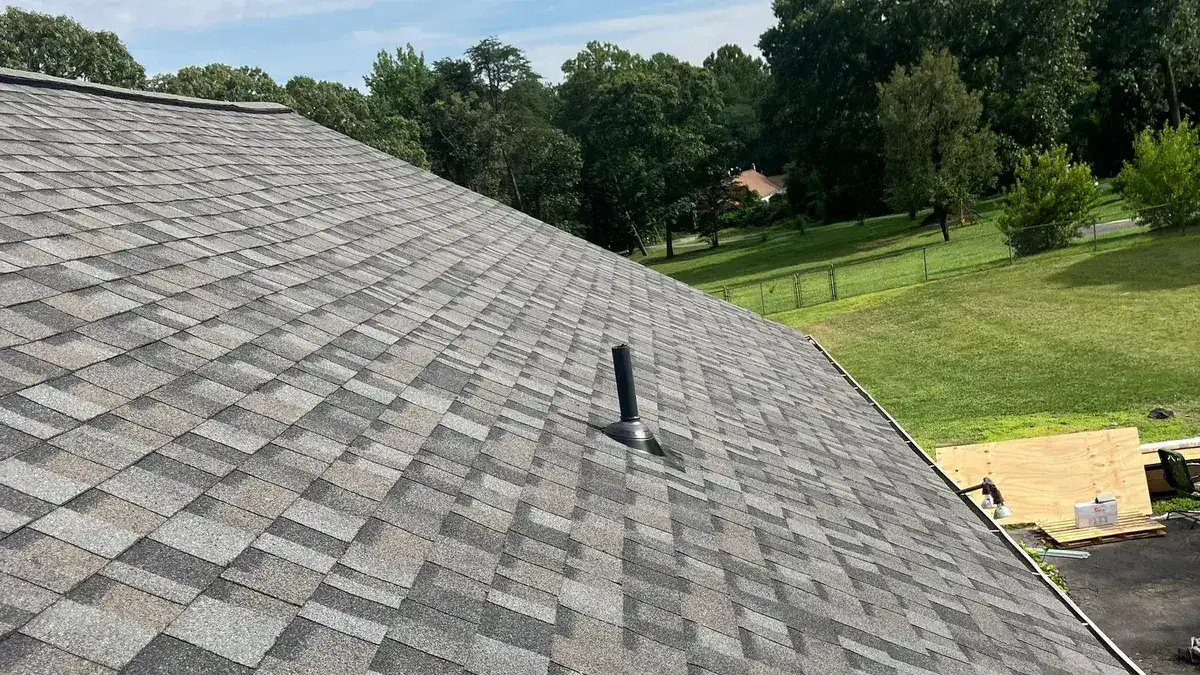
Most Maryland homes have a pitched roof, but a lot of them have a flat or low-slope section too, over a porch, an addition, a dormer, or the whole back half of an older rowhome. Those roofs work differently from the shingled slopes around them, they fail differently, and they are easy to ignore until a ceiling downstairs starts to stain. Here is how flat and low-slope roofs actually work, why they leak, and what to watch for on your own house.
Flat roofs are not really flat
A so-called flat roof is built with a slight pitch, just enough to move water toward a drain, a scupper, or an edge. The trouble is that a shingle roof sheds water fast down a steep slope, while a low-slope roof lets water sit and travel slowly, so it needs a continuous waterproof surface instead of overlapping pieces.
On a pitched roof gravity moves most of the water off, and a flat roof depends on the membrane.
Because water lingers, a low-slope roof is less forgiving of a small flaw. A pinhole at a seam or a lifted edge that a steep roof would get away with can turn into a slow leak on a flat one. Ponding, where water pools in a low spot and does not drain within a day or so after rain, is the classic warning sign that the slope or the drains are not doing their job.
The common low-slope systems
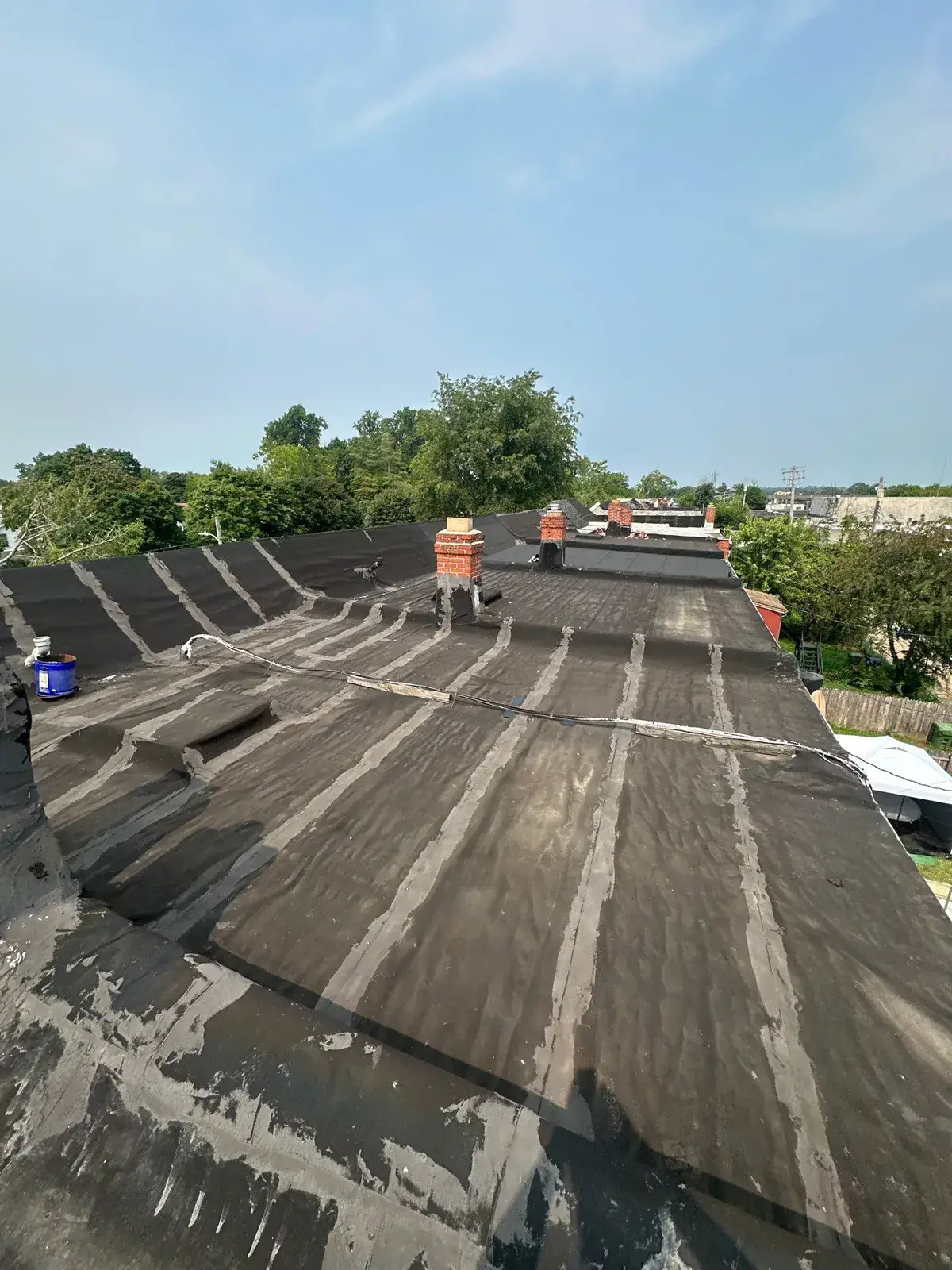
If your flat roof is old, it is probably built-up roofing, the layered tar-and-gravel system that covered flat roofs for generations, or an older rolled asphalt product with seams running across it. Both wear out at the seams and the flashings first.
Newer work usually uses a single-ply membrane or modified bitumen. Modified bitumen is an asphalt-based sheet, often torched or adhered down, that holds up well on residential low-slope sections and around dormers.
Single-ply membranes such as TPO and EPDM are large sheets seamed together, common on commercial and multifamily buildings where the roof is big and open. Which one fits your roof comes out of a look at the deck, the drainage, and how the roof is used, not out of a catalog. If you are weighing which system to put on, our guide comparing TPO, EPDM, and modified bitumen breaks down the trade-offs.
Where flat roofs actually leak
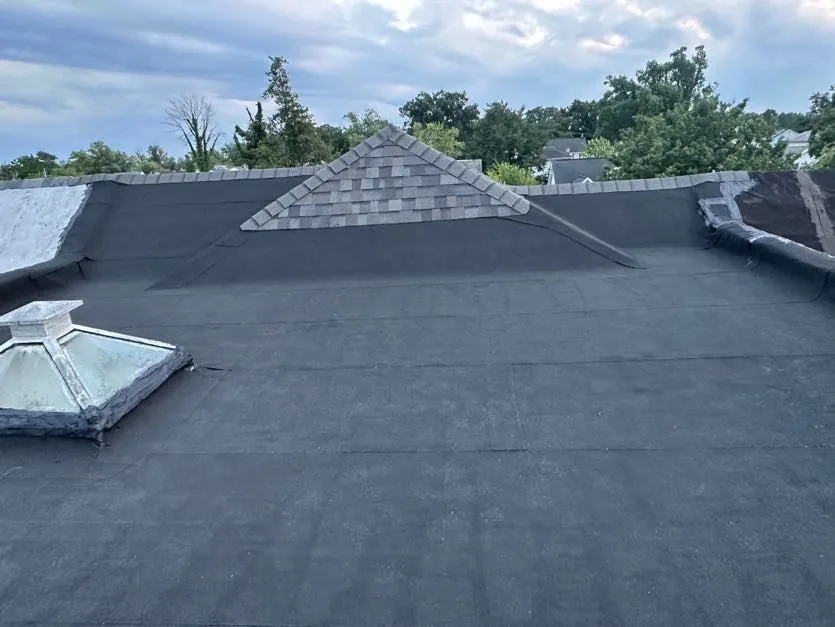
The field of a low-slope roof, the wide open middle, is rarely where the trouble starts. Leaks show up at the details.
Seams that have shrunk or split, flashing where the roof meets a wall or a parapet, the drains and scuppers themselves, and the boots around vent pipes are where most of these leaks start. On an older rowhome, the spot where a flat back roof ties into the neighbor's wall is a common leak point.
Standing water is the other big problem. A drain clogged with leaves, or a low spot that never quite empties, keeps the membrane wet and works at every seam nearby. Clearing the drains and keeping an eye on where water sits after a storm does more for a flat roof than almost anything else you can do from the ground.
A note for Baltimore rowhome owners
Baltimore is a special case, because so much of the city is brick rowhomes with flat or low-slope roofs rather than the pitched slate you see in the older neighborhoods. If you own a rowhome, your roof is very likely a membrane or a coated low-slope system, and it shares walls and drainage with the houses on either side, which makes the tie-ins and the party-wall flashing especially worth watching. We cover the city and the county, and our Baltimore roofing page goes into how these rowhome roofs are handled.
Repair, recoat, or replace
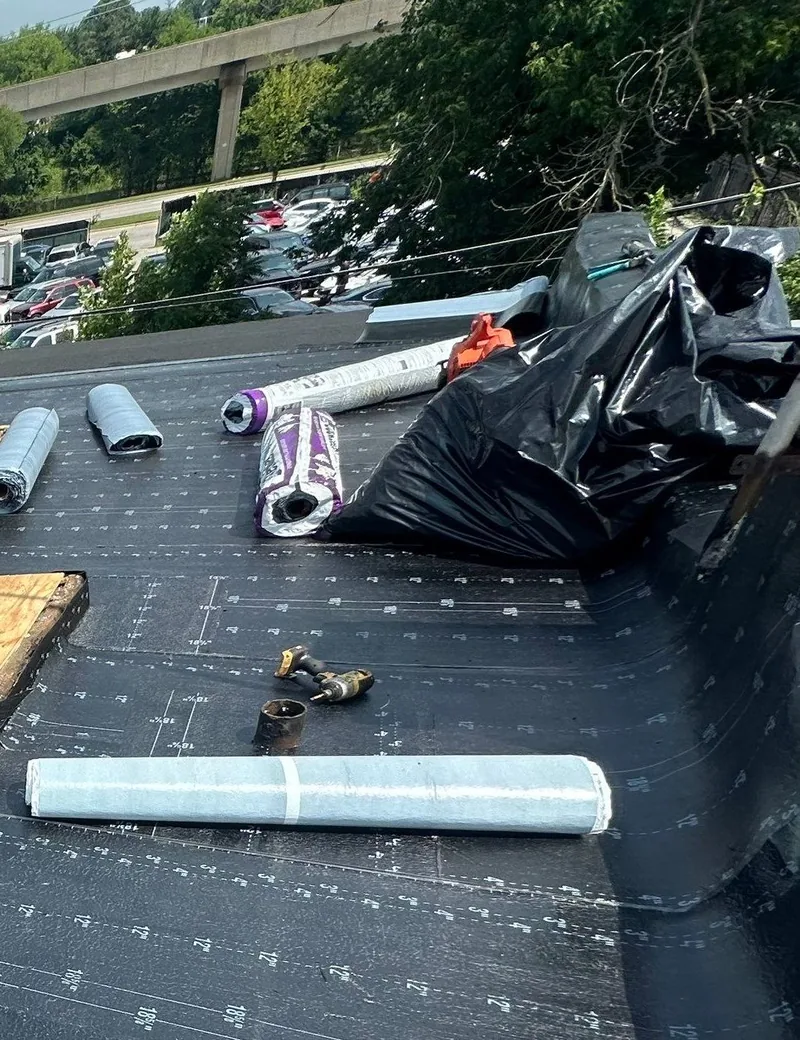
Not every tired flat roof needs to come off. A sound membrane with a failing seam or a bad flashing can often be repaired, and some low-slope roofs can be recoated to buy real time when the surface is worn but the substrate underneath is dry and solid.
The catch is the substrate. Once water has been sitting in the deck and the insulation, a coating just traps the problem, and a full replacement is the honest answer.
That is why the survey matters. We check the drainage and the substrate before recommending anything, put the scope in writing, and on an occupied building we phase the work around the people using it. If a storm has opened a low-slope roof and water is getting in now, we can provide emergency roof tarping to stop the spread while a proper plan comes together.
Watch it before it leaks
Flat roof failures are easy to miss. A tenant calls about a ceiling tile, or a stain shows up on a bedroom ceiling under the addition, and by then water has usually been getting in for a while. A look once a year, plus a habit of clearing the drains and checking where water sits after heavy rain, catches most problems while they are still small.
If your flat or low-slope section is due for a look, you can book a free roof inspection and we will walk it, check the drainage and the seams, and give you a straight read. For commercial and multifamily buildings, our commercial flat roofing page covers how we scope and phase larger jobs, and if you are trying to sort storm damage from ordinary wear, our guide on spotting storm and hail damage helps.
Frequently asked questions
How long does a flat roof last?
It depends on the system and how well it drains. An older built-up or rolled roof tends to wear out sooner than a modern modified bitumen or single-ply membrane.
Good drainage and clear scuppers add years, while standing water takes them away. A survey of your specific roof is the only way to know where it stands.
Why does my flat roof keep leaking?
Flat roofs almost always leak at the details rather than the open field, so the usual causes are split seams, failed flashing at walls and parapets, clogged or undersized drains, and worn boots around vent pipes. Standing water that never fully drains speeds all of it up.
Can a flat roof be repaired instead of replaced?
Often, yes, if the membrane is otherwise sound and the deck underneath is dry. A failing seam or a bad flashing can be repaired, and some worn surfaces can be recoated. Once water has soaked the deck and insulation, though, a full replacement is the honest fix.
Do Baltimore rowhomes have flat roofs?
Most do. Baltimore rowhomes typically carry a flat or low-slope membrane roof rather than a pitched one, and they share walls and drainage with the houses next door, so the tie-ins and party-wall flashing need particular attention.
Is my porch or addition roof a flat roof?
Very likely a low-slope one. Porches, additions, and dormers are often built with just enough pitch to drain and are covered with a membrane rather than shingles, which means they need the same seam and flashing care as a full flat roof.
Flat roof sitting in water?
Free no-obligation inspections · Central Maryland · Mon-Sat 8:00 AM - 5:00 PM