
Blog
Roof Flashing: The Most Common Source of Roof Leaks
Most roof leaks do not start out in the open field of shingles. They start at the joints, the places where the roof is interrupted by a chimney, a wall, a pipe, or a valley, and those joints are sealed by flashing. Flashing is the least glamorous part of a roof and the part that decides whether it keeps water out.
You can have a perfect field of new shingles and still get a leak if the flashing was done wrong or left old. Here is what flashing is, why it fails, and what to watch for on a Maryland roof.
What Flashing Actually Is
Flashing is thin metal, usually aluminum or galvanized steel and sometimes copper, that seals the spots where the roof plane stops or meets something else. Shingles are good at one job: shedding water down an open slope. They cannot seal a corner or a transition.
So anywhere the roof runs into a wall, a chimney, a skylight, a plumbing vent, or another slope, a piece of metal is worked in under and around the shingles to carry water back onto the roof instead of letting it slip behind. That metal is the flashing, and it is doing the hard part of keeping the roof watertight.
Why the Joints Are Where Leaks Live
Think about where water actually gets a chance to sit or change direction. It piles up in a valley where two slopes meet, it hits the side of a chimney and has to go somewhere, it works around the base of a vent pipe. Those are the pressure points, and they are exactly the places flashing has to seal.
The open slope between them sheds water fast and rarely leaks on its own. So when a roof leaks, the cause is usually a flashing detail, not the shingles, which is why a good inspection spends most of its time at the chimney, the walls, the valleys, and the penetrations.

The Main Kinds and Where They Go
A few types show up on almost every house. Step flashing is a series of small bent metal pieces woven into each course of shingles where the roof meets a wall or the side of a chimney, so each piece laps the one below and steps water down the slope. Base or apron flashing seals the front of a chimney or a wall where it faces down the slope.
Counterflashing tucks into a groove cut in the masonry and laps over the step flashing so water cannot get behind it. Valley flashing lines the trough where two slopes meet and carries a lot of concentrated water. Pipe boots, or vent flashing, seal around plumbing and exhaust pipes.
Drip edge runs along the eaves and rakes to send water into the gutter instead of behind the fascia. Each one leaks if it is skipped or rushed.
The Reused-Flashing Trap
Here is the single most common hidden problem in a re-roof. When an old roof comes off and a new one goes on, the flashing should come off and go on new too. It is cheaper and faster to lay new shingles over the old flashing, and plenty of jobs do exactly that.
The trouble is that the old flashing is often the very thing that was about to fail, rusted, lifted, or sealed with nothing but old tar, so the brand-new roof leaks at the same spots the old one did, sometimes within a season. The plain test is this: if the estimate does not say the flashing is being replaced, assume it is not.
New flashing at the chimney, the walls, the valleys, and the pipes is part of a roof done right, and it is one of the first things worth asking about. Our roof replacement page covers how the whole assembly goes back together.

How Flashing Fails
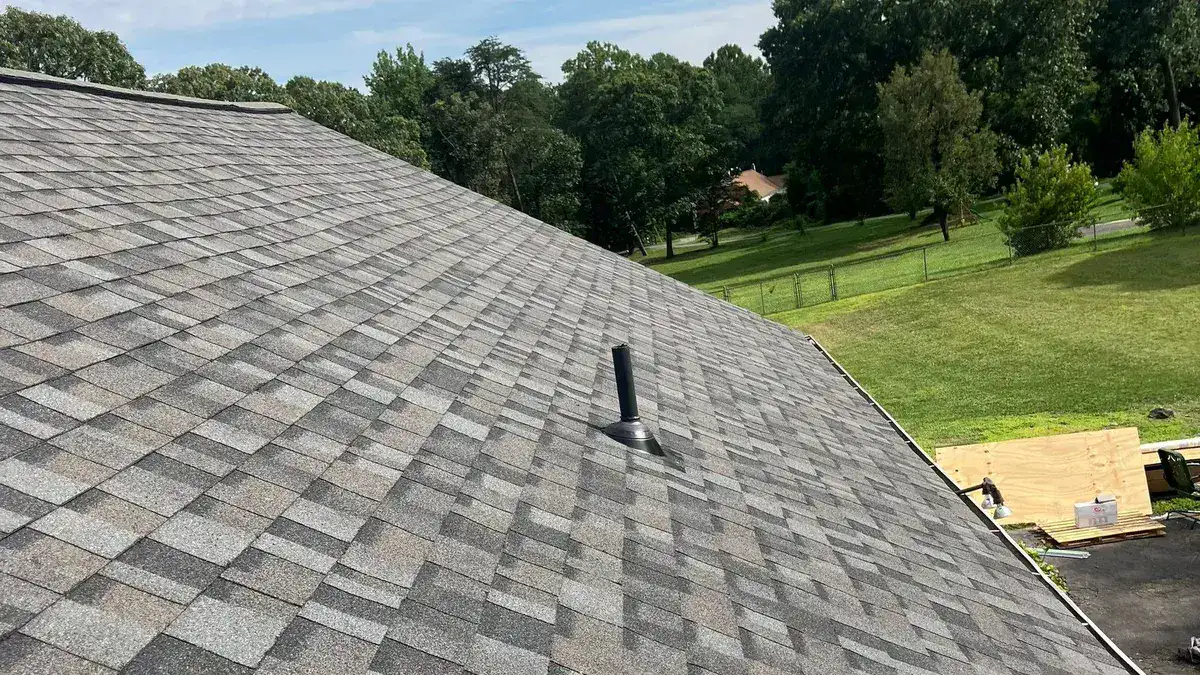
Flashing rarely fails all at once. Pipe boots usually fail first, because the rubber or neoprene collar that seals the pipe dries out and cracks under years of sun, and once it splits, water runs straight down the pipe into the house. Steel flashing can rust through where it stays wet.
Step flashing can lift or pull loose if it was face-nailed or never counterflashed into the masonry. And the biggest tell of a shortcut is tar or caulk smeared over a joint in place of proper metal, because sealant alone does not survive many seasons. In Maryland the freeze-and-thaw swings and the humidity work at every one of these weak points, so a gap that would be slow to fail in a mild climate tends to open up faster here.
What to Look For
You can catch a lot of this early without getting on the roof. Inside, a stain on the ceiling near a chimney, an exterior wall, or a skylight points at flashing more often than not, and the same goes for a damp patch that shows up after a hard rain rather than staying constant.
From the ground, look for rust streaks running down from metal at the chimney or walls, a vent pipe collar that has visibly cracked or curled, and any spot where you can see black tar smeared as a patch. If you already have water coming in, our post on what to do when your roof is leaking covers the first steps, and if a storm was involved, dented or torn flashing can be part of a storm and hail damage claim.
Repair or Replace
Not every flashing problem means a new roof. A single cracked pipe boot or one lifted piece of step flashing on an otherwise sound roof is usually a straightforward repair, the kind covered on our roof repair in Columbia, MD page. What is not worth chasing is a roof where the flashing was reused and is failing in several places at once, or where tar patches are holding things together, because those are symptoms of an assembly that was never sealed properly and will keep leaking in new places.
The way to know which situation you are in is to have the joints looked at directly. A free inspection checks the chimney, walls, valleys, and penetrations and gives you a straight answer on whether the roof needs replacing, and our post on what to expect during a roof inspection walks through what that look actually covers.
Frequently Asked Questions
What is roof flashing?
Roof flashing is thin metal, usually aluminum or galvanized steel and sometimes copper, that seals the places where the roof plane is interrupted or meets something else, such as a chimney, a wall, a skylight, a plumbing vent, or a valley where two slopes meet. Shingles shed water down an open slope but cannot seal those transitions, so flashing is worked in under and around them to carry water back onto the roof and keep it out of the house.
Why do most roof leaks start at the flashing?
Because the joints are where water collects or changes direction: valleys carry concentrated flow, chimneys and walls stop the water and force it sideways, and penetrations like vent pipes interrupt the surface. The open field of shingles sheds water quickly and rarely leaks on its own. Flashing is what seals all those pressure points, so when a roof leaks, a flashing detail is usually the cause rather than the shingles themselves.
Should flashing be replaced when I get a new roof?
In most cases yes. When an old roof is torn off, the flashing at the chimney, walls, valleys, and pipes should be replaced along with it, because old flashing is often the part that was already failing.
Shingling over old flashing is cheaper and faster but can leave the new roof leaking at the same spots the old one did. A simple check: if the estimate does not say the flashing is being replaced, assume it is not, and ask.
What does failing flashing look like?
Common signs include a cracked or curled rubber collar on a vent pipe, rust streaks running down from metal at a chimney or wall, step flashing that has lifted or pulled loose, and black tar or caulk smeared over a joint as a patch. Inside the house, a ceiling stain near a chimney, an exterior wall, or a skylight, or a damp patch that appears after a hard rain, often points to a flashing problem rather than the shingles.
Can flashing be repaired, or does it need replacing?
It depends on the extent. A single cracked pipe boot or one lifted piece of step flashing on an otherwise sound roof is usually a straightforward repair.
But when flashing was reused and is failing in several places, or when tar patches are holding joints together, that points to an assembly that was never sealed properly and will keep leaking, which usually calls for a larger fix. An inspection of the joints is the way to tell which case you have.
Stain near a chimney or skylight? Get the joints looked at.
Free no-obligation inspections · Central Maryland · Mon-Sat 8:00 AM - 5:00 PM