
Blog
What to Expect During a Roof Inspection
A roof inspection sounds simple, and a good one is, but plenty of homeowners have no idea what actually happens when a roofer climbs up there or what they should walk away knowing. Here is what a real inspection looks like on a Maryland house, what the person on the roof is checking, how long it takes, and what you should expect to see when they come back down.
Why the inspection matters more than the quote
A roof inspection should tell you whether the roof needs work at all, before anyone quotes you a price.
A careful inspection tells you where the roof actually stands, so you are deciding from what is on your house rather than from a sales pitch.
Our inspection is free, and when a roof has years left, that is what we tell the owner.
Lassana came out and looked at my roof after all the crazy storms going around and told me that my roof doesn’t have any damages yet whereas all the over roofers told me I need a new roof. My
Roof was only 10 year oldxxmicca xx, Google review
Before anyone gets on the roof
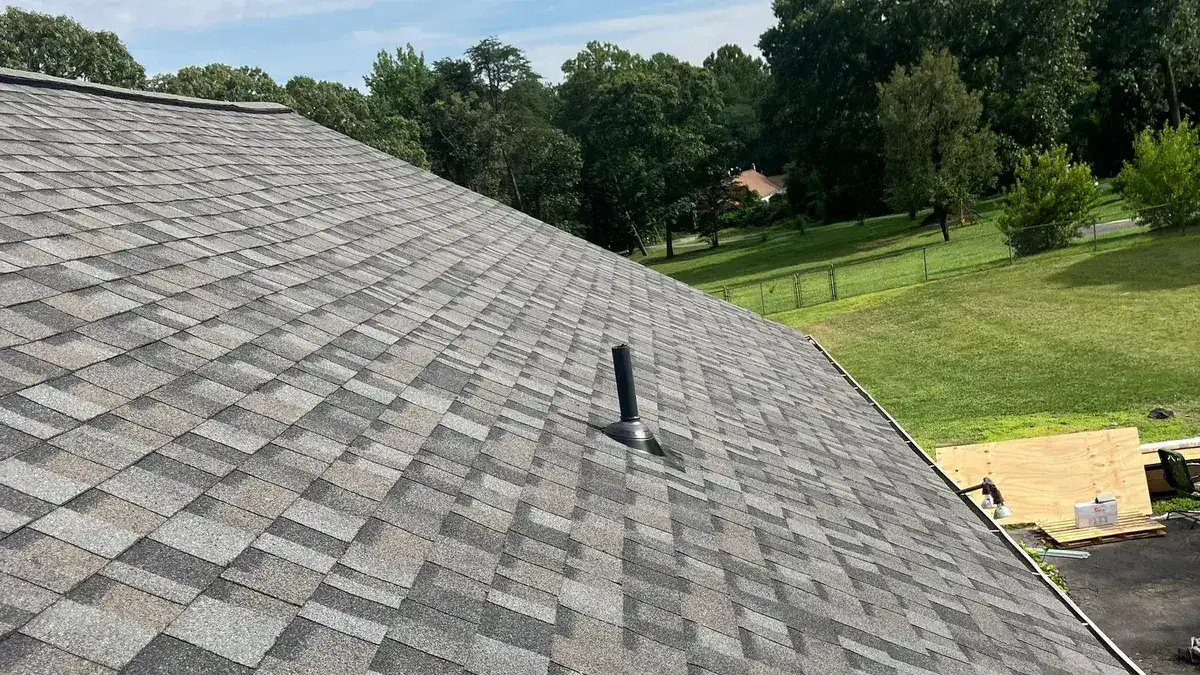
The visit usually starts on the ground and inside. From the yard the inspector looks at the roof as a whole, the lines of the slopes, any obvious missing or dark patches, the gutters, and where the downspouts drain. A dip in a ridge or granules piling up at the base of a downspout can be spotted before the ladder comes off the truck.
Inside matters just as much. Ceiling stains, a musty smell in an upstairs closet, or daylight showing through the attic boards all point to water that has already found a way in.
If you have noticed anything like that, say so at the start. It tells the inspector where to look hardest once they are up top.
On the roof, slope by slope
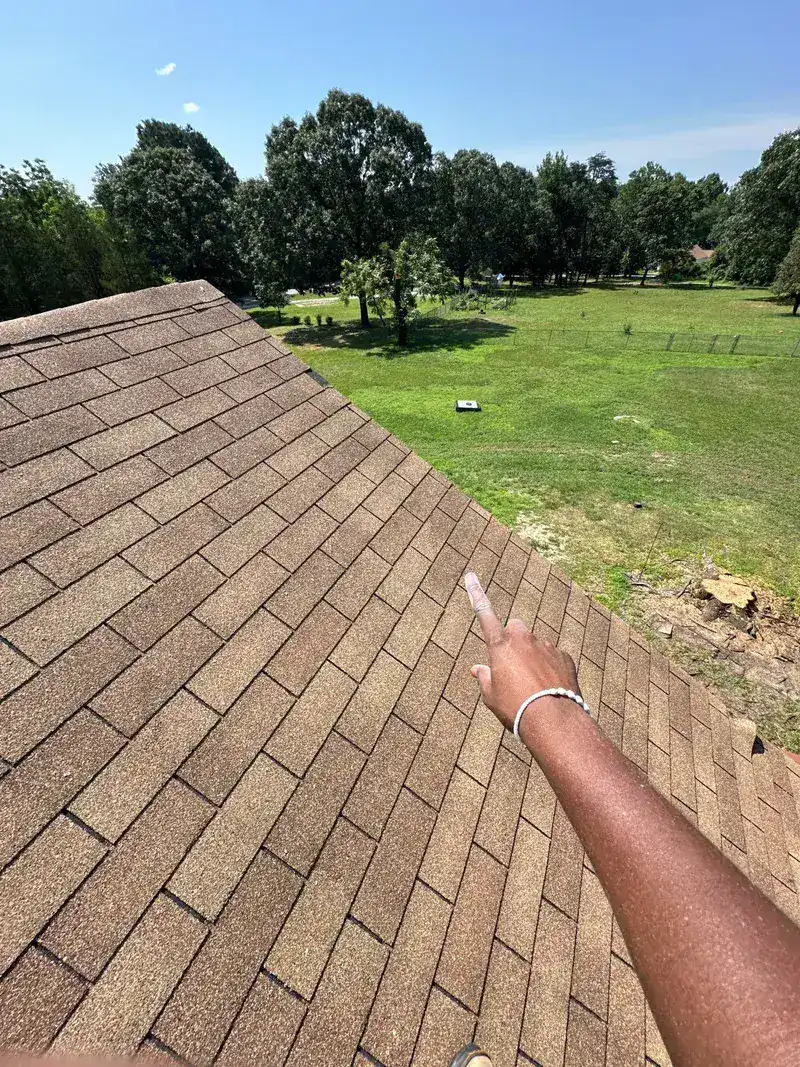
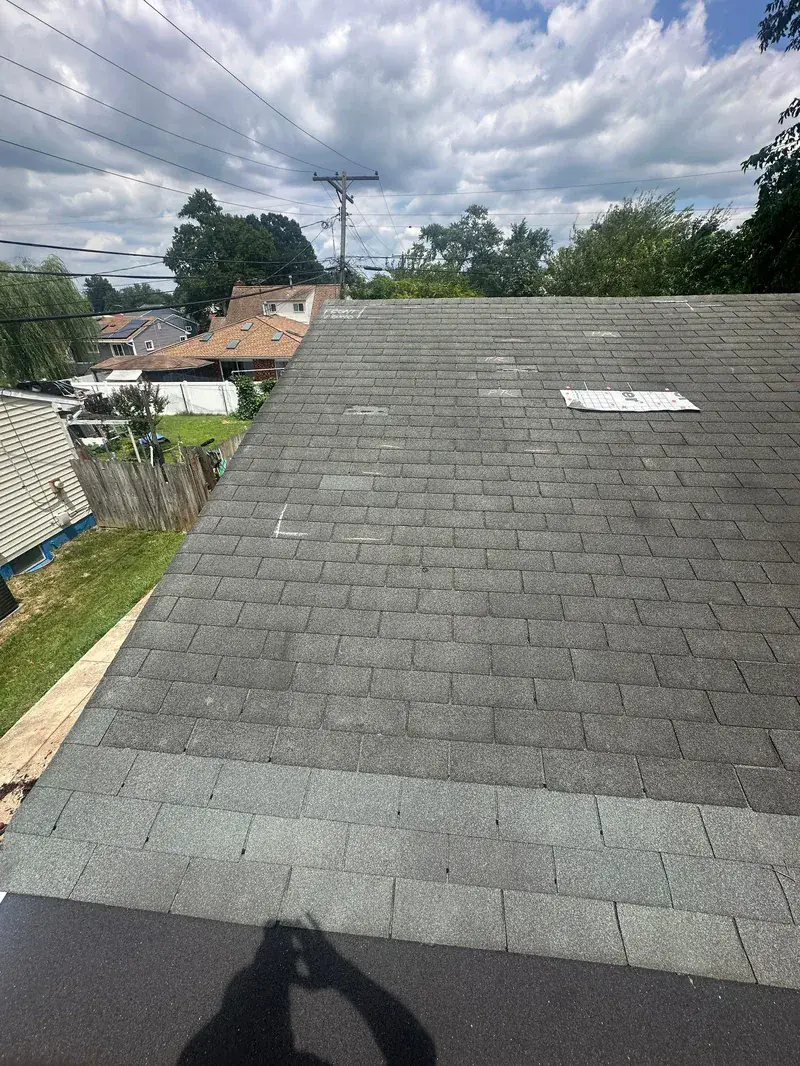
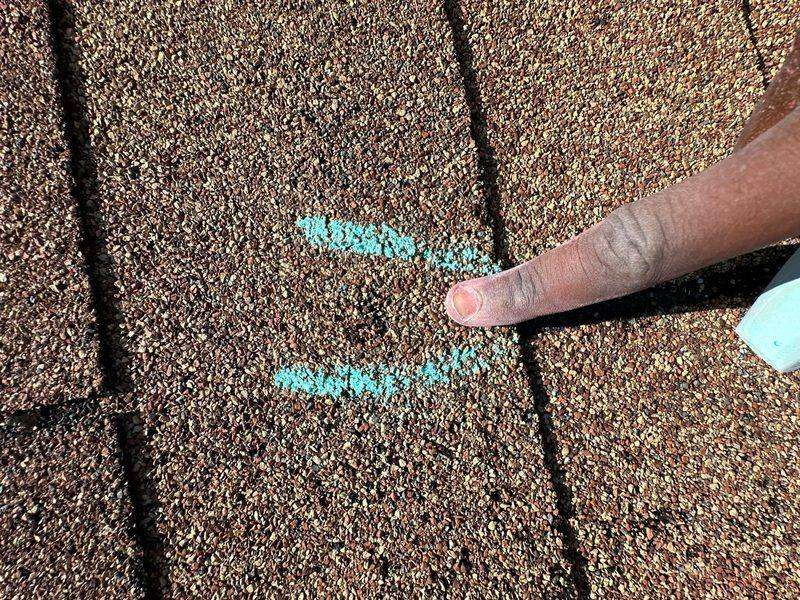
Once the inspector is up there, the work turns methodical. Every slope gets walked and photographed, not just the one facing the street. The field of shingles is checked for curling, cracking, granule loss and the soft bruises that hail leaves behind, and damaged spots often get ringed in chalk so they show up clearly in the photos.
Then come the parts that leak first. Most roofs do not fail in the open field of shingles, they fail at the transitions, so the flashing around chimneys, skylights, vents and wall lines gets a close look.
The inspector checks the pipe boots, the valleys where two slopes meet, and the drip edge along the eaves. Ventilation gets checked too, because a poorly vented attic overheats the shingles from underneath and they age early.
How long it takes
On a typical Columbia house the roof part usually runs under an hour, sometimes longer on a big or cut-up roof with a lot of valleys and dormers. After that there is the part that actually helps you, which is going through the photos together. You do not have to be home for the roof to get inspected, but it helps to be there for the walkthrough so you can ask questions while the pictures are in front of you.
What you should get at the end
A useful inspection ends with a straight answer. You should come away knowing the rough age and condition of the roof, whether it has damage and how serious it is, whether that damage looks like storm or ordinary wear, and what your realistic options are. If the roof has life left, a good inspector will tell you that and leave it alone.
If there is storm damage, the slope-by-slope photos matter more than usual, because an insurance claim turns on documentation.
We scope storm damage in Xactimate, the same estimating platform your carrier prices from, and we will meet your adjuster at the house and walk the same slopes with them. What no honest roofer will do is promise you an approval, because that decision belongs to the carrier.
Questions worth asking
You learn a lot about a roofer from how they answer a few plain questions. Ask whether they got on the roof or just looked from the ground. Ask to see photos of every slope, not a general summary.
Ask whether the damage they found is storm related or wear, and how they can tell. And ask what happens if the roof turns out to be fine.
When you are ready, you can book a free roof inspection and we will call back to set a time, walk the roof, and show you the photos. If a storm just came through, the signs of storm and hail damage are worth a read first, and if the inspection points to bigger work, our roof replacement page walks through what that involves.
Not sure whether it is time yet? Our guide on when to replace a roof in Maryland covers the signs to watch for.
Frequently asked questions
How much does a roof inspection cost?
Our inspection is free and there is no obligation. We would rather earn the work by being straight with you than charge to look. If the roof is fine, we will tell you and leave it at that.
How long does a roof inspection take?
Usually under an hour on a typical Columbia house, and longer on a large or complicated roof with a lot of valleys and dormers. Plan for a little extra time afterward to go through the photos together.
Do I need to be home for the inspection?
Not for the roof itself, but it helps to be there for the walkthrough. Going through the slope-by-slope photos while you can ask questions is where most of the value is.
Will you actually get on the roof?
Yes. A ground-level or drone glance misses the bruising and broken seals that decide a storm claim. Our inspector walks the roof, checks the flashing and ventilation, and photographs every slope.
What if my roof does not need replacing?
Then we say so. That happens often, and it is the whole point of an honest inspection. You get a clear read on the age and condition and a realistic sense of how much life is left, with no pressure to do work you do not need.
Want a straight answer on your roof?
Free no-obligation inspections · Central Maryland · Mon-Sat 8:00 AM - 5:00 PM