
Blog
Flat Roof in Columbia, MD: What Maryland Weather Does to the Membrane
Here are the NOAA numbers for Columbia and what to check on a TPO, EPDM or modified bitumen roof after a hard season.
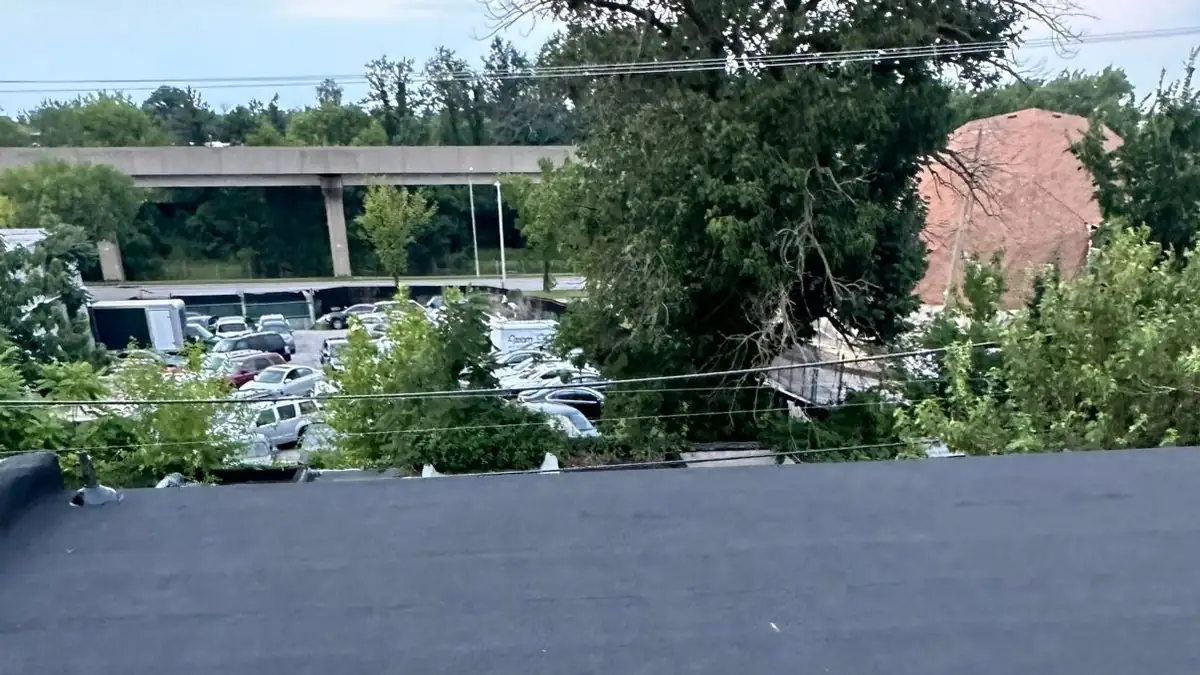
A flat roof in Columbia, MD takes about 34 days a year at 90°F or hotter and about 82 days of freeze and thaw, by NOAA's BWI normals. TPO, EPDM and modified bitumen all meet that weather at the same weak points, mainly ponded water and seams.
We are Diakite Roofing & Restoration, a roofing contractor based in Columbia, and this guide puts numbers on what a Maryland year does to a flat roof. If you are still choosing a system, our guide to TPO vs EPDM vs modified bitumen compares the three. This one covers the weather and what to check after each season.
What does Maryland summer heat do to a flat roof?
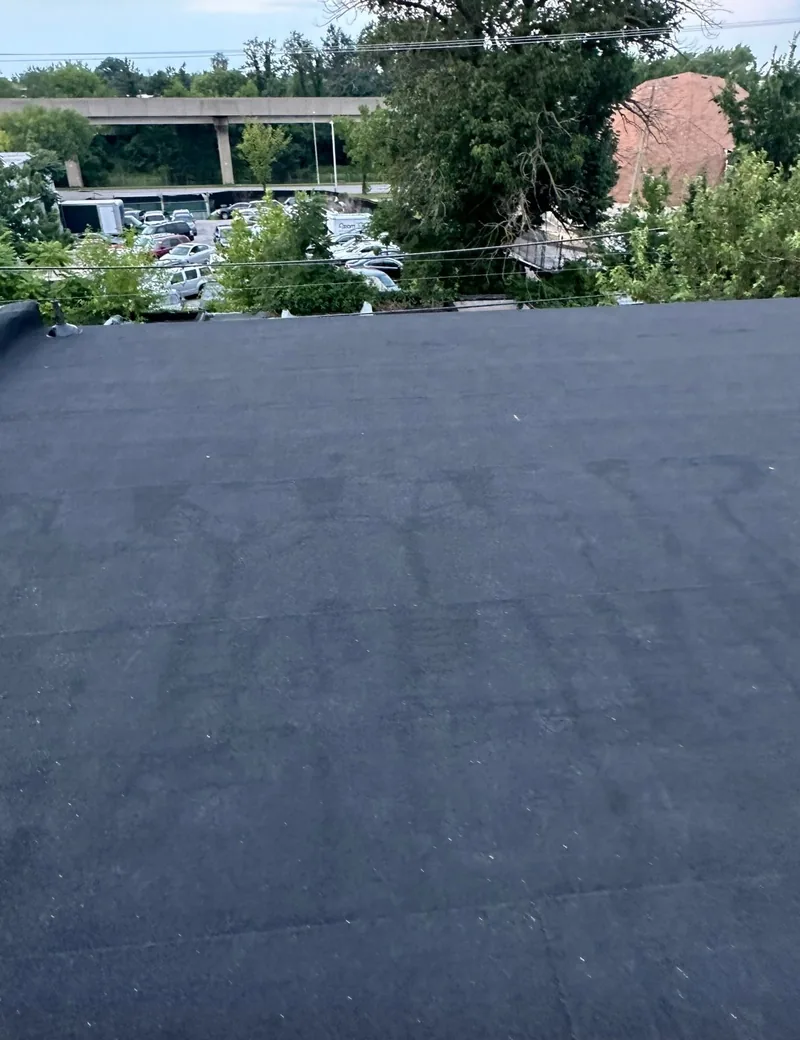
A flat roof takes the sun across its whole surface all afternoon, with no pitch to turn it away. NOAA's 1991 to 2020 normals for BWI Airport, about 10 miles from Columbia in a straight line, count 33.9 days a year with a high of 90°F or more.
Color is part of the choice. TPO usually comes in a light, reflective color that bounces sunlight, while EPDM is usually dark and absorbs heat rather than reflecting it. After a hot summer we look at the seams and the edges first, because the seams are where these roofs usually leak.
What do freezing nights do to a flat roof?
The same station counts 93.2 days a year with a low of 32°F or colder, and 10.7 days when the high never gets above freezing. The difference is about 82 days a year that dip below freezing overnight and warm up again. Water freezes and thaws on those days, and water expands as it freezes.
On a pitched roof most of the water is gone before it can freeze. On a flat roof, whatever sits in a low spot, a clogged drain or an open seam freezes where it sits. That is why ponding gets so much attention in our flat roof surveys. A puddle that is still there a day or two after the rain stops is a slope or drain problem, and a new membrane laid over the same low spot ponds the same way. Water that ponds speeds up UV and freeze-thaw wear, loads the deck and works into the seams.
How much rain does a flat roof have to shed in Columbia?
BWI's normals show 45 inches of precipitation a year and 10.9 days with an inch or more. One inch of rain on 1,000 square feet of roof is about 620 gallons, and all of it has to reach a drain or a scupper, which is an opening through the parapet wall that lets water out.
With almost no slope to help, a flat roof depends on drains that are open and sumps that are set at the right height. When a drain is packed with leaves, the water backs up onto the roof.
What about snow and ice on a flat roof?
BWI averages 19.3 inches of snow a year in the 1991 to 2020 normals, with 4.6 days of an inch or more. A flat roof holds snow where it falls. When it melts on a warm afternoon the water has to find a drain, and if the drain is blocked it spreads to the nearest low spot and freezes again that night. Clearing the drains and watching where water sits after a storm does more for a flat roof than almost anything else you can do from the ground.
Does the roofing system change how the weather affects a flat roof?
The weather is the same for all three, but where they give out is not quite the same. This table shows how the common systems differ and where we look on each after a hard season.
| System | In summer sun | How the seams are made | Look at after a hard season |
|---|---|---|---|
| TPO | Usually light and reflective | Heat-welded with hot air | Welded seams, the edges, and the flashing at walls and curbs |
| EPDM | Usually dark, absorbs heat | Tape or adhesive | Taped or glued seams and the edges, the traditional weak spot on this system |
| Modified bitumen | Asphalt-based, built up in layered plies | Plies sealed together; torch, cold adhesive or self-adhered | Lapped edges, flashing where the roof meets a wall, and any blisters |
Descriptions of each system are general. Which one fits your building comes out of a survey of the deck and the drainage.
Our comparison of modified bitumen, EPDM and TPO goes through each system in more depth.
What can you check on your own flat roof after a storm?
Stay off the roof. These signs show from a window or from the room below:
- Water still standing a day or two after the rain stops.
- Seams that are open, shrinking or lifting, mostly at the perimeter and around curbs.
- Blisters, ridging or soft spots you can feel underfoot.
- A ceiling stain or dropped tile under a flat section, usually near a drain or a curb.
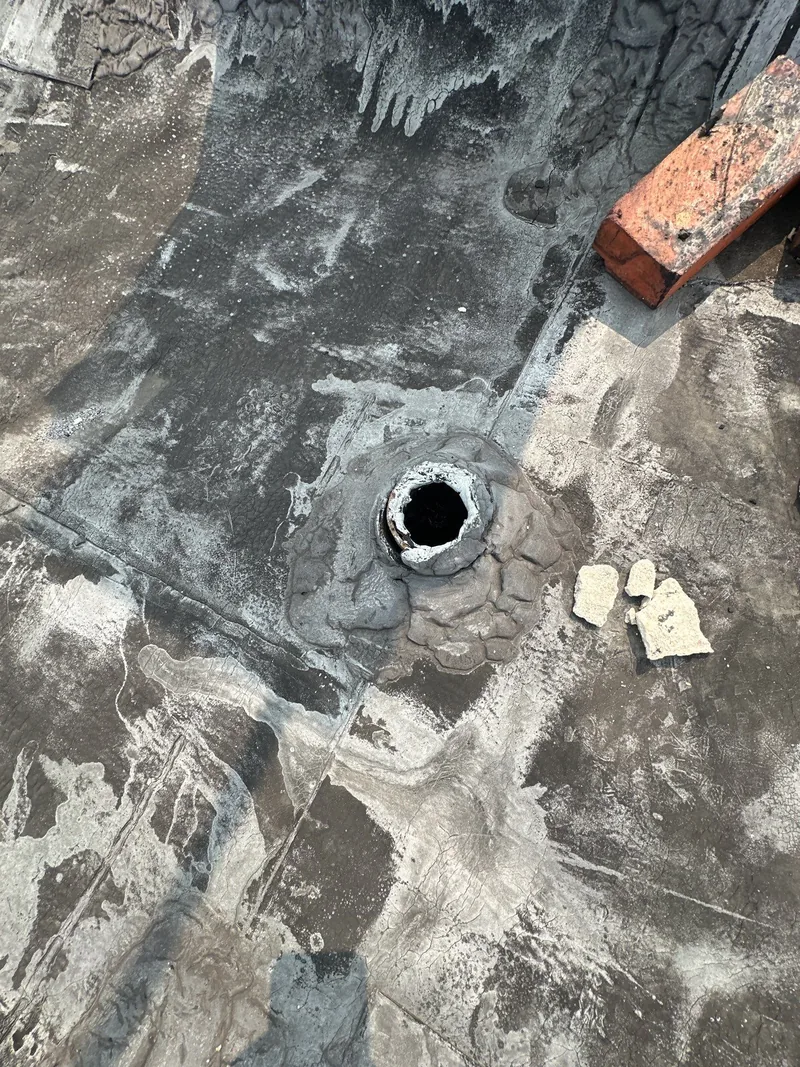
- Patch stacked on patch around vents and rooftop units, which usually means the same spot has been leaking for a while.
If you see one of these, a free roof inspection will tell you whether it is a repair or a replacement.
When is the best time to check a flat roof in Maryland?
Spring is the first window, once freeze-thaw season is behind you and before the April through June storm run starts. Late fall is the second, to clear the drains before winter. Add a look after any hail or high-wind event, because damage on a flat roof is easy to miss from the ground.
How do we handle a flat roof in Columbia?
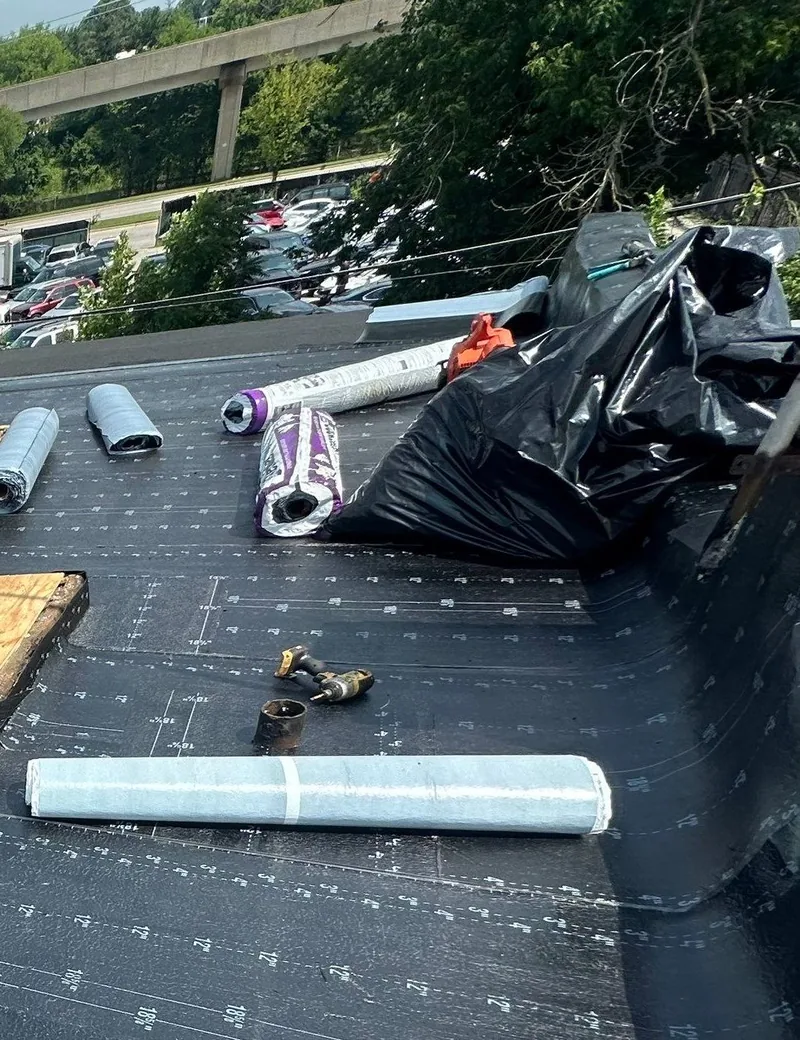
We start with a survey. We map the drainage, check the seams, curbs and penetrations, and probe for wet substrate under the surface. When we scope a replacement, the slope plan comes first: tapered insulation that builds pitch toward the drains, crickets between drains, sumps set correctly at the drain bowls, and clamping rings and strainers that actually seal. The perimeter comes next, with the curbs and penetrations after it, since that is where most low-slope leaks start.
Our commercial flat roofing page covers how we scope and phase larger jobs. The first look is free and carries no obligation, and we work Monday through Saturday, 8am to 5pm.
Sources: NOAA National Centers for Environmental Information, U.S. Climate Normals 1991 to 2020, station USW00093721 (Baltimore/Washington International Airport), annual and seasonal normals, read October 26, 2026. Freeze-thaw days are days with a low of 32°F or colder (93.2) minus days with a high of 32°F or colder (10.7). The distance is straight-line from the Columbia map point used on this site. Rain volume is arithmetic: 1 inch over 1,000 square feet is 83.3 cubic feet, about 620 gallons.
Related reading
For the drainage side of the same problem, see flat and low-slope roofs in Maryland. Leaks at walls and penetrations are covered in why flashing is the most common source of roof leaks.
Flat roof holding water?
We walk it, map the drainage and tell you what it needs on a free inspection.