
Blog
How to Choose a Roofing Contractor in Maryland
A roof is one of the bigger things you will ever buy for your house, and you usually buy it in a hurry, often right after a leak or a storm. That is exactly when it is easiest to hire the wrong company.
A little homework up front protects you from the crews that blow into a neighborhood after bad weather, collect a deposit, and are never seen again. Here is what actually matters when you are choosing a roofer in Maryland, in the order it matters.
Start With the MHIC License
In Maryland, a contractor doing home improvement work on your house is required to hold a license from the Maryland Home Improvement Commission, the MHIC. It is the law, and it is your first filter.
A licensed contractor has met the state's bonding and background requirements, and the license gives you a path to recourse through the Commission if a job goes badly. An unlicensed one gives you no such path.
Ask any roofer for their MHIC number, and take a minute to look it up on the state's site to confirm it is real and active. A legitimate contractor will hand the number over without hesitation.
Ours is MHIC #168891. If someone dodges the question or cannot produce a number, that alone is your answer.
Check Both Kinds of Insurance
License first, insurance right behind it. A roofer should carry two things: general liability, which covers damage to your property, and workers' compensation, which covers their crew if someone is hurt on your roof. That second one protects you directly.
If an uninsured worker falls on your property, you can end up on the hook for it. Ask for a certificate of insurance, and do not take a shrug for an answer.
Get the Scope in Writing
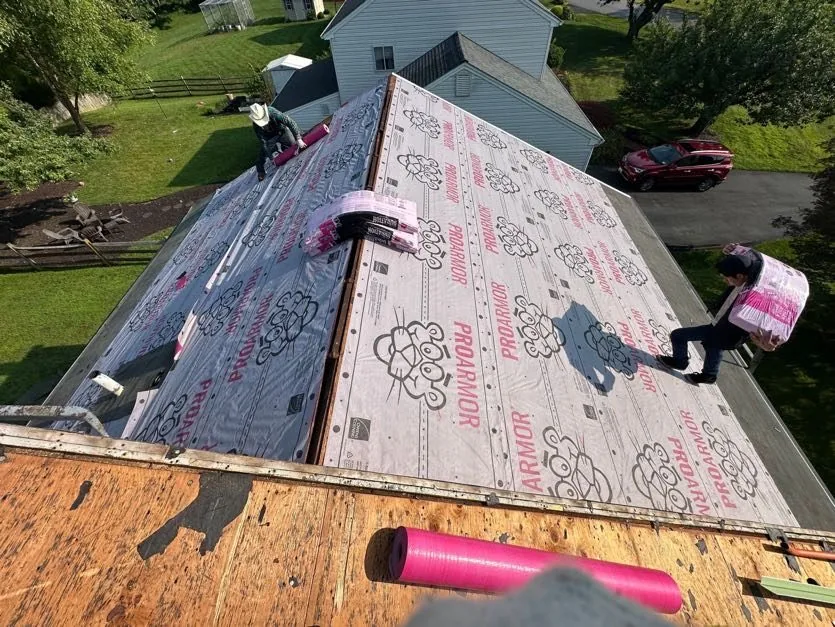
A serious contractor gives you a written estimate that spells out the work, not a number scribbled on the back of a card. It should say whether the old roof is being torn off or gone over, how replacement decking is handled if bad wood turns up, which materials are going on, whether flashing and ventilation are included, and how cleanup and the final permit inspection are covered.
A vague one-line quote is a red flag, because you cannot hold anyone to a promise that was never written down. We break down what actually drives that scope in our post on how long a roof lasts and the factors behind a roof replacement.
Understand the Two Warranties
Roofs come with two different warranties, and people mix them up. The manufacturer warranty covers the shingles themselves against defects.
The workmanship warranty is the contractor's own promise to stand behind how the roof was installed. That second one matters more than most homeowners expect, because the large majority of roof leaks come from installation mistakes, not from a bad shingle. A workmanship warranty is only as good as the company offering it, which is one more reason a local outfit with a track record beats a name you will never find again.
Look at the Local Track Record
A company rooted in your area is easier to trust and easier to hold accountable than a crew working out of a truck with an out-of-state plate. Read their reviews, look for jobs they have done nearby, and check how long they have been around under the same name.
Ask whether the people who show up to do the work are the company's own crew or subcontractors hired for the day. The company has to still be around for the life of the warranty.
Know the Storm-Chaser Red Flags
After a big storm, door-knockers appear in the hardest-hit neighborhoods. Some are fine. Many are not, and the warning signs are consistent: high pressure to sign today, an offer to waive or eat your insurance deductible, a demand for a large deposit before any work, no verifiable local address, and a push to sign a document that hands them control of your insurance claim.
Waiving a deductible is not a favor. It is insurance fraud, and agreeing to it can put you in the middle of it.
If a pitch leans on urgency and money up front, slow down. A real roof problem will still be there tomorrow when you have checked the company out.
Watch How They Inspect and Document
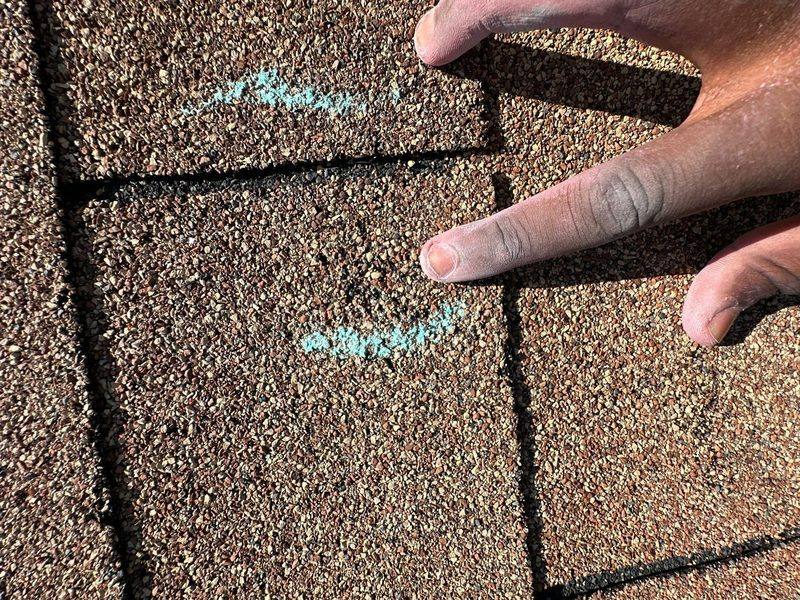
How a contractor handles the first visit tells you a lot. A good one does an actual inspection, gets on the roof or safely up to it, and photographs what they find rather than pronouncing a verdict from the lawn.
If storm damage is in play, they document it in a way an insurance adjuster can work with and are comfortable meeting the adjuster on site. Our post on what to expect during a roof inspection covers what a thorough one looks like, and our guide to roof insurance claims in Maryland covers the claim side.
Ask About Certifications, and Know What They Mean
You will see logos on trucks and flyers. Manufacturer certifications and damage-assessment credentials are real things, but a logo on a brochure is not proof that the person standing in your driveway holds the credential.
Ask what a contractor actually carries, and for storm claims ask specifically who will be assessing the damage and how. A good company will give you a straight answer instead of leaning on a badge.
What This Looks Like With Us
Diakite Roofing & Restoration is licensed with the MHIC and local to Central Maryland, we put the scope of every job in writing, and we start with a free, no-pressure inspection instead of a sales pitch. Whether it turns into a storm-damage restoration or a full replacement, you will know what you are getting and why before anyone gets on your roof.
Frequently Asked Questions
Do roofing contractors have to be licensed in Maryland?
Yes. A contractor performing home improvement work, including roofing, on a home in Maryland is required to hold a license from the Maryland Home Improvement Commission (MHIC). Ask any roofer for their MHIC number and look it up on the state's site to confirm it is active.
A legitimate contractor will provide it without hesitation. Ours is MHIC #168891.
What insurance should a roofing company carry?
Two kinds. General liability covers damage to your property, and workers' compensation covers the crew if someone is injured on your roof. Always ask for a certificate of insurance before work begins.
Does Maryland require home improvement contractors to carry insurance?
Yes, for general liability. The Maryland Home Improvement Commission says that, effective June 1, 2024, section 8-302.1 of the Business Regulation Article requires all Maryland home improvement contractors to maintain general liability insurance of at least $500,000.
The Commission's notice does not mention workers' compensation. Ask any contractor for a certificate of insurance before work begins, and check it with the insurer named on it.
How do I spot a storm-chaser or a roofing scam?
Watch for high pressure to sign immediately, an offer to waive or cover your insurance deductible, a demand for a large deposit up front, no verifiable local address, and pressure to sign over control of your insurance claim. Waiving a deductible is insurance fraud, not a discount. If a pitch runs on urgency and money before any work, slow down and verify the company first.
What is the difference between a manufacturer warranty and a workmanship warranty?
The manufacturer warranty covers the shingles against defects. The workmanship warranty is the contractor's own promise on the installation, and each contractor sets its own terms, so ask for them in writing before you sign.
Should I choose a local roofer over a national or out-of-town company?
A local company with a track record is easier to check and easier to hold accountable over the life of the warranty. Read reviews, look for nearby jobs, confirm how long they have operated under the same name, and ask whether their own crew or day-hire subcontractors will do the work. A roofer who is part of your community is more likely to still be there if you need them.
Want a straight answer on your roof? Book a free inspection.
Free no-obligation inspections · Central Maryland · Mon-Sat 8:00 AM - 5:00 PM