
Blog
How to Spot Hail Damage on Your Roof in Maryland
Hail damage on a roof is easy to miss and expensive to ignore. A storm passes, the shingles look about the same from the driveway, and life goes on, while up on the roof the surface has taken hits that will shorten its life and, in a lot of cases, would have been covered by insurance if anyone had looked in time.
Maryland gets hail most springs and summers, and knowing what the damage actually looks like is the difference between catching it and paying for it later. Here is how to read a roof after a storm.
Why Hail Damage Hides
Wind damage is usually easy to see. A shingle is gone or flipped up and you can see it from the ground. Hail is quieter.
It bruises and pits the shingle surface without necessarily tearing anything off, so from the street the roof can look untouched even after a storm that did real harm. The damage is up close and often subtle, which is why so much of it goes unreported until the roof starts leaking a year or two later, long after the storm date that would have supported an insurance claim.
What Hail Actually Does to a Shingle
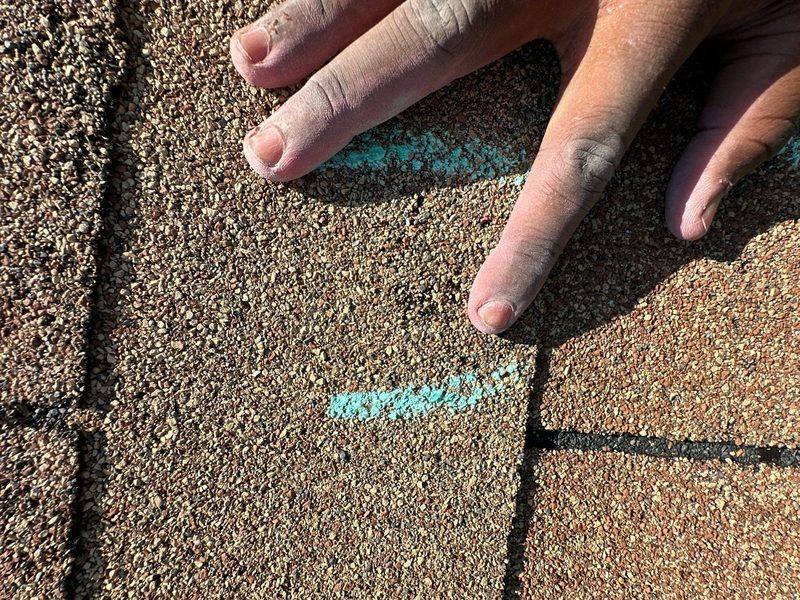
When a hailstone hits an asphalt shingle hard enough, it knocks the protective granules loose and bruises the mat underneath. You end up with a dark spot where the granules are gone and the asphalt shows through, and if you press on it, it often feels soft, like a bruise on fruit. That soft spot matters more than it looks, because the granules are what shield the asphalt from the sun.
Once they are knocked away, that spot ages fast, the asphalt dries and cracks, and the shingle starts to fail from that point outward. One or two hits are not an emergency. A roof with many of them will wear out early.
The Signs You Can Look For
You do not need to walk the roof to find the first clues, and honestly you should not climb up there yourself. Start on the ground.
Granules washing into the gutters and collecting at the bottom of downspouts are a common tell after hail, since the storm strips them off the shingles by the handful. Then look at the soft metal around the house, because hail dents metal before it obviously damages shingles. Dings in the gutters, the downspouts, the metal flashing, roof vents, and the fins on the outdoor air conditioner are all corroborating evidence, and they are at eye level.
Dented window screens, a battered mailbox, or marks on a wood deck from the same storm add to the picture. On the shingles themselves, the signs are the bruises and the bare dark spots described above, scattered in a random pattern rather than lined up in rows.
Hail Damage Versus Normal Wear
Not every dark spot is hail. Older roofs lose granules just from age, shingles blister from heat and trapped moisture, and foot traffic or a passing branch leaves marks too. The thing that sets hail apart is the pattern.
Hail hits are random and scattered across slopes, they tend to show up on the sides of the house that faced the storm, and they come with that fresh soft bruise and the matching dents on the surrounding metal. Blistering, by contrast, is more evenly spread and has no soft mat underneath, and normal aging is uniform across the whole roof.
Sorting one from the other is a big part of what an inspection is for, and it is easy to guess wrong from the ground. Our post on how to tell if your roof has storm damage covers the wind side of the same question.
Why Timing Matters for a Claim
Of all the ways a roof gets damaged, hail is one of the clearest that ties back to a specific date, and that date is what an insurance claim rests on. Most homeowners policies expect damage to be reported within a set window after the event, so the longer a hit roof goes unlooked-at, the harder the claim becomes, and eventually it is too late. When an adjuster does come out, they do not eyeball the whole roof.
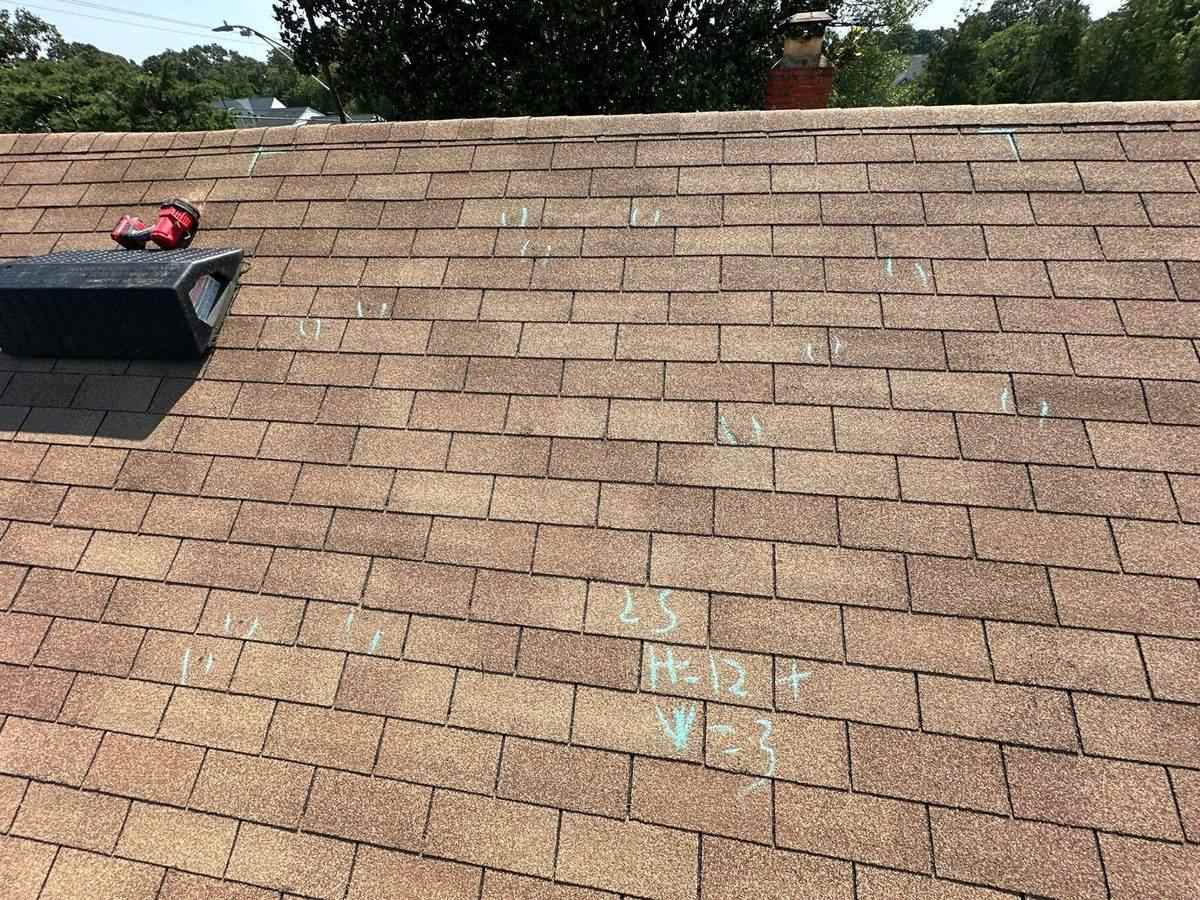
They mark off a ten-foot-by-ten-foot test square, count the hits inside it, and use that count to judge the slope, which is exactly the kind of documentation you want on your side. Getting the roof looked at soon after a storm, and having the hits chalked and photographed, puts you in a far stronger position. Our post on roof insurance claims in Maryland walks through how that process works, and it is why we document the way we do.
What to Do After a Hailstorm
If a real hailstorm has come through, the move is not to climb up and start poking around, it is to get the roof looked at by someone who does it safely and knows what the damage looks like. Note the date of the storm, take photos of any dents you can see from the ground, and leave the roof itself to a professional. During an inspection we walk the slopes, chalk and photograph the hits, check the soft metals and flashing, and give you a straight answer on whether there is enough damage to matter and whether it is worth a claim.
What we look for on that walk is spelled out in our post on what to expect during a roof inspection. If the damage is real, we can document it for your insurer and handle the restoration, which is covered on our storm and hail damage restoration page. If the hail damage means the roof needs replacing, see what a roof replacement involves.
Get It Checked Before the Window Closes
The worst case with hail is damage that sits unnoticed until it turns into a leak and the claim window has already passed. If a storm has rolled through your part of Central Maryland and you are not sure what it left behind, a free inspection is the safe way to find out. We will tell you honestly whether your roof was hit, how bad it is, and what your options are, with no pressure either way.
Frequently Asked Questions
How can I tell if my roof has hail damage?
Look for granules washed into the gutters and downspouts, and dents on soft metal such as gutters, flashing, roof vents, and the fins of the outdoor air conditioner, all of which are visible from the ground. On the shingles, hail leaves dark spots where granules are knocked off and a soft, bruised feel to the mat underneath, scattered in a random pattern. Because the shingle signs are subtle and the roof is dangerous to climb, a professional inspection is the reliable way to confirm it.
Is hail damage always visible from the ground?
Often it is not. Hail bruises and pits the shingle surface without tearing anything off, so a roof can look untouched from the driveway even after a damaging storm.
The ground-level clues are the dented metal and the granules in the gutters. Confirming damage on the shingles themselves usually takes a close look on the roof, which is why so much hail damage goes unreported until it becomes a leak.
How is hail damage different from normal roof wear?
Hail damage is random and scattered, shows up on the slopes that faced the storm, comes with a soft bruised spot under the missing granules, and is matched by fresh dents on nearby metal. Normal aging is uniform across the whole roof, and heat blistering is more evenly spread with no soft mat underneath. The pattern and the matching metal dents are what separate hail from ordinary wear, and telling them apart is a main reason to have an inspection.
Does homeowners insurance cover hail damage?
Many homeowners policies cover sudden hail damage, though coverage, deductibles, and limits vary by policy. Claims are tied to the date of the storm, and most policies expect the damage to be reported within a set window, so acting soon after a hailstorm matters.
Documenting the hits with photos and a marked test square strengthens the claim. Check your specific policy, and an inspection can tie the damage to the event.
Should I get my roof inspected after every hailstorm?
It is worth it after any storm with real hail, especially larger stones or a long, hard fall. Because the damage often hides and the claim window is limited, a prompt inspection is the safe way to catch anything before it turns into a leak or the window to file closes. A reputable inspection will also tell you honestly when there is not enough damage to act on, so there is little downside to looking.
Storm come through? Get your roof checked before the claim window closes.
Free no-obligation inspections · Central Maryland · Mon-Sat 8:00 AM - 5:00 PM