
Blog
What Is Roof Underlayment? A Maryland Homeowner's Guide
Roof underlayment is the water-resistant sheet laid over the wood deck before any shingles go on. It catches the water that gets past the shingles, from wind-driven rain or a tab that tore loose in a storm, and sends it down the slope and off the roof before it reaches the deck or the attic.
Nobody sees it once the roof is finished. It still decides a lot about how that roof handles a bad storm, so it is worth knowing what should be under your shingles and what to ask about it.
Where underlayment sits in a roof
At the bottom are the rafters. Nailed across them is the deck, usually plywood or OSB, and on a lot of older houses around here it is rows of solid wood planks. The underlayment covers that deck edge to edge and the shingles go on top of it.
Shingles overlap and shed most of what hits them. They also have seams and nail lines, and a hard sideways rain or snowmelt backing up at the eave can push water past them. That water lands on the underlayment next.
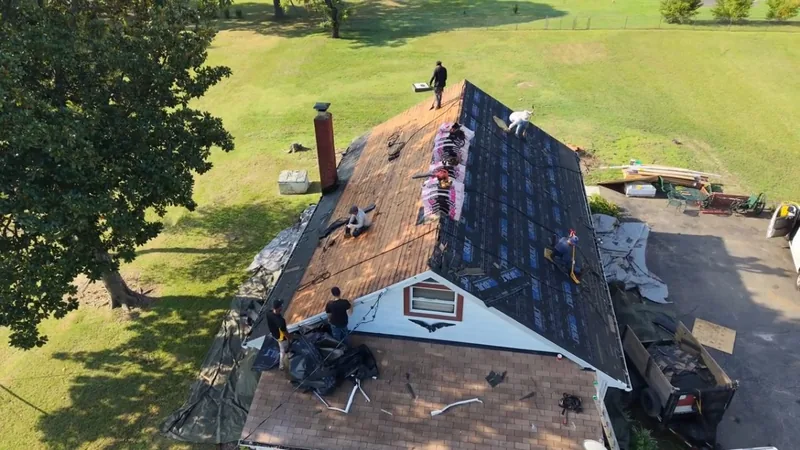
It has a second job during the replacement itself. Once the old roof is off, the deck is open to the sky, and getting underlayment down is how a crew dries the house in so a pop-up afternoon storm does not end up in a bedroom ceiling. On our jobs an exposed deck gets covered before the crew leaves for the day, and our post on how long a roof replacement takes shows where that falls in the day.
Felt, synthetic, and self-adhered membrane
Asphalt felt is the old standard, what a lot of people still call tar paper. It is a mat soaked in asphalt and sold by weight as #15 or #30. It is heavy, and if it gets rained on before the shingles go down it tends to wrinkle.
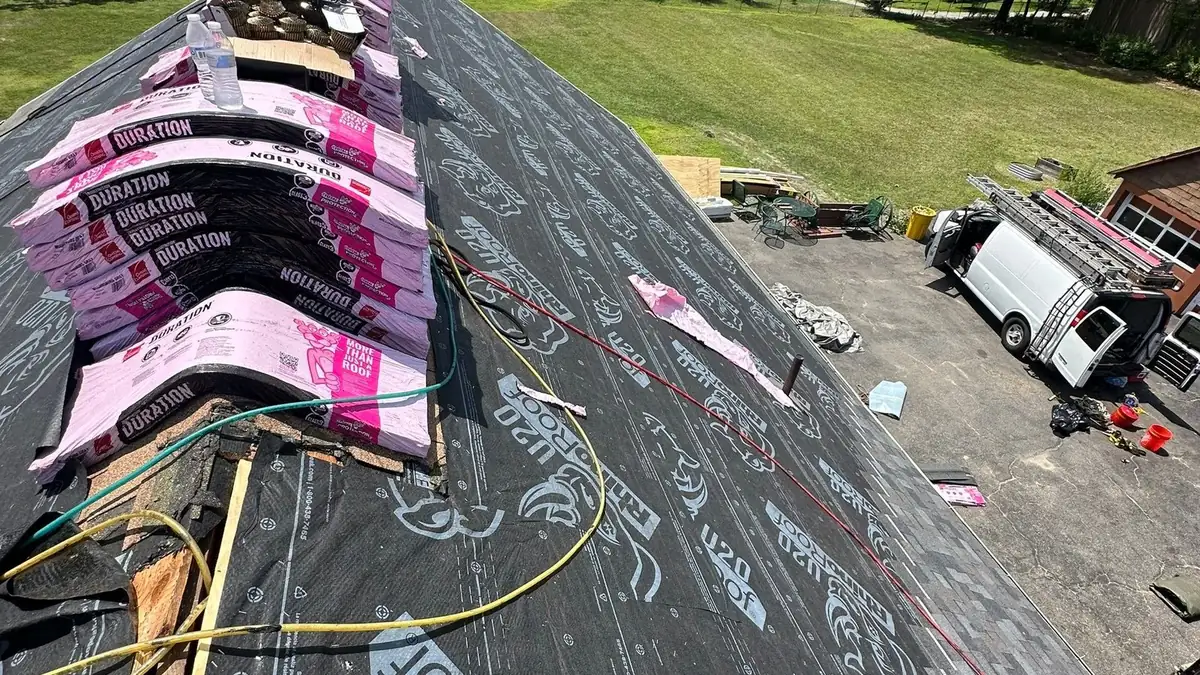
Synthetic underlayment is a woven or spun plastic sheet, much lighter per roll and tough enough for a crew to walk on all day. It is what we put over the field on a replacement. In the photos on this page you will see it in black with gray printing on one roof and white with pink lettering on another, both synthetic, different makers.
Self-adhered membrane, usually called ice and water shield, is a rubberized asphalt sheet with a peel-off back. It sticks to the deck and seals around the nails that go through it. It usually costs more and goes where water is most likely to sit or back up, along the eaves and down the valleys.
What Maryland code asks for
Maryland builds its code on the International Residential Code. The state adopted the 2021 edition through the Maryland Building Performance Standards, and counties can amend it for local conditions.
For asphalt shingles that code requires underlayment and spells out how far the sheets have to overlap. It also requires an ice barrier in areas the local design table marks as having a history of ice forming along the eaves, and where that applies the barrier has to run from the lowest edge of the roof to at least 24 inches inside the exterior wall line. On a house with a deep overhang that can mean the membrane runs a good way up the slope.
Our post on ice dams on Maryland roofs gets into why ice forms along the eave in the first place. The permit inspection at the end of a replacement is one of the few times someone other than your roofer looks at this layer.
How it goes down on a replacement
With the old shingles and old underlayment off and the deck sound, our roof replacements run in this order: ice and water membrane at the eaves and up the valleys, drip edge, synthetic underlayment across the rest of the field, then starter strip and shingles.
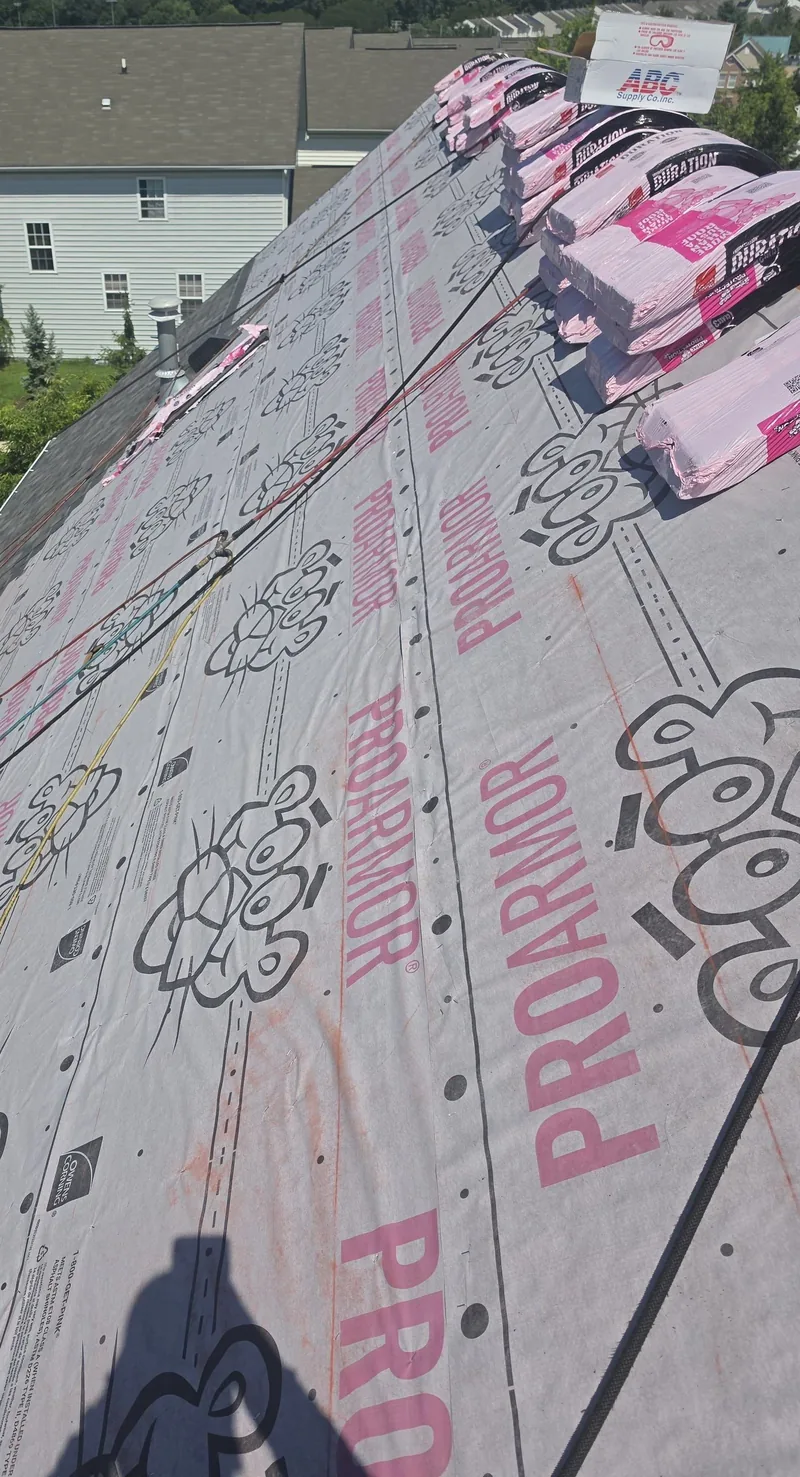
Each course of synthetic laps over the one below it, so water running down the slope rides over the seams. Chalk lines get snapped across it to keep the shingle courses straight, you can see a couple of them in the photo. Around a chimney or a wall the underlayment turns up and the flashing is worked in over it, and our post on roof flashing and leaks covers that detail.
Why it only gets replaced with the roof
People sometimes ask whether they can just swap the underlayment. Not really, it sits under every shingle. The only time it is exposed is during a tear-off, and that is when it comes off and goes back on new.
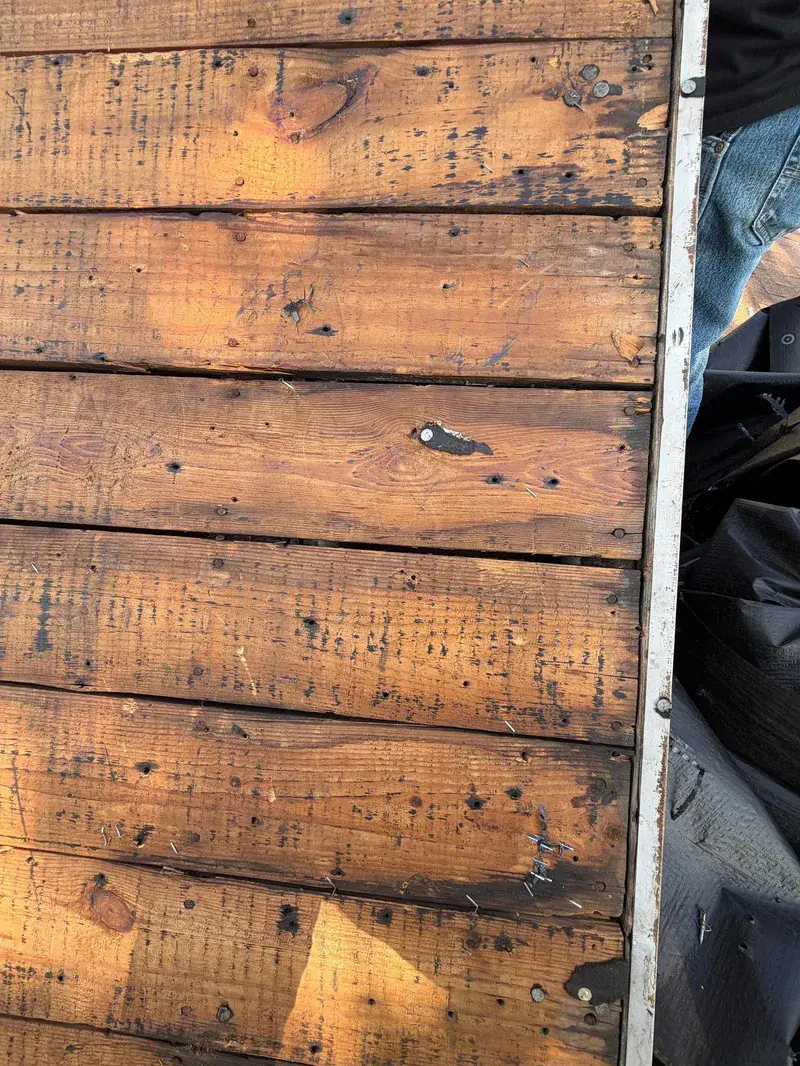
The tear-off is also the one chance to look at the deck. Soft or rotted boards show up as soon as the old layers are gone, and those get replaced before any new underlayment goes down over them.
What to ask on an estimate
A lot of estimates just say "underlayment" and move on. Ask what goes over the field, and ask separately what goes along the eaves and in the valleys, because those are often two different materials. It is also worth confirming the old underlayment comes off with the shingles.
If you are comparing bids, our guide on how to choose a roofing contractor in Maryland covers the rest of what belongs in a written scope.
Frequently Asked Questions
What is roof underlayment?
Roof underlayment is a water-resistant layer installed over the wood deck and under the shingles. It catches water that gets past the shingles and keeps the deck covered while a replacement is underway.
Is synthetic underlayment better than felt?
Synthetic is lighter, harder to tear and stays flatter than asphalt felt, and it is what we install over the field on a replacement. Felt still meets code when it is installed correctly. Either way, the laps and the membrane at the eaves and valleys matter as much as the sheet itself.
Does Maryland require ice and water shield?
Maryland uses the 2021 International Residential Code, which requires an ice barrier where the local design table shows a history of ice forming along the eaves. Where required, it runs from the roof edge to at least 24 inches inside the exterior wall line. On our replacements the membrane goes along the eaves and up the valleys.
Can underlayment be replaced without replacing the shingles?
Not in any practical way, because it sits under every shingle. It comes off with the old roof during a tear-off and goes back on new before the shingles.
The roof replacement page lays out the full system we install, from the deck up.
Planning a roof replacement? Start with a free inspection.
Free no-obligation inspections · Central Maryland · Mon-Sat 8:00 AM - 5:00 PM