
Blog
Roof Inspection in Laurel, MD: Checking a Roof After High Winds
Wind damage is easy to miss from the sidewalk. Here is what a roof inspection in Laurel checks after a windstorm, and when it is worth booking one.
A roof inspection in Laurel, MD after high winds is mostly a search for damage that does not look like damage. Laurel is a city in Prince George's County on the banks of the Patuxent River, between Washington and Baltimore, and wind is part of its record: on September 24, 2001, a tornado passed through Laurel and left F3-level property damage behind it.
Most windstorms are far smaller than that one, which makes their damage harder to spot. A gust strong enough to fold a shingle tab back can break the seal strip under it, and the tab then lays flat again. From the street the roof looks fine, and the gap only shows up when wind-driven rain finds it. This guide covers what we check on a roof after a windstorm and when an inspection is worth booking. For how our free roof inspection works start to finish, see that page, and for the town itself, see roofing in Laurel, MD.
What wind leaves behind on a shingle roof
Wind damage comes from shingles being lifted and bent, so it looks different from the bruises hail leaves. These are the marks we look for after a windstorm:
- Creased tabs, with a straight crease line across the shingle where it bent back.
- Broken seal strips, where a tab lifts with light hand pressure instead of staying bonded to the course below.
- Missing pieces along the rakes and eaves, the edges wind catches first.
- Ridge caps lifted, cracked or gone.
- Flashing seams opened where the roof meets a wall or chimney.
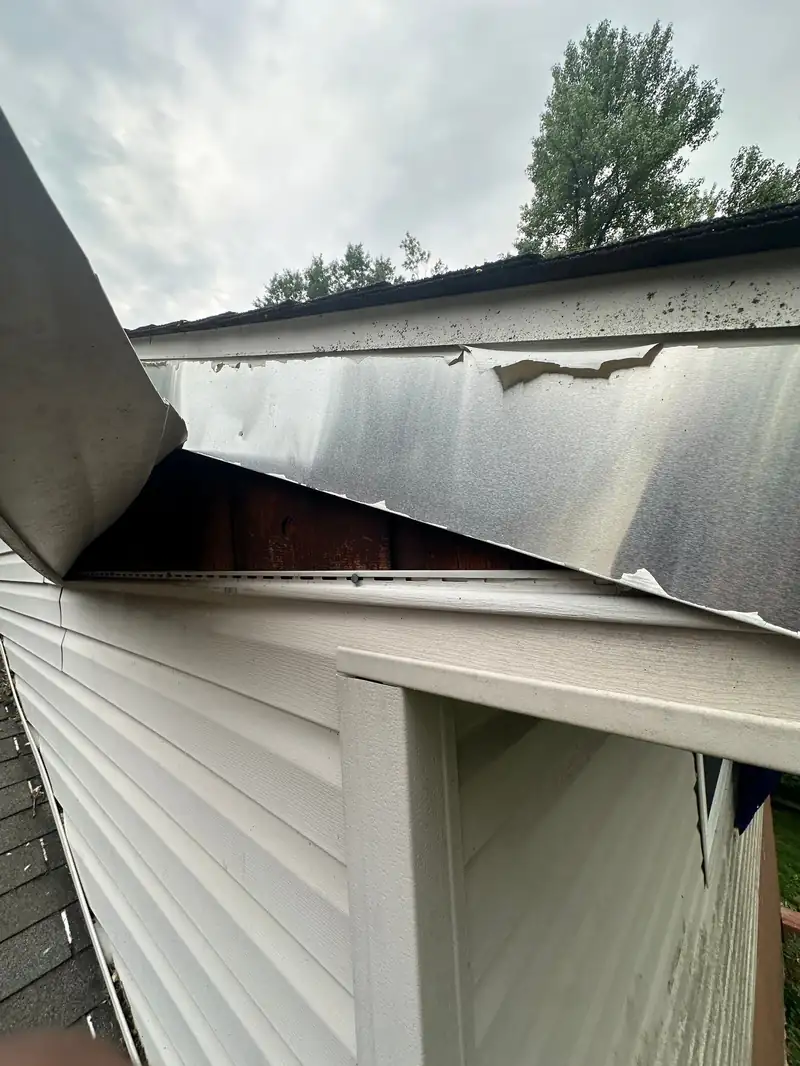
- Metal at the roof edge pulled loose or bent.
For the hail side, our guide on how to tell if your roof has storm damage covers what to look for.
How we check a roof after a windstorm
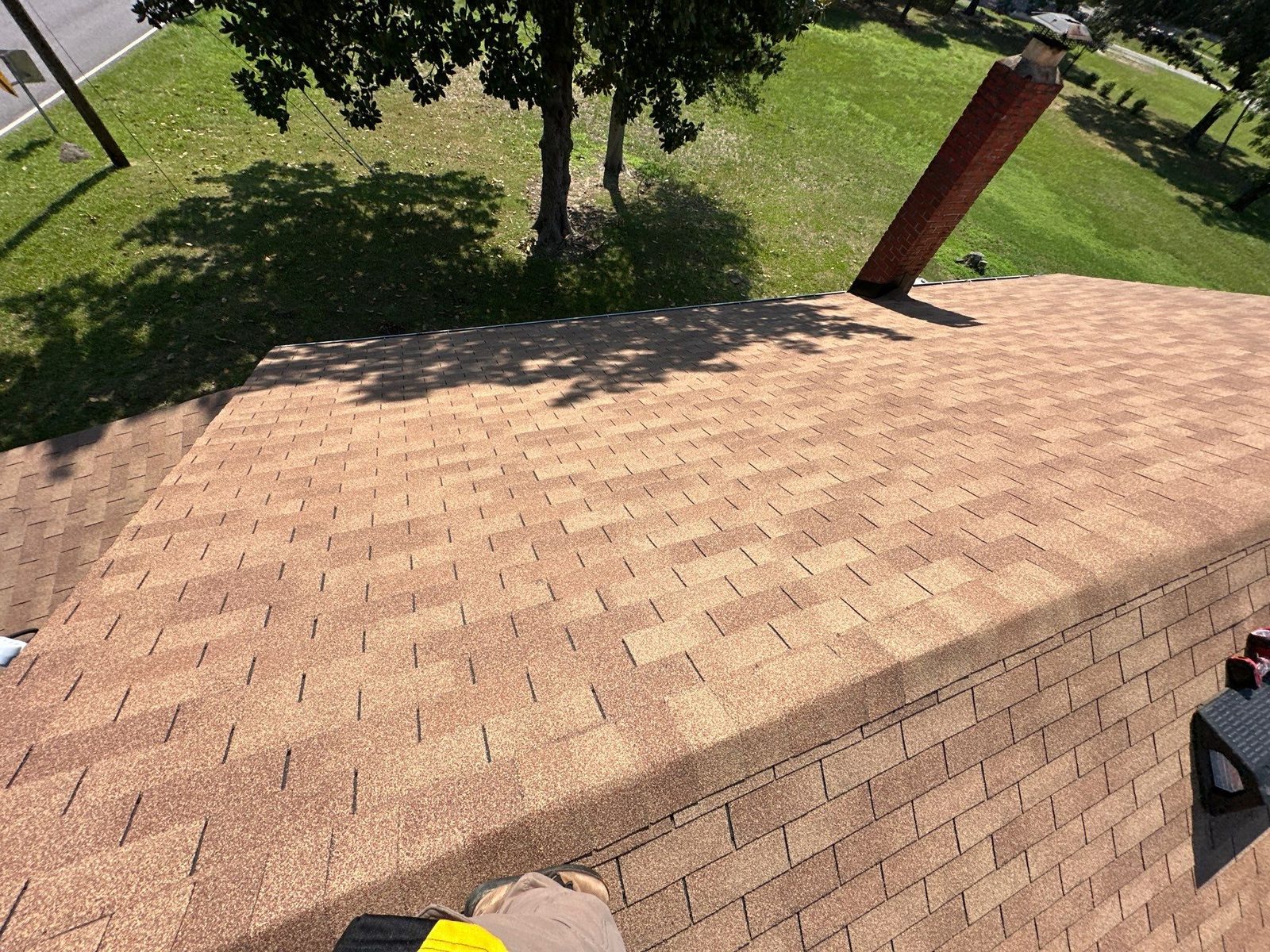
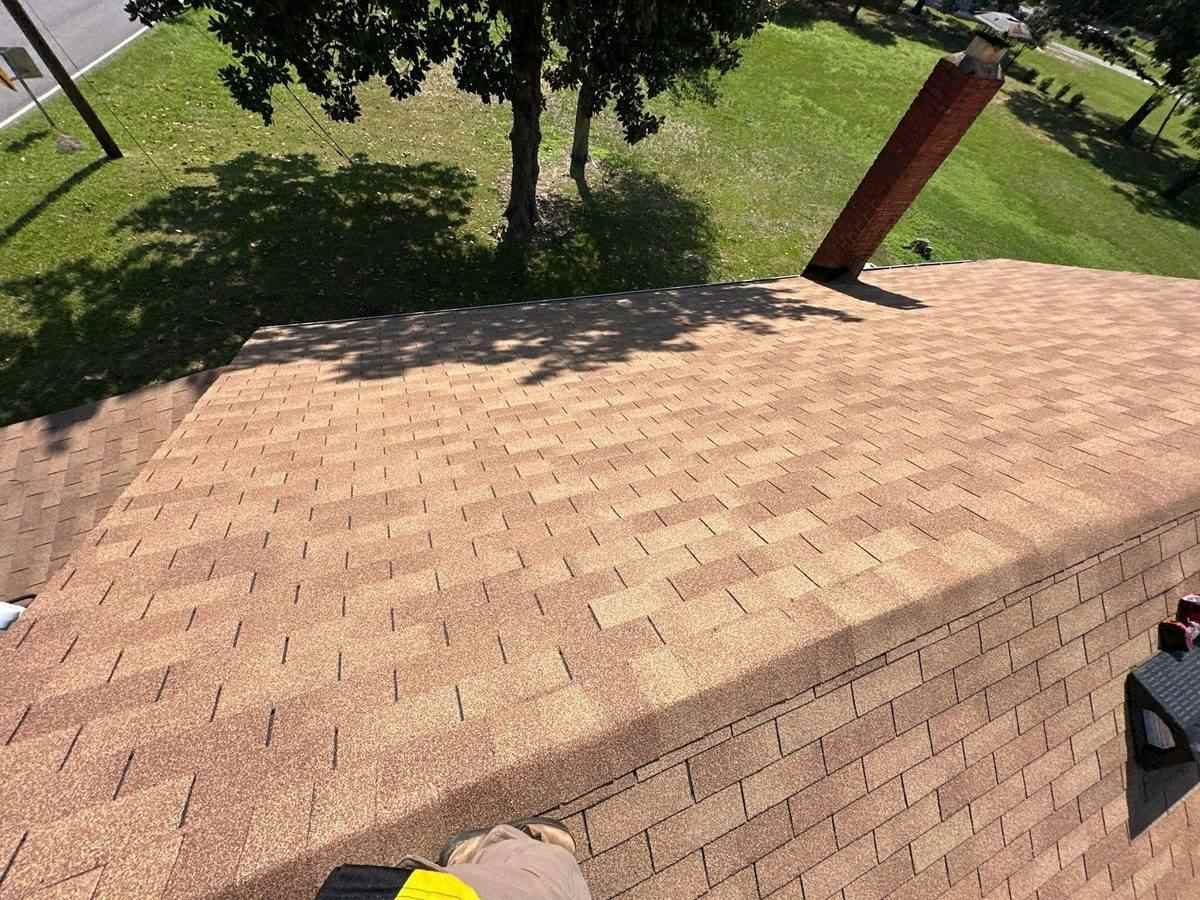
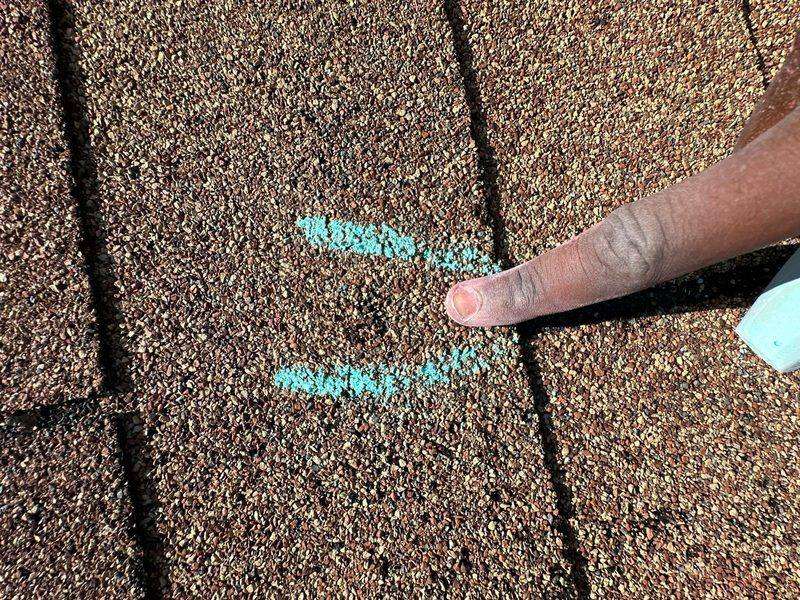
We walk the roof slope by slope and test tabs along the edges and the ridge, where wind gets underneath first. Damaged tabs get marked in chalk and photographed with a hand or a tape in the frame for scale. If there has been a leak, we go into the attic too and work back from the stain, because water travels along the decking before it drips.
At the end you see the photos and hear what the roof needs: nothing, a repair, or more. If the damage came from a storm, it may support an insurance claim. We document it and, if you file, write the scope in Xactimate, the estimating software insurers price from. Your carrier decides coverage.
Older houses near Main Street
Laurel grew up as a mill town. In the 1840s, mill president Horace Capron and his partners built housing for close to 300 cotton mill workers, and frame houses from that era still stand close together near Main Street. On a narrow lot with the neighbor a few feet away, the roof-to-wall flashing and the edges of the roof take a lot of the weather, so an opened seam on one of those houses is worth finding early.
If your house is in the historic district
In 1975 the city created a historic district around Main Street. The City of Laurel Historic District Commission reviews plans for all exterior alterations to buildings in the district and grants certificates of approval under its design guidelines. If a wind-damaged roof needs new material, check the city's Historic District Commission page before anything is ordered.
Between the storm and the inspection
A few things are worth doing while you wait for someone to look at the roof, and none of them involve a ladder:
- Write down the date of the storm. If you file a claim, the carrier will ask for it.
- Walk the yard and the street side of the house and photograph anything that came off the roof: shingle pieces, ridge caps, strips of metal. Leave the pieces where you can find them.
- Take photos of each roof slope you can see from the ground, so there is a record of how it looked right after the storm.
- Check the ceilings on the top floor and, if you can get into it safely, the attic. A drip or a damp spot on the decking is worth a photo and a bucket.
If shingles are missing over a living space and more rain is coming, the roof may need to be covered before it can be inspected properly. Our page on emergency roof tarping covers how that works and how the tarp gets documented for a claim.
When to book a roof inspection in Laurel
- After a storm with strong gusts, even if nothing looks missing from the yard.
- When shingle pieces or ridge caps turn up in the yard or the gutters.
- When a ceiling stain appears after wind-driven rain.
- Before you file an insurance claim, so you know what is actually on the roof.
The inspection is free and carries no obligation. If the roof is fine, that is what you will hear. We work Monday through Saturday, 8am to 5pm, and Laurel is about 7 miles from our base in Columbia. If you have never had one, read what to expect during a roof inspection.
Related reading
If hail came with the wind, read how to spot hail damage on your roof. If water is already coming in, start with what to do when your roof is leaking.
Windstorm in Laurel?
We check the roof slope by slope on a free inspection and show you the photos.