
Blog
What Is House Wrap, and Why Does It Matter Under Siding?
House wrap is the sheet that covers the outside of your walls under the siding. It stops liquid water that gets behind the siding from reaching the sheathing and framing, and it lets water vapor work its way out of the wall. Vinyl siding is not watertight on its own, so on a vinyl-sided house the wrap is doing most of the waterproofing.
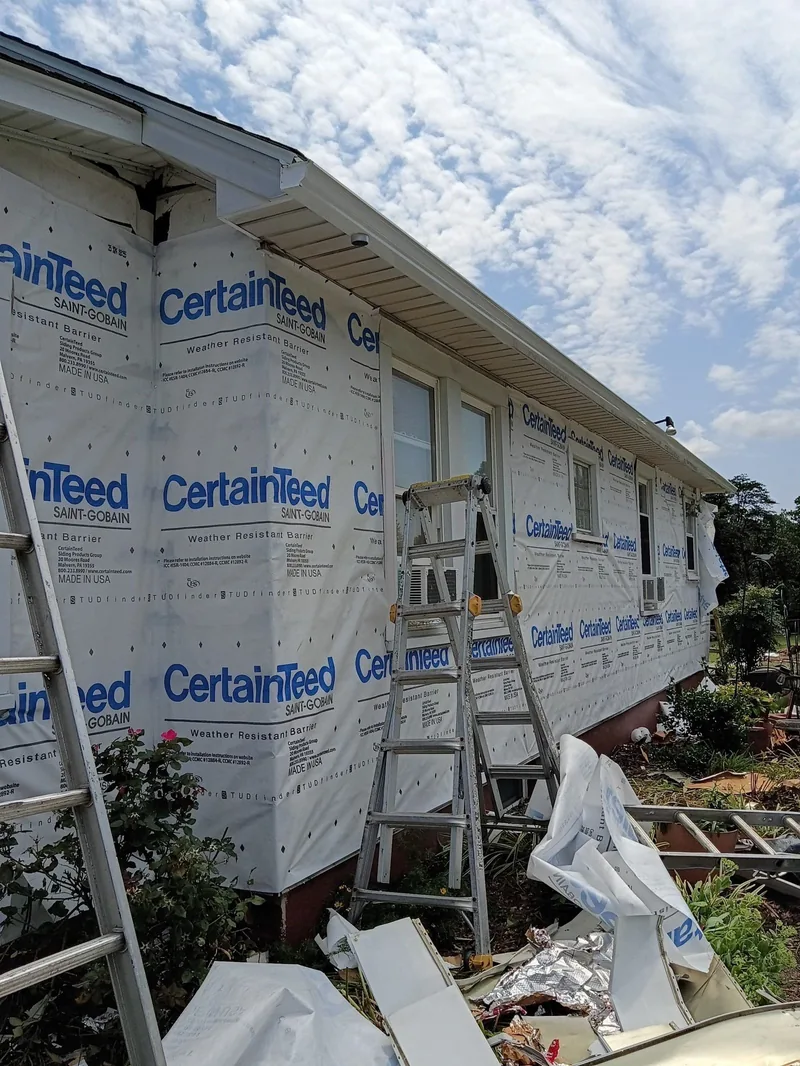
Most homeowners only ever see it in the middle of a siding replacement, for the day or two when the old panels are off and the walls are covered in white sheeting with a brand name printed every few feet.
What house wrap is
Code calls it a water-resistive barrier. Maryland uses the 2021 International Residential Code, which requires at least one layer of it over the studs or sheathing of every exterior wall, tied into flashing at the windows and doors. Code still allows No. 15 asphalt felt for the job. The walls in our photos here were done in a synthetic wrap that comes in wide rolls.
It is made to shed rain from the outside while letting moisture vapor escape from the inside. Walls take on some moisture from the house over the years, and a wrap that let none of it out would leave that moisture sitting against the wood.
Why vinyl siding needs it
Vinyl lets some water in by design. The panels hang loose on their nails so they can slide as the wall heats up and cools down, and the laps and the trim channels around windows leave small paths for wind-driven rain to get behind them. The Vinyl Siding Institute's installation manual says as much, calling vinyl an exterior cladding and not a water-resistive barrier, and it says vinyl has to go over one.
The panels shed most of the rain and take the sun. Whatever gets behind them hits the wrap. If that layer is torn or was put up wrong, the water goes into the sheathing, and nobody sees it until a wall goes soft or a stain shows up on an inside wall. Our post on the signs it is time to replace your siding covers what that looks like from the outside.
Laps, seams and the openings
Wrap goes on from the bottom up so each upper sheet laps over the one below it, the same way shingles do. For felt and the paper-type barriers, code calls for at least two inches of lap on the horizontal seams and at least six where two sheets meet end to end, and synthetic wraps come with their own lap instructions from the maker. Lap it the other way and the seams point water into the wall.
Windows and doors are usually where it goes wrong. The flashing at each opening has to tie into the wrap, with the head flashing over it so water is carried out. Where a roof edge meets a wall, a kick-out flashing throws the water clear, and a missing one is one of the most common reasons we open a wall and find rotted sheathing.
What a tear-off shows you
You can only check the wrap, and the sheathing under it, with the old siding off the house.
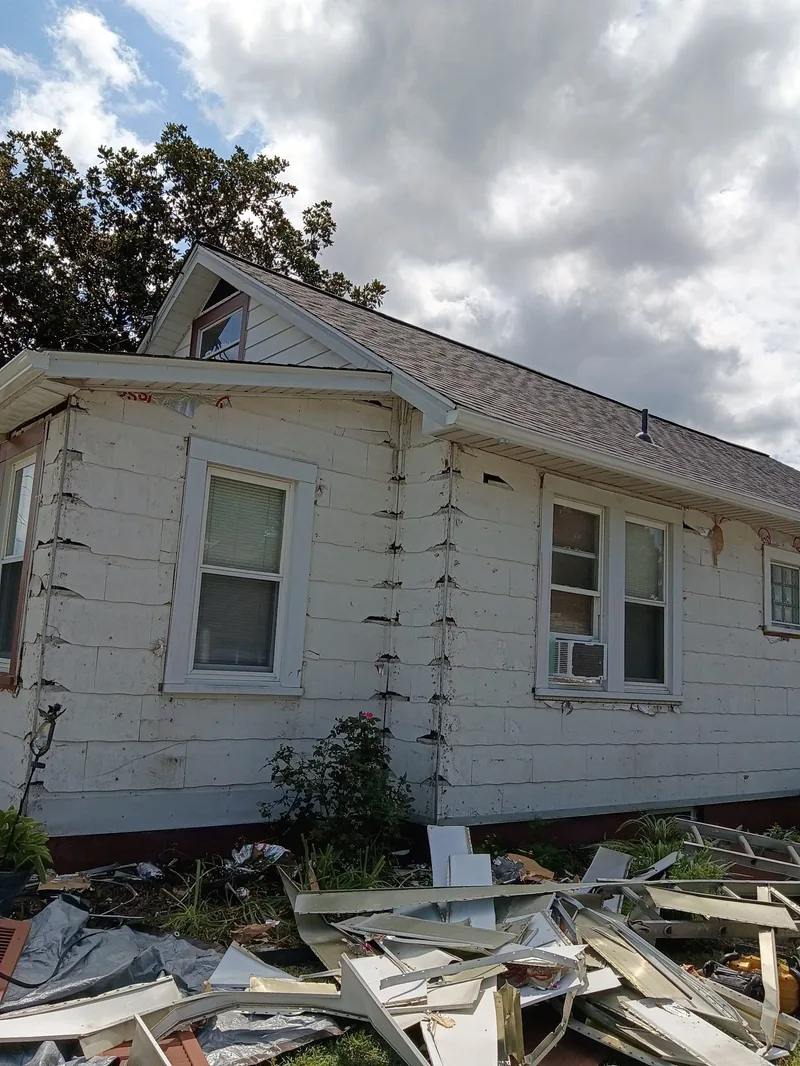
The house in these photos had old white siding that was cracked and pulling loose across whole walls. On our siding replacements the old panels come off first, the sheathing and wrap underneath get inspected, any rotted sheathing gets replaced and the openings get flashed before new siding goes up. Where the old wrap is torn or missing, a fresh weather-resistant barrier goes on. The wall gets rebuilt from the weather barrier out.
New siding over a sound wall
Once the wrap is lapped and the openings are flashed, the new siding goes on over it. Vinyl gets nailed in the center of the slot and left snug, not driven tight, so it can move with the temperature without buckling.
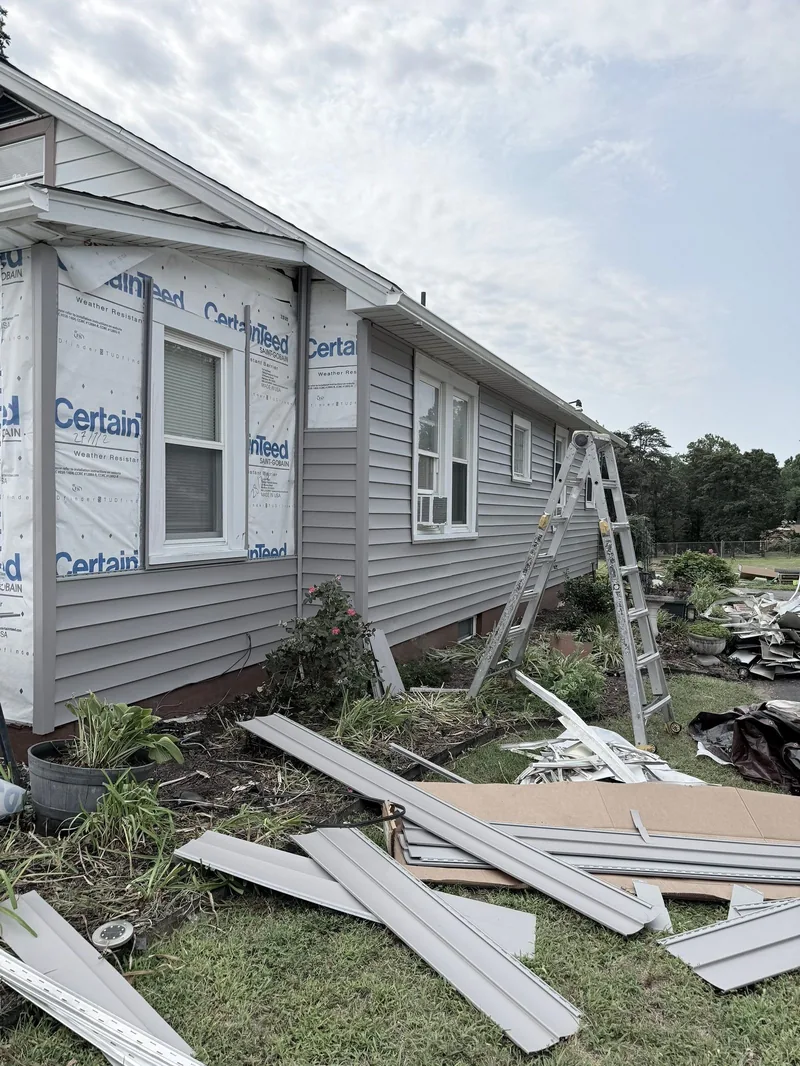
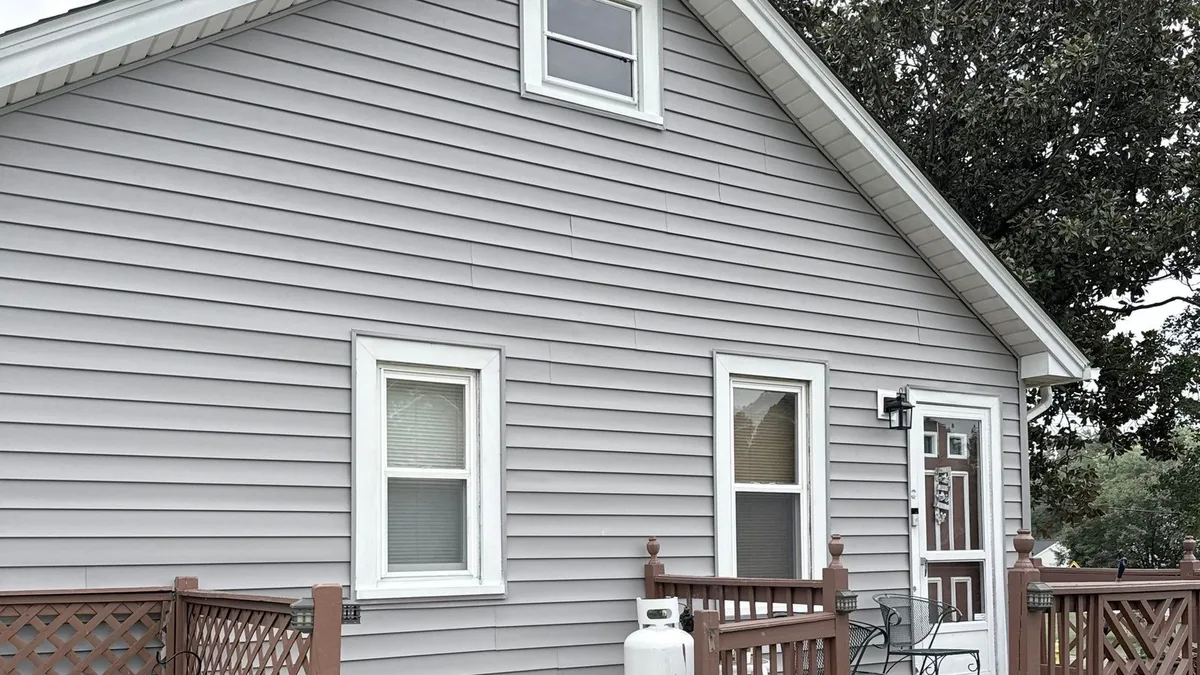
On this house the new panels were a light gray, going up over the fresh wrap. Our post on how long vinyl siding lasts in Maryland gets into what wears the panels themselves down over time.
What to ask before you sign
Ask first whether the old siding is coming off. If the answer is yes, then ask what goes on the wall behind the new panels and how the windows and doors get flashed. If the estimate does not say, ask for it in writing.
Thinking about painting the siding you already have? Our post on whether vinyl siding can be painted covers when paint is enough and when the wall needs more.
Frequently Asked Questions
What is house wrap?
House wrap is a water-resistive barrier installed over the sheathing of an exterior wall and under the siding. It keeps liquid water that gets behind the siding off the wood, and it lets water vapor escape from inside the wall.
Does vinyl siding need house wrap?
Yes. Vinyl siding hangs loose and is not watertight, and the Vinyl Siding Institute's installation manual says it has to be installed over a water-resistive barrier. Maryland's residential code also requires a water-resistive barrier behind exterior wall coverings.
Can new siding go over the old house wrap?
Only if the old wrap is intact and lapped correctly, and the way to know is to take the old siding off and look. On our replacements the wrap and sheathing get inspected after tear-off, and a fresh weather-resistant barrier goes on where the old one has failed.
How should house wrap be lapped?
From the bottom up, so each upper sheet overlaps the one below it. For felt and paper-type barriers, code calls for at least two inches on horizontal laps and six at end joints, and synthetic wraps follow the maker's lap instructions. Flashing at windows and doors ties into the wrap so water is carried back out of the wall.
The siding replacement page covers how we strip, inspect and rebuild a wall from the sheathing out.
Siding cracked or pulling loose? Let us take a look.
Free no-obligation inspections · Central Maryland · Mon-Sat 8:00 AM - 5:00 PM
During a siding replacement
Our Columbia siding installation guide shows what to check while the sheathing and weather barrier are exposed.