
Blog
Insulated Vinyl vs Fiber Cement Siding in Maryland
Both stand up to a Central Maryland summer. They differ in weight, upkeep, install time and how the wall looks up close.
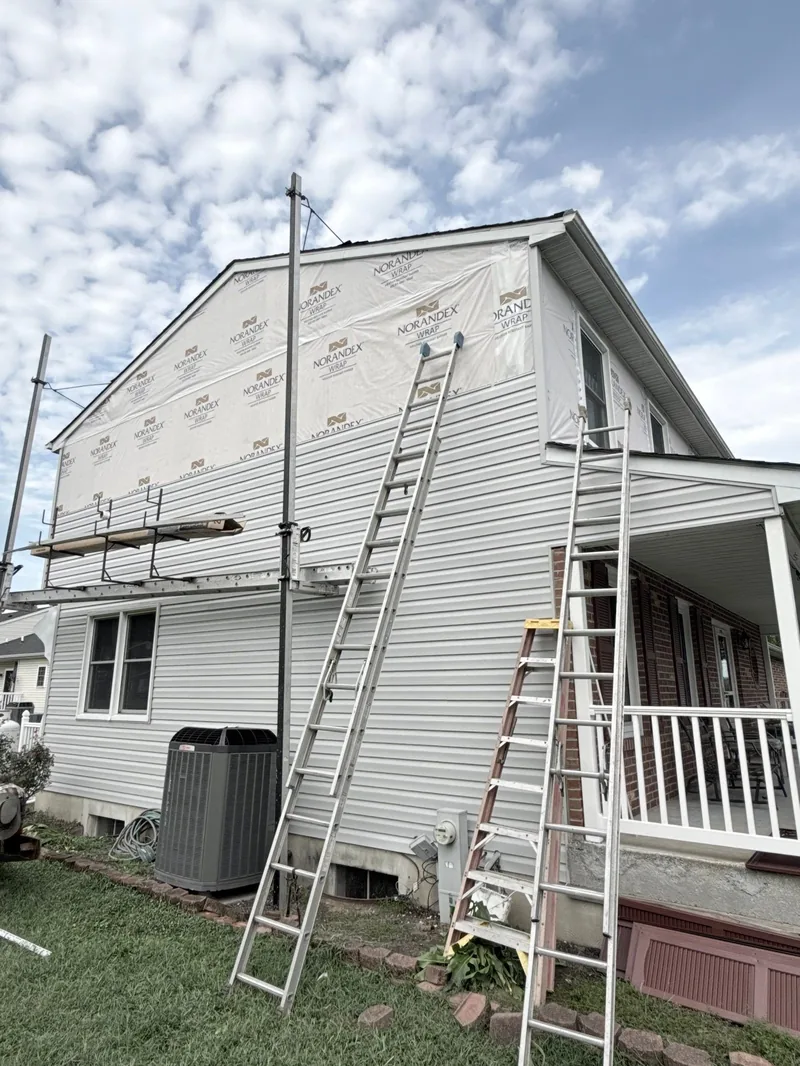
Most of the walls we replace around Columbia and Howard County get one of three materials: standard vinyl, insulated vinyl or fiber cement. When homeowners narrow it down, the choice usually comes to the last two. For most homes we work on, insulated vinyl is the practical middle. Fiber cement earns its extra cost on an elevation that has to look right up close, like the front of the house.
Standard hollow vinyl still has a place on a rental or a wall nobody sees from the street. The rest of this guide compares the two upgrades, and our siding replacement page shows the full job from the old wall to the new panels.
What each material is
Insulated vinyl is a vinyl panel with a foam backing shaped to fit behind it. The foam fills the hollow space behind the panel. That makes the wall read flatter and stand up to a knock better than hollow vinyl, and it lets less heat through. The color runs through the vinyl itself, so there is nothing to paint.
Fiber cement is made from cement, sand and wood fiber pressed into planks and panels. Hardie plank, from James Hardie, is the brand most people mean when they ask for it by name. It comes primed for paint or with a baked-on color finish, and it does not soften in the humidity that sits over Central Maryland all summer or feed insects the way wood can.
| Insulated vinyl | Fiber cement | |
|---|---|---|
| Look up close | Flatter than hollow vinyl, still reads as vinyl | Closer to painted wood, crisp board lines |
| Weight and labor | Light, quicker to hang | Heavy, every cut handled properly, longer install |
| Color | Through the panel, no painting | Primed or factory finish that holds for years |
| Maryland humidity | Does not absorb water | Does not soften |
| Cost | The middle option | Costs more in material and labor |
How each one handles a Maryland year
Vinyl moves. A wall here can swing from a 20 degree January night to a 95 degree July afternoon, and vinyl panels grow and shrink with it. That is why vinyl nails go in the center of the slot, snug but not driven, so the panel can slide. Nailed tight, it ripples or pulls loose, which is one of the failures we see most on older vinyl jobs. The foam on insulated vinyl stiffens the panel, which helps it lie flat through those swings.
Fiber cement goes on the other way. Cut ends get sealed, butt joints get the right gap, and the boards are blind-nailed to the stud layout. It is heavy enough that the labor runs longer than vinyl. In exchange it holds paint for years and keeps a hard, straight face through humid summers. Hail damage on any siding tends to show up on the south and west walls, the ones that take the storm.
The wall behind the siding matters more than the panel
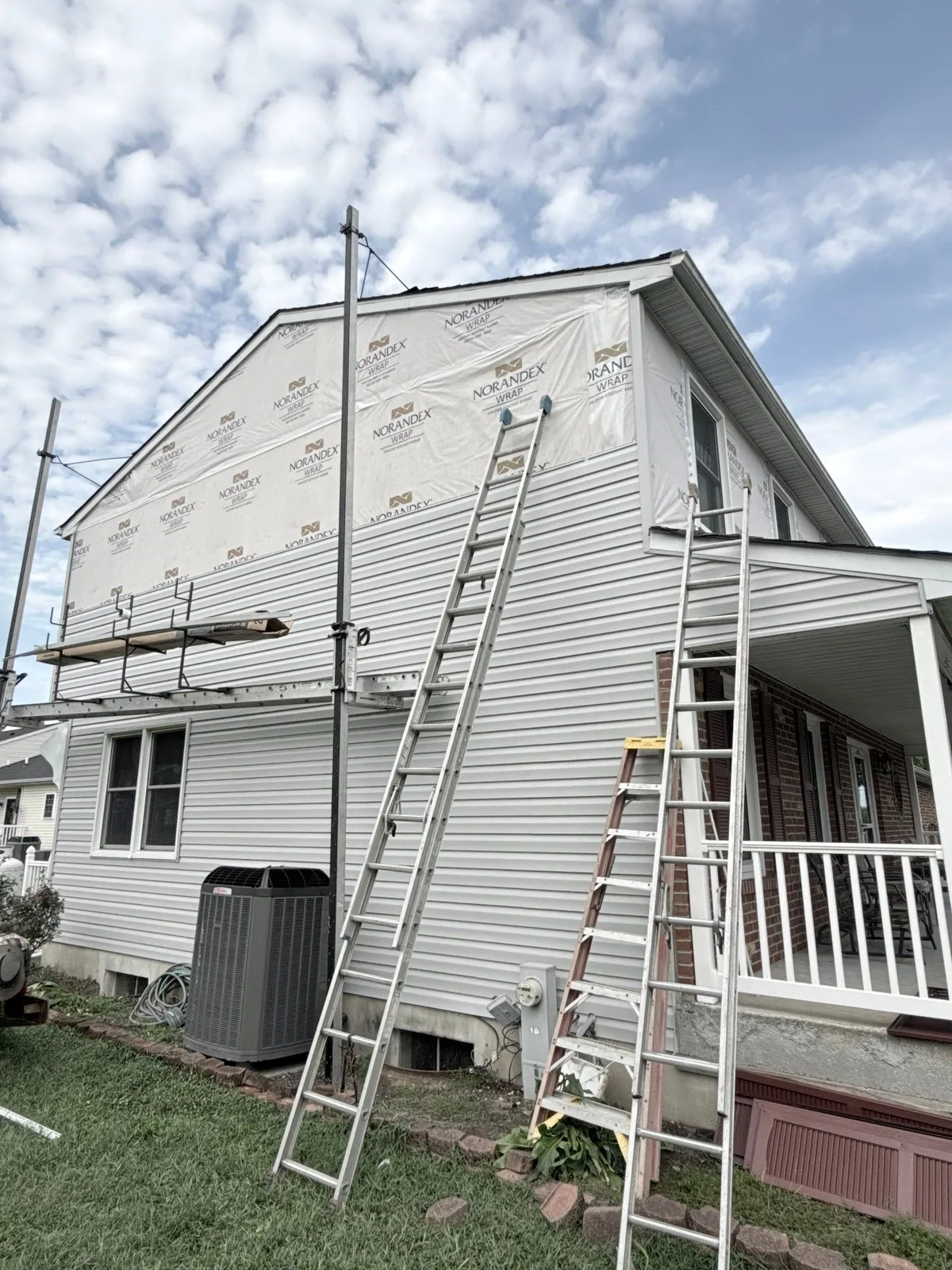
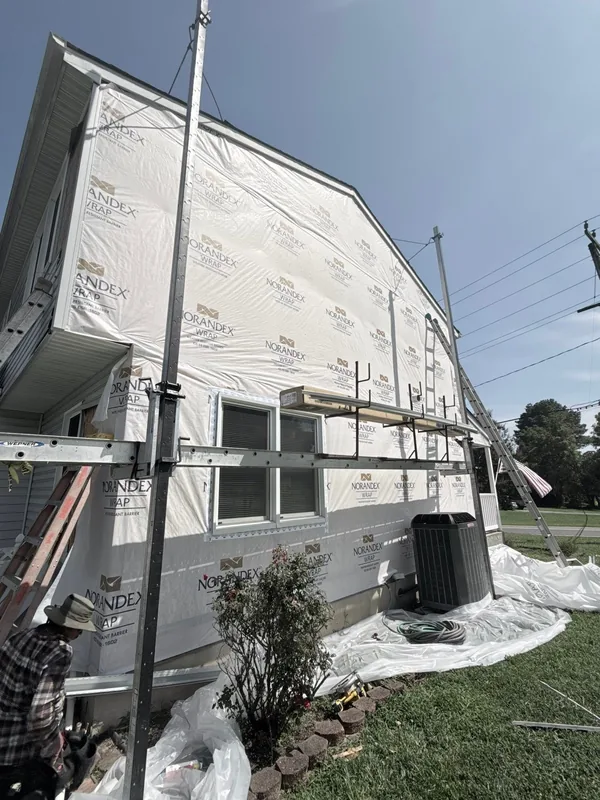
Whichever material you pick, the job is the same underneath. The old siding comes off, we inspect the sheathing and replace anything wet or soft, then the house wrap is lapped so water runs down and out. Windows and doors get head flashing over the wrap, and every spot where a roof edge meets a wall gets a kick-out flashing. Siding sheds most of the water, and the layers behind it handle the rest.
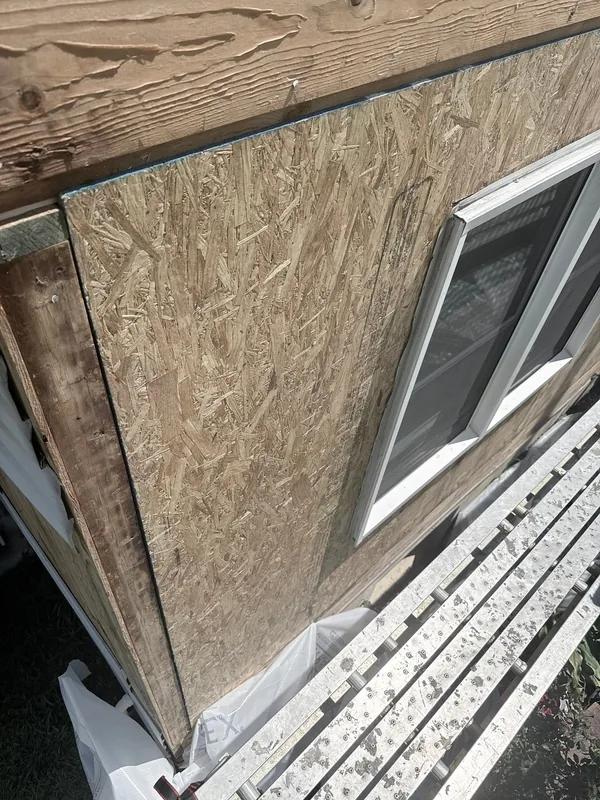
Our guides on house wrap under siding and what to check while the wall is open go deeper on those layers. If you are still deciding whether the old siding has to go, start with the signs it is time to replace siding, then see the siding replacement process in Columbia.
Related reading
For vinyl in particular, read how long vinyl siding lasts in Maryland. Planning the roof at the same time? See whether new shingles can go over an old roof.
Choosing siding for your house?
We measure on site, show you both materials and put a firm quote in writing.