
Blog
What Affects the Cost of a Roof Replacement in Maryland
The first question almost everyone asks about a new roof is what it will cost, and the honest answer is that no two roofs price out the same way. What you pay comes down to the specific house, the shape of the roof, and what the crew finds once the old shingles are off. Rather than throw out a number that would be wrong for your home, here is a plain look at the things that move a Maryland roof replacement up or down, so the estimate you get makes sense instead of feeling like a mystery.
Why There Is No Single Price
A roof is measured and quoted for the house it sits on. Two homes on the same street can price out differently because one has a steeper roof, an extra chimney, or rotted wood hiding under the shingles that the other does not.
Any contractor who gives you a firm price from the driveway without measuring is guessing, and that guess usually gets corrected later in a way you will not enjoy. A real estimate follows a real look at the roof.
Each factor below moves the cost up or down, and your estimate adds them up for your house.
The Size and Pitch of the Roof
Size is the obvious one. Roofers measure a roof in squares, where a square is a hundred square feet of surface, and a bigger roof simply takes more material and more hours to cover. The footprint of your house is only part of it, because the slope adds surface that you do not see from the ground.
Pitch matters just as much. A steep roof is slower and more demanding to work on, and it needs more safety setup, so the same square footage takes longer on a sharp slope than on a gentle one.
How Many Layers Have to Come Off
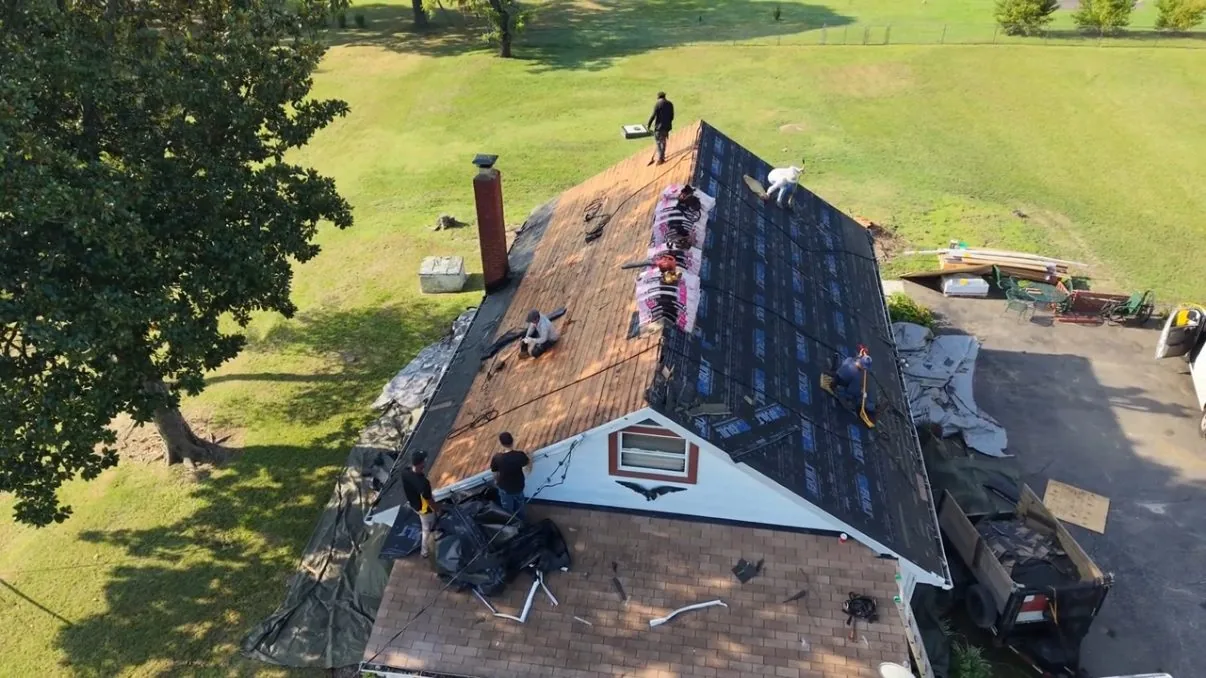
Some roofs carry more than one layer of old shingles from a previous go-over. The more layers there are, the more there is to tear off, bag, and haul away, and that is labor and disposal that shows up in the estimate.
Going over an old roof instead of tearing it off can look cheaper on paper, but it hides the decking, adds weight, and shortens the life of the new shingles, which is why a full tear-off is the standard we work to. When you pull everything down to the deck, you also get to see what you are actually building on. Our guide on putting new shingles over an old roof covers when Maryland code rules a second layer out.
The Condition of the Wood Underneath
The decking is the plywood or plank that the shingles are nailed to, and you cannot judge it until the old roof is off. Most decks are fine. Some are not.
Years of a small leak, poor ventilation, or old nail holes can leave boards that are soft, delaminated, or rotted, and any bad wood has to come out and be replaced before new shingles go on. Each sheet or board of replacement decking is material and labor on top of the base job.
This is the single most common reason an estimate has a range or a per-sheet line for decking in it. A straightforward contractor tells you up front that some decking replacement is possible, shows you the bad wood when it turns up, and prices it clearly rather than springing it on you at the end.
The Material You Choose
The material you pick moves the price too. A basic three-tab shingle sits at one end, architectural shingles in the middle, and premium designer or standing-seam metal at the higher end.
Heavier, longer-rated materials cost more and generally last longer, so the choice is partly a budget question and partly how long you plan to be in the house. We walk through the shingle side of that trade-off in our post on architectural versus three-tab shingles, and our asphalt shingle roofing page covers the options we install most.
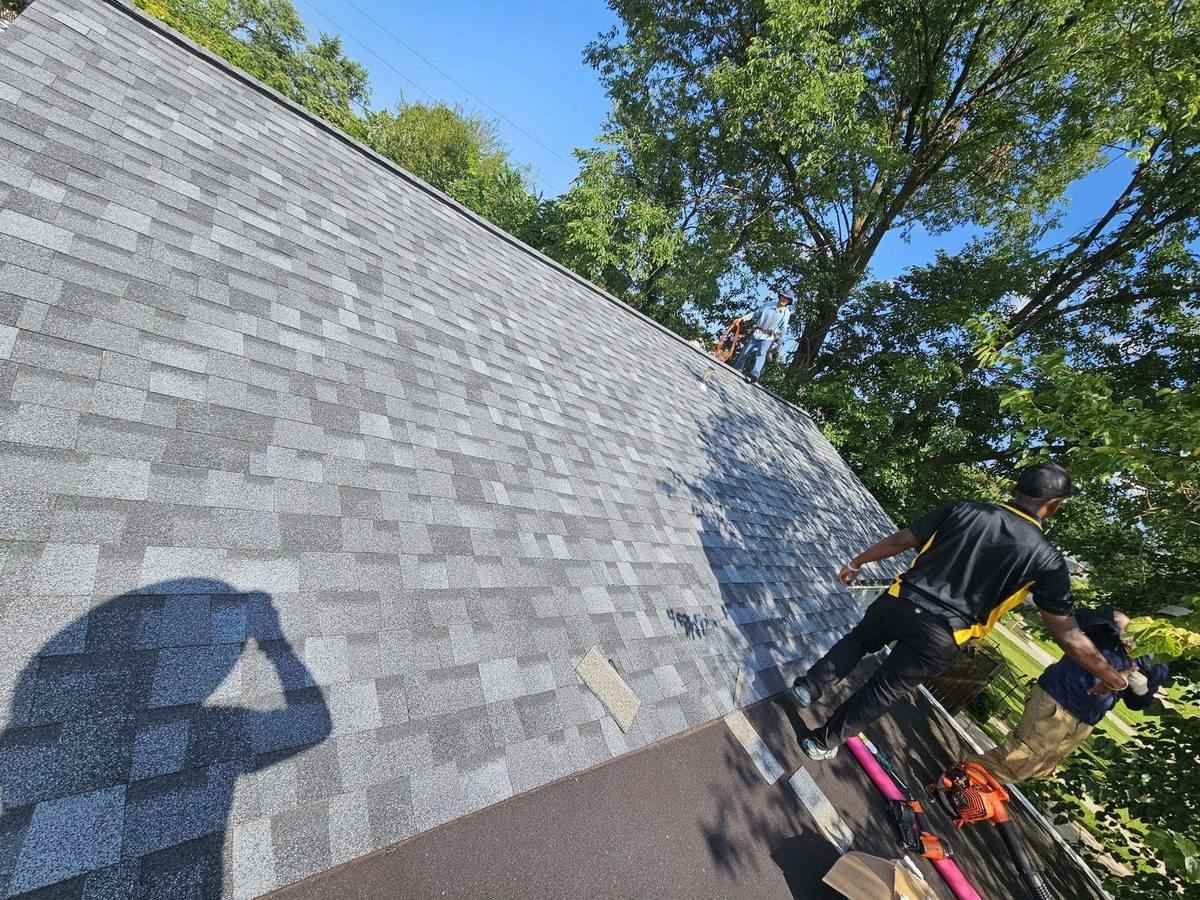
The shingle is only the visible part. A proper roof also includes underlayment across the deck, an ice-and-water membrane in the valleys and along the eaves where leaks start, drip edge, starter strip, and ridge cap.
Those components are part of a real replacement, and skipping them is one way a suspiciously low bid gets low. When you compare estimates, you are really comparing what is under the shingle as much as the shingle itself.
How Cut Up the Roof Is
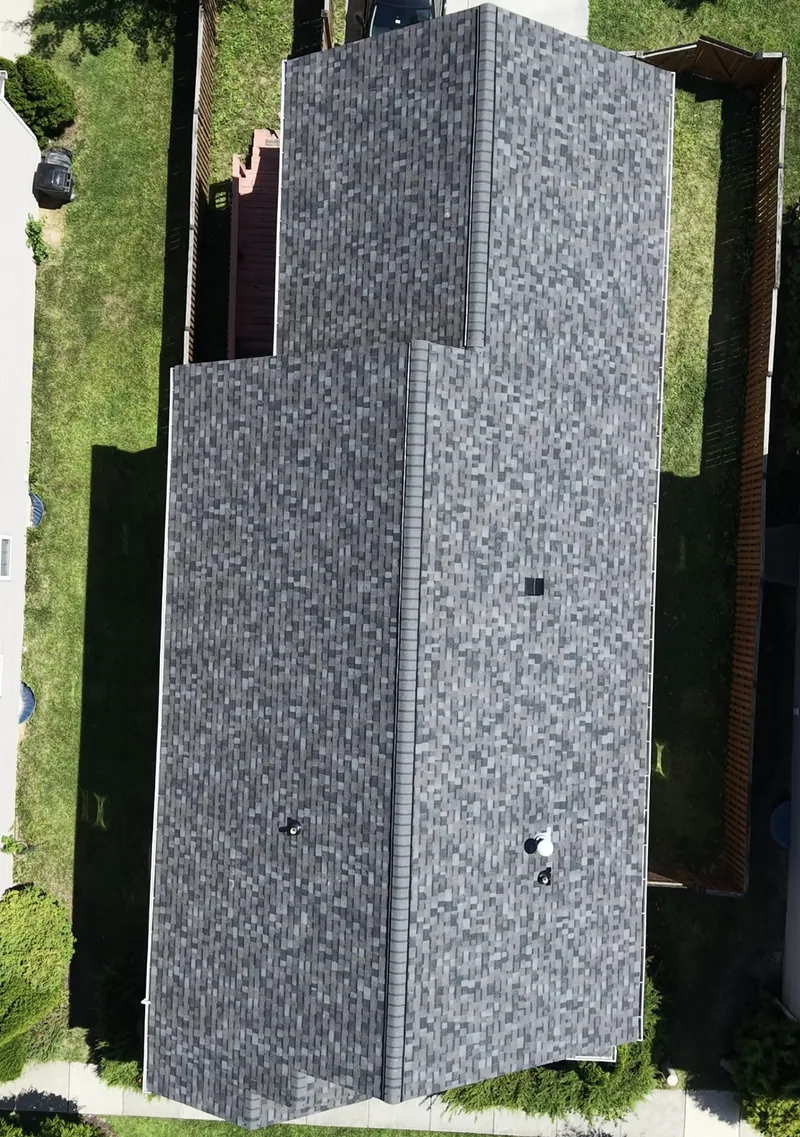
A plain gable roof with two big slopes is fast. A roof with a lot of valleys, dormers, a couple of chimneys, skylights, and pipe penetrations is slow, because every one of those spots is hand-work and a place where flashing has to be cut, fit, and sealed.
Complexity is where a lot of the labor difference between two same-sized roofs comes from. The more angles and interruptions your roof has, the more careful time it takes to do right.
Flashing, Ventilation, and Other Fixes
A replacement is the natural time to correct the things that were wrong with the old roof. New flashing at the chimneys and walls, fresh pipe boots, and correcting the attic airflow all add to the scope, but they cost far less done now, while the roof is open, than as separate projects later.
Ventilation especially is worth handling during the job, and we explain why in our post on attic ventilation and your roof. A cheaper estimate that leaves old, tired flashing in place is not really the same job as one that replaces it.
Access, Permits, and the Details
Smaller things add up too. A three-story house takes more setup than a ranch. A tight lot, a steep driveway, or landscaping that has to be protected all affect how the crew stages the work and gets the debris out.
Your county requires a permit and an inspection for a roof replacement, and a licensed contractor pulls it and builds that into the job rather than skipping it. None of these are huge on their own, but together they are part of why the final number is specific to your address.
When Insurance Is in the Picture
If your roof was damaged by wind or hail, the math can change. A homeowners policy often covers storm damage, in which case what you pay out of pocket may come down to your deductible rather than the full job.
That is a different situation from replacing a roof that simply wore out, which is on the homeowner. Our page on storm and hail damage restoration and our guide to roof insurance claims in Maryland walk through how that side works, and we document the roof thoroughly so the damage is clearly tied to the storm for your adjuster.
How We Turn This Into a Number
We do not price a roof from the curb. It starts with a free inspection where we get up on the roof, measure it, look at the condition of the decking where we can, and talk through the material choices with you.
From there you get a written estimate that spells out the scope, so you can see what is included and compare it fairly against anyone else. No pressure and no games, just a clear picture of your roof and what it will take to replace it properly.
Frequently Asked Questions
How much does a roof replacement cost in Maryland?
There is no single price, because a roof is quoted for the specific house. The cost depends on the roof's size and pitch, how many old layers have to be torn off, the condition of the wood decking underneath, the material you choose, how many valleys and chimneys the roof has, and any flashing or ventilation work. The only accurate number comes from an inspection, which is why we measure the roof and give you a written estimate rather than a guess from the driveway.
Why do roof replacement estimates vary so much between companies?
Two estimates can differ because they are not always the same job. A low bid may skip a full tear-off, leave old flashing in place, use a lighter shingle, or leave out underlayment and ice-and-water membrane. When you compare quotes, compare what is under the shingle and whether a full tear-off, new flashing, and a permit are included, not just the top-line price.
Does the wood under my shingles affect the price?
It can. The decking cannot be judged until the old roof is off.
Most decks are fine, but rotted or delaminated boards have to be replaced before new shingles go on, and that is added material and labor. A straightforward contractor warns you up front that some decking replacement is possible and prices it clearly when it turns up.
Is it cheaper to put a new roof over the old one?
Going over an old roof can look cheaper on paper, but it hides the condition of the decking, adds weight, and usually shortens the life of the new shingles. We work to a full tear-off so the new roof is built on wood we have actually seen. In the long run that is the more economical choice.
Will homeowners insurance pay for my roof replacement?
If the roof was damaged by a covered event like wind or hail, a homeowners policy often pays, and your out-of-pocket cost may come down to your deductible. A roof that simply wore out with age is generally the homeowner's responsibility. We document storm damage thoroughly so it is clearly tied to the event for your adjuster.
Thinking about a new roof? Start with a free inspection.
Free no-obligation inspections · Central Maryland · Mon-Sat 8:00 AM - 5:00 PM